News On Japan

Shimane's Sole 'Departo' Closes After 65 Years, Leaving Four Prefectures Without Department Stores

TOKYO - Since 2008, about a third of department stores in Japan have closed down, with Ichibata in Shimane the latest to shut its doors, leaving four prefectures in Japan without any department stores at all.

There were 280 department stores throughout Japan in 2008, but that number has dropped to just 180 as of November last year.

Ichibata Department Store closed its doors on Sunday, marking the end of a 65-year history, and a sign of a changing consumer environment.

With the closure of other 'departo' such as Onuma Yamagata Main Store, Sogo Tokushima Store, and Gifu Takashimaya, four prefectures are now without a single department store.

The question arises: why are department stores closing nationwide?

Consumer economy analyst Hiroaki Watanabe suggests, "Shopping malls have emerged, offering a wider variety of products than department stores in front of stations, attracting customers. The rise of internet shopping in recent years has also contributed."

In their wake, new commercial facilities are being opened as part of the redevelopment around train stations.

'Nagasaki Stadium City,' scheduled to open near JR Nagasaki Station, will include a soccer stadium, a basketball arena, and also commercial real estate and hotels, offering music concerts, created by the e-commerce giant 'Japanet.'

In Tokyo, the 'Toyosu Senkyakubanrai,' opening Feb 1, will feature an open-air bath with a 24-hour view of Tokyo Bay and restaurants utilizing its location next to the Toyosu Market.

Source: ANNnewsCH

News On Japan
POPULAR NEWS

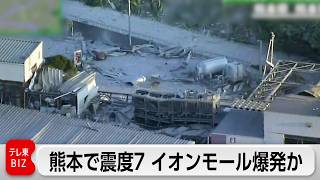
Two women were confirmed dead and another woman was in cardiopulmonary arrest on July 29 as hundreds of emergency personnel searched the wreckage of Aeon Mall Kumamoto following a powerful explosion and collapse triggered after a magnitude 7.1 earthquake.

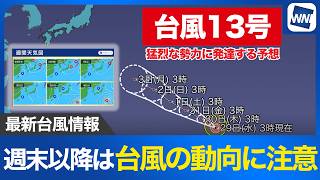
Typhoon No. 13 (Dolphin) has rapidly strengthened into a very strong storm over the Marshall Islands and is forecast to become a violent typhoon as it moves west-northwest across the Pacific, raising the possibility of dangerous waves and other effects reaching Japan in early August.

A magnitude 7.1 earthquake struck Kumamoto Prefecture on July 28, registering the maximum intensity of 7 on Japan's seismic scale and causing collapsed buildings, fires, widespread utility failures and major transport disruption as emergency crews raced to reach people trapped at a shopping center and a paper factory.

Temples that have long shaped Japanese life and culture are increasingly closing and being put up for sale as falling numbers of parishioners and a shortage of successors leave many religious institutions unable to continue operating.

Typhoon No. 13, which formed on the afternoon of July 27, is expected to intensify rapidly into a violent storm as it draws in clusters of highly developed clouds, though forecasts remain sharply divided over whether it will eventually approach Japan.

MEDIA CHANNELS
         

MORE Business NEWS

Japan's national average minimum wage is set to rise by 55 yen, or 4.9%, to 1,176 yen per hour in fiscal 2026 after a labor ministry panel agreed on guidelines for this year's increase.

The Nikkei Stock Average plunged 2,566.27 yen, or 3.9%, to close at 62,364.92 on July 28 as a sharp fall in South Korean stocks and growing concerns over intensifying competition in the global semiconductor industry triggered heavy selling in artificial intelligence and chip-related shares.

Japan is unlikely to end its heavy reliance on Middle East crude oil, even as geopolitical tensions expose the risks of depending on the region for more than 90% of its imports, leaving the country to pursue a gradual mix of diversification, electrification, renewable energy and technological innovation.

Tokyo stocks rebounded on July 27, with the Nikkei 225 closing at 64,931.19, up 320.04 points, or 0.50%, as easing concern over the Middle East conflict supported broad buying across domestic-demand and value shares, although semiconductor weakness continued to cap the market’s recovery.

Honda Motor and Nissan Motor have entered final-stage negotiations to jointly develop an operating system that will serve as the core software for their next-generation vehicles, with an agreement targeted by the end of August.

Japanese investors may be starting to redirect money from semiconductor and memory-related stocks toward automakers and other value shares, as concerns grow that soaring memory prices, increased Chinese production and the search for cheaper suppliers could weaken the technology rally.

Japanese business leaders voiced concern over new additional tariffs imposed by the administration of U.S. President Donald Trump, warning that the measures could damage global manufacturing and undermine free trade.

Buying car insurance can already feel complicated without also worrying about whether you have the “right” payment method.