News On Japan

Japan to Introduce Legislation for 20-Year Criminal Record Checks

TOKYO - The government has finalized a bill to introduce a system similar to the UK's Disclosure and Barring Service (DBS) to ensure that individuals working with children do not have a history of sexual offenses.

Japan to Introduce Legislation for 20-Year Criminal Record Checks

The bill allows for inquiries into criminal history for up to 20 years, and the government plans to submit it to the Diet as early as next week, aiming for its enactment.

The so-called "Japanese version of the DBS" is a response to the unending incidents of children falling victim to sexual crimes in schools and tutoring centers. After discussions with the ruling party, the bill was finalized on the 7th. It stipulates that businesses can inquire about the sexual offense history of individuals working with children for a period of 20 years following incarceration and 10 years following a fine. The bill also proposes that the inquiries should cover not only new hires but also those who are already employed.

The government has indicated that if an employee is found to have a criminal history, they may be subject to reassignment or, depending on the circumstances, dismissal. Guidelines for businesses will be developed to ensure proper implementation of the system. In light of suggestions from within the ruling party that the inquiry period for criminal history should be extended further, the bill includes a provision to consider revisions within five years after its implementation.

The government intends to approve the bill at a Cabinet meeting next week and submit it to the Diet, aiming for passage within the current session.

Source: NHK

News On Japan
POPULAR NEWS

The resignation of Nvidia CEO Jensen Huang on November 12 following allegations involving a woman suspected of links to Chinese intelligence has raised concerns in Japan over the potential impact on semiconductor investment, financial markets and the yen, as uncertainty surrounding the American AI chipmaker threatens to disrupt the global technology industry.

Japan launched a new national disaster management agency on November 2nd to strengthen its response to major emergencies, just days before a powerful earthquake struck Aichi Prefecture, injuring 24 people and renewing concerns over the possibility of a catastrophic Nankai Trough earthquake.

Russia's Foreign Ministry on November 11 defended the government's unilateral decision to place the local subsidiary of Japan Tobacco (JT) under the management of a Russian company, describing the move as a countermeasure against what it called Japan's "blatantly hostile actions."

East Japan Railway (JR East) announced on November 10th that it will introduce touch-free ticket gates at 40 stations, including every station on Tokyo's Yamanote Line, from spring 2028, allowing passengers using Mobile Suica to pass through without taking their smartphones out of their pockets or bags.

Japan's Children and Families Agency unveiled its first national guidelines on November 10th for parental involvement in children's internet use, dividing those aged 0 to 18 into six developmental stages as the government considers tighter regulations on social media platforms to protect young people from online bullying, exploitation, and other growing risks.

MEDIA CHANNELS
         

MORE Education NEWS

Japan now has only one sea otter remaining in captivity following the death of Kira, an 18-year-old female at Toba Aquarium in Mie Prefecture on November 5th, leaving 22-year-old Mei as the country's last surviving aquarium sea otter after a population that once exceeded 100 animals steadily declined.

Japan's Children and Families Agency unveiled its first national guidelines on November 10th for parental involvement in children's internet use, dividing those aged 0 to 18 into six developmental stages as the government considers tighter regulations on social media platforms to protect young people from online bullying, exploitation, and other growing risks.

A 31-year-old Japanese researcher who moved to an indigenous village in eastern Taiwan four years ago to study the Rukai people has become an active member of the community, helping preserve traditional ceremonies and customs while learning the importance of protecting cultural values that remain unchanged across generations.

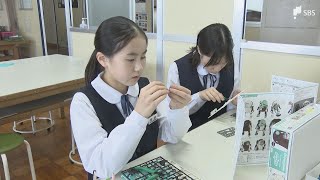
Shizuoka City, which promotes itself as the "World Capital of Models," is using plastic model kits as teaching materials in junior high schools, hoping to cultivate future leaders in the model industry.

A Japanese slang term describing children hooked on the instant stimulation of short videos and social media has been nominated for the country's 2026 New Words and Buzzwords Awards, highlighting growing concerns about declining attention spans and the pressure to consume digital content at ever-increasing speeds.

Delivery rooms in Japan are some of the safest with fewer than two infant deaths per 1,000 births. As a result, many families may assume that complications during delivery are unlikely to happen to them.

Late-night Slack pings, back-to-back video calls, and relentless release cycles have become routine for many working in technology. Employees are often handed access to meditation apps, yoga classes, or lunchtime breathing sessions as a way to “beat burnout.”

Japanese calligraphy is set to be added to UNESCO's Intangible Cultural Heritage list after an evaluation body recommended its registration on November 5th, paving the way for the traditional art form to become Japan's 24th entry and its first since traditional sake brewing was recognized in 2024.