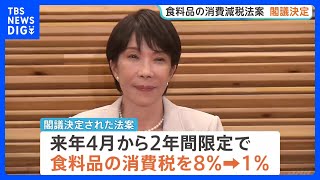
TOKYO - Prime Minister Sanae Takaichi, who launched the second Takaichi Cabinet on February 18th, signaled strong determination to secure passage of next fiscal year’s budget within the current fiscal year, even as a proposal to drastically shorten parliamentary deliberations has triggered backlash from opposition parties accusing the government of disregarding the Diet.
Although deliberations on the record budget of more than 122 trillion yen have been delayed by about one month due to the dissolution of the House of Representatives, Takaichi has made clear she has not abandoned the goal of enacting the budget before the fiscal year ends. She said the government intends to aim for passage of both the fiscal 2026 budget and bills that must be enacted by the end of the current fiscal year.
Ordinarily, it takes just under 20 days for the initial budget bill to clear the House of Representatives, and with deliberations also required in the House of Councillors, passage within the fiscal year is widely seen as difficult. Against that backdrop, some within the ruling coalition have begun floating a proposal to shorten deliberation time.
A senior Liberal Democratic Party official said that if deliberations in the lower house were limited to 44 hours, passage within the fiscal year would be possible. However, the benchmark for deliberation time on an initial budget is typically 70 to 80 hours in the House of Representatives, and in 2025, when the ruling bloc was in a minority, deliberations lasted 92 hours. Since 2000, the shortest deliberation period was 66 hours and 30 minutes in 2007.
Within the ruling party, there are calls to significantly reduce the amount of questioning time allocated to the ruling bloc while maintaining time for opposition questioning in order to secure passage of next year’s budget within the fiscal year. Junichi Ishii, the LDP’s secretary-general in the House of Councillors, said he had confirmed during a recent meeting at the Prime Minister’s Office that achieving passage within the fiscal year was a strong priority for Takaichi, adding that he had offered advice on the timeline required if the lower house were to complete its work by the end of March.
Opposition parties, however, have strongly criticized the idea of shortening deliberations, calling it a sign of disrespect toward the Diet. Takahiro Yasuno, leader of Team Mirai, said that if necessary deliberation were skipped, it would be putting the cart before the horse, stressing that while there is shared recognition of the need for passage, thorough debate must be ensured. Yoshitaka Saito, chair of the Constitutional Democratic Party’s upper house Diet affairs committee, said the legislature could not avoid accusations of being disregarded and called for substantial deliberations.
The debate over how to handle deliberations on next year’s budget has raised broader questions about the functioning of the Diet itself. Commentators noted that even if the ruling bloc pushes the bill through the lower house by compressing schedules, it still lacks a majority in the upper house, casting doubt on whether the budget can be enacted in time. Normally it takes around 20 days for the budget to pass the lower house, leaving little time for the upper house to deliberate, and the government will need to strike a balance between pushing the bill forward and avoiding a backlash from the opposition.
Source: TBS