News On Japan

Australia Selects Japanese Warship

TOKYO - Australia has formally decided to jointly develop its next-generation frigate with Japan, marking a major step forward in defense cooperation between the two countries.

Defense Minister Shinjiro Koizumi, who is visiting Australia, announced the agreement after signing a contract with Australian Defense Minister Richard Marles.

'The adoption of a Japanese vessel by Australia marks the beginning of a major step that will elevate defense cooperation between our two nations to a new level,' Koizumi said.

Under Australia's new frigate procurement program, the two governments will jointly develop an upgraded version of the Maritime Self-Defense Force's Mogami-class destroyer escort.

The agreement represents Japan's largest-ever export of defense equipment.

The Mogami-class vessel is known for its high level of automation, allowing it to operate with a crew of around 90 people, roughly half that of conventional ships of similar size.

The first three ships are expected to be built in Japan, with deliveries scheduled to begin as early as 2029.

Source: TBS

News On Japan
POPULAR NEWS

Typhoon Jangmi (Typhoon No. 6) swept across Japan on June 3rd, bringing record-breaking rainfall, widespread flooding, landslides, transport disruptions, and powerful winds, while prompting Tokyo's first-ever issuance of a Level 4 danger alert under the country's new weather warning system. The storm also exposed challenges surrounding evacuation behavior, as many residents chose not to leave their homes despite official warnings affecting more than 1.6 million people across the Tokyo metropolitan area.

[updated 10:50 p.m.] Typhoon Jangmi (Typhoon No. 6) continued to disrupt transport across eastern Japan late on June 3rd, although many major rail and air services began shifting into recovery mode after the storm moved away into the Pacific, with nearly 900 flights canceled during the day, several regional railway lines still suspended, and operators warning that delays and reduced services could linger into June 4th.

As Typhoon Jangmi (Typhoon No. 6) struck Wakayama Prefecture on June 3rd, the storm became the first major test of Japan's newly introduced disaster weather warning system, revealing both the benefits of earlier evacuation calls and the challenges local authorities faced in helping residents understand and respond to the new alerts.

Flooding was reported around the popular tourist district of Oharai-machi in Ise City following the passage of Typhoon No. 6, with some businesses forced to clean up after floodwaters overflowed from a nearby river during the early hours of June 3rd.

A breaking weather alert was issued for the Izu region of Shizuoka Prefecture early Wednesday morning, after the formation of a linear rain band, a phenomenon capable of producing prolonged and extremely intense rainfall over the same area. Authorities warned that the risk of disasters has risen sharply as heavy rain continues to fall, increasing the likelihood of flooding, landslides, and other weather-related emergencies.

MEDIA CHANNELS
         

MORE Politics NEWS

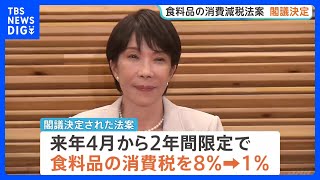
The Japanese government has presented estimates showing how long it would take to implement a reduction in Japan's consumption tax on food products, indicating that cutting the rate to either zero percent or 1 percent would require significant preparation time.

The Japanese government approved a supplementary budget proposal exceeding 3 trillion yen on June 3rd, including the creation of a new contingency reserve aimed at responding to developments in the Middle East and addressing rising energy prices.

The leader of the Democratic Party for the People, Yuichiro Tamaki, suggested on June 2nd that his party may oppose a bill drafted by the Liberal Democratic Party to establish a new criminal offense for desecrating the national flag, arguing that it could unduly restrict freedom of expression.

Japanese Prime Minister Sanae Takaichi held a telephone conversation with Iranian President Masoud Pezeshkian on June 1st, urging Iran to demonstrate maximum flexibility in its ongoing discussions with the United States and expressing hope that an agreement on the nuclear issue can be reached as soon as possible.

Defense Minister Shinjiro Koizumi strongly rejected accusations that Japan is embracing "new militarism," describing such claims as false while delivering a speech at a major regional security conference in Singapore on May 31st.

Defense Minister Shinji Koizumi met with U.S. Defense Secretary Pete Hegseth on May 30th while visiting Singapore for the Asian security forum known as the Shangri-La Dialogue, as the two sides discussed ways to further strengthen the Japan-U.S. alliance and expand defense cooperation.

Prime Minister Sanae Takaichi renewed her determination to resolve the long-standing abduction issue involving North Korea on May 30th, declaring her willingness to pursue a summit meeting with North Korean leader Kim Jong Un as families of the victims gathered in Tokyo to demand the return of their loved ones.

Japan's Defense Minister Shinji Koizumi held the first-ever trilateral meeting with his counterparts from Australia and New Zealand, where the three sides exchanged views on defense cooperation, including the potential export of the Maritime Self-Defense Force's latest frigate design.