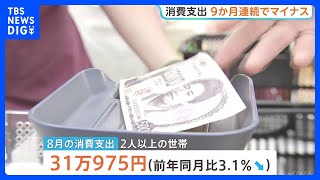
TOKYO - As price hikes spread from fast food to daily necessities and households grapple with rising living costs, the steady depreciation of the yen has emerged as a central driver of inflation, with multiple indicators showing that the currency’s purchasing power has fallen to roughly one-third of its mid-1990s peak, underscoring how three decades of economic stagnation, prolonged monetary easing and renewed fiscal expansion have left Japan far more vulnerable to imported inflation than other major economies.
Big Mac at 500 yen Still Cheap by Global Standards
As price hikes continue across Japan, McDonald’s raised prices again on February 25th, lifting its flagship Big Mac from 480 yen to 500 yen. Even so, Japan’s Big Mac remains relatively inexpensive by international standards.
The Big Mac is sold worldwide with nearly identical ingredients and size, suggesting it should carry the same price everywhere. In reality, differences in currency values mean prices vary widely.
This disparity is measured by the “Big Mac Index,” compiled annually since 1986 by the British economic magazine The Economist, using U.S. prices as the benchmark.
Before the latest increase, a Big Mac in Japan cost 480 yen, while in the United States it was priced at 6.12 dollars, or about 970 yen based on an exchange rate of 1 dollar = 158.54 yen in January 2026.
In effect, the yen’s value against the dollar is roughly half.
According to the latest Big Mac Index in January 2026, Japan ranks 48th out of 54 countries surveyed. Even at the new price of 500 yen, the ranking remains unchanged, underscoring the yen’s weakness.
Yen Strength Down to One-Third Over 30 Years
Other indicators highlight the currency’s decline.
The Bank for International Settlements publishes the real effective exchange rate, which measures purchasing power — in other words, the “strength” of the yen. In January 2026, the index fell to its lowest level since Japan adopted the floating exchange rate system in 1973.
Compared with its peak in 1995, the yen’s strength has dropped to roughly one-third.
The Big Mac Index tells a similar story. In 1995, Japan’s Big Mac cost about twice as much as in the United States, implying that the yen was worth roughly double the dollar at the time — the reverse of today’s situation.
Currency Depreciation Drives Prices Higher in Resource-Dependent Japan
What lies behind what some call “cheap Japan”?
The asset-inflated bubble economy that began around 1986 collapsed in 1991, ushering in decades of low growth and deflation often described as the “lost 30 years.”
In 2013, Abenomics sought to break this cycle. Through “unprecedented monetary easing” and the introduction of negative interest rates, the policy helped correct what had been seen as excessive yen strength at the time. However, the pendulum later swung toward sustained depreciation.
After Takaichi assumed the premiership, advocating “responsible proactive fiscal policy” modeled in part on Abenomics, the yen’s decline accelerated further.
Takaichi has expressed admiration for former British Prime Minister Margaret Thatcher. Yet Thatcher’s approach was rooted not in expansionary fiscal policy but in austerity.
Britain in the 1970s was mired in prolonged stagnation, often referred to as the “British disease,” and required tight monetary policy to stabilize the currency and rebuild the pound. Thatcher, known as the “Iron Lady,” went on to lead a long-lasting administration.
While a weaker currency can benefit export industries, Japan’s heavy reliance on imported resources means depreciation directly feeds into higher prices.
Bill Emmott, former editor-in-chief of The Economist, wrote in a commentary that the top priority for the Takaichi administration should be curbing inflation and promoting yen appreciation.
He added that if the yen remains as undervalued in one or two years as it is now, it would suggest that Japan’s own “Iron Lady” — a reference to Takaichi — has become severely rusted.
Source: TBS