News On Japan

Survey Shows Working-Age Mothers Exercise Only 30 to 40 Minutes a Week

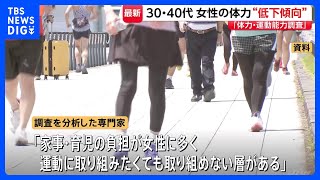
Mar 12, 2026 (News On Japan) - Women in their 20s to 50s—the so-called child-rearing and working-age generation—have significantly shorter exercise times than other age groups, according to a survey by Japan’s Sports Agency.

The survey, conducted last year, found that the median amount of time adults aged 20 and over spend exercising each week was 69 minutes.

Although definitions of "exercise" differ and direct comparisons are difficult, the World Health Organization recommends at least 150 minutes of physical activity per week, meaning the survey’s figure was less than half of that benchmark.

Among all groups, women in their 20s to 50s—many of whom are balancing work and child-rearing—stood out for their particularly low activity levels, with a median weekly exercise time of only about 30 to 40 minutes.

A Sports Agency official said the result may reflect how household chores and childcare responsibilities continue to fall disproportionately on women even as female workforce participation rises. The agency plans to encourage companies and other organizations to create environments that make it easier for women to secure time for exercise.

Source: TBS

News On Japan
POPULAR NEWS

A tropical depression far south of Japan is expected to develop into a typhoon as early as the night of September 15, potentially approaching Okinawa during the Silver Week holiday period before changing course and bringing heavy rain to other parts of the country.

A Japan Air Self-Defense Force Global Hawk unmanned reconnaissance aircraft went missing over international waters about 50 kilometers north of Tottori Prefecture on September 15, with floating debris and oil later found in the area where communications were lost.

GO, Waymo and Nihon Kotsu said they aim to launch Japan's first commercial fully driverless taxi service in Tokyo during 2027, using Level 4 autonomous vehicles that can operate without a driver on board under specified conditions.

Kajima Corp. has unveiled the construction site of KAJIMA TREE, a roughly 60-meter wooden tower being built for the International Horticultural Expo that will open in March 2027.

Climbers who get into trouble on Mount Fuji during the official closed season could be charged for rescue by disaster-prevention helicopters under new safety measures being considered by Yamanashi Prefecture.

MEDIA CHANNELS
         

MORE Education NEWS

Elementary school students in Fukuoka got a hands-on lesson in the importance of taxes on September 11, lifting a 10-kilogram replica of 100 million yen as part of a class designed to show how public money supports society.

Raccoons are increasingly appearing in urban areas of Japan, including residential neighborhoods near Shin-Osaka Station, raising concerns over disease, attacks on people and agricultural damage that reached about 700 million yen nationwide last year.

Japanese 15-year-olds spend an average of 2.3 hours browsing social media during their weekday free time, the shortest amount among 24 countries surveyed, according to data from the Organization for Economic Cooperation and Development.

Renovation work has begun at a hospital in Izumisano, Osaka Prefecture, as the city prepares to introduce a baby hatch for parents unable to raise their children and a confidential birth system that allows pregnant women to give birth without publicly disclosing their identities.

A disaster prevention experiment has shown how quickly a rain-soaked slope can collapse once visible cracks appear, highlighting the need for people in landslide-prone areas to evacuate before conditions become critical as the risk of disasters remains elevated through early next week.

Nearly 60% of Japanese high school students consider learning about different cultures "very important," the highest proportion among Japan, the United States, China and South Korea, according to a survey released by the National Institution for Youth Education.

The number of elderly people in Japan with no relatives to rely on is projected to rise to 4.48 million by 2050, or roughly one in nine seniors, prompting the government to create a new system under revised social welfare laws to support people with daily needs, hospitalization and arrangements after death.

Japan's education ministry unveiled a draft of its new national curriculum guidelines on August 31, placing stronger information education for the AI era and greater flexibility in allocating classroom hours among the central pillars of the major overhaul carried out roughly once every decade.