TAIWAN - A 31-year-old Japanese researcher who moved to an indigenous village in eastern Taiwan four years ago to study the Rukai people has become an active member of the community, helping preserve traditional ceremonies and customs while learning the importance of protecting cultural values that remain unchanged across generations.
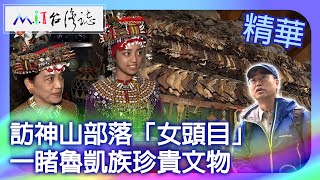
Taiwan is widely known as a popular travel destination, but the island is also home to 17 officially recognized indigenous peoples, each with its own cultural heritage. Among them are the Rukai, whose traditions remain deeply rooted in everyday life despite the spread of modern technology.
In the eastern Taiwanese village of Taromak, home to approximately 1,350 residents, a traditional wedding recently brought the community together for one of its most important celebrations. The ceremony marked the marriage of a Rukai woman and a man from another indigenous group, with hundreds of villagers gathering to honor the couple.
Among those participating was Tenga Hoshino, a 31-year-old Japanese man who relocated to Taromak four years ago to conduct research into Rukai society and culture.
What began as an academic project gradually developed into a much deeper relationship with the community. Fascinated by its traditions, Hoshino joined the village's youth association, where he studies its rules and ceremonial practices while taking part in local events and community responsibilities.
"Culture is something that everyone has worked hard to pass down through everyday life," Hoshino said. "By living together, experiencing things firsthand and sometimes coming into conflict with one another, I am learning from the people here."
Although smartphones, motorcycles and other conveniences of modern life are commonplace in Taromak, important occasions such as weddings transform the village into a setting dominated by traditional customs passed down through generations.
Preparations begin with the groom's family assembling ceremonial marriage gifts, each carrying a particular cultural significance.
"The jars, knives, cooking pots and bedding all have their own cultural meanings," Hoshino explained. "Marriage is extremely important, not only for the families involved but for the entire village."
Hoshino was entrusted with an important responsibility during the ceremony: setting off the firecrackers that signal the beginning of the traditional proceedings.
Following the signal, relatives and members of the groom's party made their way through the village toward the bride's home in a procession lasting approximately 10 minutes.
Upon arrival, the families began an elaborate ritual in which each ceremonial gift was individually inspected and acknowledged, a process that continued for about an hour.
Once the formal proceedings were completed, the celebrations moved to a wedding reception attended by more than 600 people, who gathered to congratulate the newlyweds and share in the festivities.
Children were among those enjoying the occasion, with one young participant enthusiastically describing the celebration as "really, really fun."
Beyond the festivities, such ceremonies serve a broader cultural purpose, bringing together different generations and providing opportunities for villagers to reaffirm their shared identity and ancestral traditions.
The newlyweds emphasized the importance of maintaining these customs. "We are very happy," they said. "These traditions are absolutely necessary. It is only by understanding your roots that you develop a sense of identity."
Throughout the celebrations, Hoshino supported the elaborate proceedings while also volunteering for less visible responsibilities, including cleaning up after the event.
His involvement reflects the close relationship he has developed with Taromak's residents and his belief that preserving a culture requires more than simply documenting its ceremonies.
Hoshino recognizes that traditions cannot remain entirely unchanged as societies evolve, but believes their underlying values must be protected.
"As times change, culture inevitably changes little by little because it is something living," he said. "But even within those changes, there is a core that does not change. It may be something invisible, but I think that is what really matters."
During the conversation, villagers interrupted Hoshino with friendly calls of "Brother! Brother!" illustrating the sense of belonging he has found within the community.
"Things like this are part of it," he said. "I think what really matters is that everyone works together to protect what they value."
Having originally arrived in Taromak as an outside researcher, Hoshino has become one of the people helping sustain its cultural heritage, demonstrating how participation in everyday community life can contribute to passing traditional knowledge and values to future generations.
Source: TBS