News On Japan

American Student Embraces Japanese Culture in Akita

AKITA - An American exchange student with a passion for Japanese culture, from martial arts and tea ceremonies to traditional performing arts, is pursuing her studies at Akita International University in Akita City, drawn by the opportunity to experience Japan's traditions while building close friendships in a smaller community.

Jameson Ketchum, 21, from Arkansas, has been studying at the university since August last year after arriving from Dickinson College in the United States. Her interest in Japan began with manga but gradually developed into a fascination with the country's traditional arts, prompting her to pursue an exchange program.

Before coming to Japan, Ketchum decorated the walls of her college dormitory in the United States with Japanese-inspired artwork, including paper-cut designs and posters featuring traditional Japanese towers, reflecting her growing enthusiasm for the country.

Although Japan offered numerous destinations for overseas study, Ketchum deliberately chose Akita over a major city, believing that a smaller community would provide more opportunities to experience everyday Japanese life and develop meaningful relationships.

"I wanted to study in a smaller town rather than a big city," she said. "Akita has a close-knit community, and Akita International University was particularly attractive because it offered opportunities to build close friendships with Japanese students."

At the university, Ketchum has immersed herself in traditional Japanese culture, taking classes in flower arrangement, kabuki theater, Noh performances and the tea ceremony. During a recent tea ceremony lesson, she carefully prepared matcha using traditional utensils, practicing the precise movements and etiquette associated with the centuries-old custom.

She is also a member of the university's kyudo club, where she practices traditional Japanese archery. Through training with fellow club members, she has been learning not only the technical skills required to shoot a bow but also the discipline and spiritual principles that underpin Japanese martial arts.

Ketchum lives in a student dormitory on campus, sharing a room with Remi Omura, a Japanese student from Shizuoka Prefecture. Omura described her American roommate as considerate, kind and exceptionally tidy.

"She's very kind and thoughtful, and she always keeps our room clean, which I really appreciate," Omura said.

Beyond her academic interests, Ketchum has enthusiastically embraced contemporary Japanese pastimes, particularly capsule toy vending machines, commonly known as gachapon. Omura said Ketchum often tries the machines several times whenever they go out together, adding that capsule toys have become a popular hobby among students.

Another favorite is onigiri, the Japanese rice ball, which Ketchum enjoys for its simplicity, convenience and variety of fillings.

"I really love onigiri," she said, explaining that she particularly likes Japanese rice, especially Akita Komachi, a variety closely associated with the prefecture. Her favorite filling is salmon.

"Onigiri is compact and simple, and there are so many different kinds. It's also fun to make," she said.

Ketchum has also developed an appreciation for Japanese dining etiquette, including the custom of saying "itadakimasu" before eating and "gochisosama" after finishing a meal.

"In America, we just start eating without saying anything like 'itadakimasu,' and we don't say 'gochisosama' when we finish," she said. "I think it's a wonderful part of Japanese culture."

Her exchange program at Akita International University is scheduled to continue until July, but Ketchum hopes her relationship with Japan will extend well beyond her studies.

After returning to the United States, she plans to visit Japan repeatedly to explore regional festivals, experience more traditional customs and discover places beyond Akita.

"I really love Japanese food, and there are so many things here that we don't have in America, so I want to try as much as possible," she said. "I also want to travel to many different places outside Akita."

For Ketchum, an initial interest in Japanese manga has developed into a broader appreciation of the country's traditions, communities and everyday customs, illustrating how Japanese popular culture can become a gateway to deeper cultural exchange.

Source: FNN

News On Japan
POPULAR NEWS

A bear believed to be a mother that has been roaming residential neighborhoods in Maebashi, Gunma Prefecture, since November 17 was spotted again by a police officer early on November 21, prompting authorities to prepare for its capture as residents entered a three-day holiday weekend following days of repeated sightings, school closures and a frightening encounter involving a high school student.

Residents of Okinawa's remote islands are struggling to secure airline tickets as travelers seeking to accumulate loyalty points flood short-haul flights, with some boarding as many as 12 planes a day without stopping to sightsee, leaving essential routes fully booked and prompting calls for Japan Airlines (JAL) to reconsider its promotional campaign.

Traditional matchmaking is making a comeback in Japan as younger generations increasingly seek safer and more efficient ways to find marriage partners, with growing frustration over dating apps encouraging a return to arranged introductions once common among their parents and grandparents.

Nepalese police have detained 35 Japanese nationals and five Chinese nationals suspected of involvement in organized fraud operations at a mountain resort hotel near Kathmandu, where the group had allegedly established a sophisticated base equipped with a mock police station, photography studios and dozens of livestreaming booths.

A powerful surge of midwinter cold air is bringing heavy snow, strong winds and freezing temperatures to much of Japan ahead of the three-day holiday weekend beginning November 21st, with authorities warning of dangerous road conditions, possible landslides and traffic disruptions as snow and heavy rain continue along the Sea of Japan coast through the morning of November 22nd.

MEDIA CHANNELS
         

MORE Education NEWS

Public elementary and junior high schools in Saga Prefecture have faced teacher shortages for eight consecutive years, forcing educators to take on additional responsibilities and work long hours as schools struggle to fill vacancies, with 45 teaching positions remaining unfilled in the 2024 academic year.

An American exchange student with a passion for Japanese culture, from martial arts and tea ceremonies to traditional performing arts, is pursuing her studies at Akita International University in Akita City, drawn by the opportunity to experience Japan's traditions while building close friendships in a smaller community.

A new immersive digital art museum from South Korea is opening in Chita City, Aichi Prefecture, on November 18, highlighting the deep cultural ties between South Korea and the Nagoya region, where a historic Korean community has helped shape local culture since the end of World War II.

A new Japanese slang term describing children and young people addicted to the instant stimulation of social media has been nominated for Japan's 2026 Buzzword of the Year, drawing attention to growing concerns that endless short videos are undermining concentration, disrupting sleep, and creating addictive behavior among adults as well as children.

Japan now has only one sea otter remaining in captivity following the death of Kira, an 18-year-old female at Toba Aquarium in Mie Prefecture on November 5th, leaving 22-year-old Mei as the country's last surviving aquarium sea otter after a population that once exceeded 100 animals steadily declined.

Japan's Children and Families Agency unveiled its first national guidelines on November 10th for parental involvement in children's internet use, dividing those aged 0 to 18 into six developmental stages as the government considers tighter regulations on social media platforms to protect young people from online bullying, exploitation, and other growing risks.

A 31-year-old Japanese researcher who moved to an indigenous village in eastern Taiwan four years ago to study the Rukai people has become an active member of the community, helping preserve traditional ceremonies and customs while learning the importance of protecting cultural values that remain unchanged across generations.

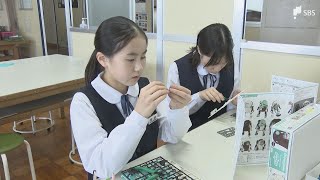
Shizuoka City, which promotes itself as the "World Capital of Models," is using plastic model kits as teaching materials in junior high schools, hoping to cultivate future leaders in the model industry.