News On Japan

Why Korean Culture Has Deep Roots in Nagoya’s Old Koreatown

NAGOYA - A new immersive digital art museum from South Korea is opening in Chita City, Aichi Prefecture, on November 18, highlighting the deep cultural ties between South Korea and the Nagoya region, where a historic Korean community has helped shape local culture since the end of World War II.

Arte Museum Nagoya is the latest addition to a growing international network of digital art museums created by South Korean artists. The concept debuted on South Korea's Jeju Island in 2020 and has since expanded to eight locations worldwide, including New York and Dubai.

Chita City was selected as the museum's first location in Japan because of its history, cultural attractions and convenient access from Nagoya Station and Chubu Centrair International Airport.

The opening has also drawn attention to the longstanding relationship between South Korea and Aichi Prefecture, particularly Nagoya, where Korean food, music, cosmetics and other cultural products have become increasingly popular.

Eiji Isono, dean of the Faculty of International Studies at Nagoya University of Commerce and Business, said the popularity of Korean culture in Japan reflects the close geographical and historical relationship between the two countries.

"South Korea and Japan are neighbors with a long history of economic and cultural exchange," Isono said. "Because they are geographically close, they naturally influence each other. This is known as the geographical proximity effect, and the relationship between Japan and South Korea is a typical example."

In Nagoya, however, the connection goes beyond the recent popularity of K-pop, Korean beauty products and Korean cuisine.

According to Isono, the area west of Nagoya Station has long been home to what is known as an "old Koreatown," reflecting the presence of a substantial ethnic Korean community dating back to the postwar period.

"West of Nagoya Station is a Koreatown that has existed for many years," Isono said. "After World War II, the area was home to the city's largest postwar market, and historically, many ethnic Koreans living in Japan were concentrated there."

The market and surrounding community helped establish a Korean cultural presence that gradually became part of Nagoya's wider urban identity.

Isono said this process of integration explains why Korean culture has maintained such a strong presence in the city over successive generations.

"Korean culture took root during the postwar period because it was maintained while successfully blending into the city of Nagoya," he said.

Over the years, Korean restaurants, music, cosmetics and consumer goods have become familiar parts of everyday life in the region. The arrival of Arte Museum Nagoya now introduces another dimension of Korean creativity, expanding its influence beyond food, entertainment and retail into contemporary digital art.

Isono believes the museum reflects a broader shift in how Japanese audiences encounter and appreciate Korean culture.

"We already have Korean cosmetics, general merchandise and food culture, and now a new museum is opening," he said. "I think we are entering an era in which Korean culture will increasingly be accepted and enjoyed across many different fields, both in new forms and in its original form."

The museum's opening represents another stage in a relationship that has developed over decades, connecting Nagoya's historic Korean community with the global expansion of South Korea's contemporary cultural industries.

Source: CBC

News On Japan
POPULAR NEWS

Japanese Prime Minister Sanae Takaichi joined U.S. President Donald Trump and the leaders of Australia and India for a Quad summit in Manila on November 17th, where Trump described the four countries' relationships as among the world's most important partnerships and drew attention to Takaichi's toughness during an exchange with reporters.

Two aircraft believed to be Russian briefly violated Japanese airspace over Okinoshima Island in Fukuoka Prefecture on November 17th before flying between Okinawa and Taiwan toward the Pacific Ocean, prompting Japan's defense minister to condemn the incursions as a serious violation of national sovereignty.

Japan's Fugaku supercomputer has been temporarily shut down following unauthorized external access to a system used to connect to the facility, raising concerns that user information may have been leaked, the Riken research institute announced on November 16th.

A 42-year-old man has been arrested on suspicion of murdering former fashion model Kanako Kawabata, 36, who was found dead in her apartment in Tokyo's Ikebukuro district in July, with investigators believing she was repeatedly beaten across her body, leaving her with severe head injuries and multiple fractured ribs.

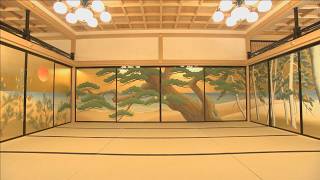
A historic guest hall at Kodaiji Temple in Kyoto, closely associated with Nene, the wife of warlord Toyotomi Hideyoshi, has been reconstructed for the first time in approximately 240 years, restoring a lavish space once used by Hideyoshi to entertain feudal lords.

MEDIA CHANNELS
         

MORE Education NEWS

A new immersive digital art museum from South Korea is opening in Chita City, Aichi Prefecture, on November 18, highlighting the deep cultural ties between South Korea and the Nagoya region, where a historic Korean community has helped shape local culture since the end of World War II.

A new Japanese slang term describing children and young people addicted to the instant stimulation of social media has been nominated for Japan's 2026 Buzzword of the Year, drawing attention to growing concerns that endless short videos are undermining concentration, disrupting sleep, and creating addictive behavior among adults as well as children.

Japan now has only one sea otter remaining in captivity following the death of Kira, an 18-year-old female at Toba Aquarium in Mie Prefecture on November 5th, leaving 22-year-old Mei as the country's last surviving aquarium sea otter after a population that once exceeded 100 animals steadily declined.

Japan's Children and Families Agency unveiled its first national guidelines on November 10th for parental involvement in children's internet use, dividing those aged 0 to 18 into six developmental stages as the government considers tighter regulations on social media platforms to protect young people from online bullying, exploitation, and other growing risks.

A 31-year-old Japanese researcher who moved to an indigenous village in eastern Taiwan four years ago to study the Rukai people has become an active member of the community, helping preserve traditional ceremonies and customs while learning the importance of protecting cultural values that remain unchanged across generations.

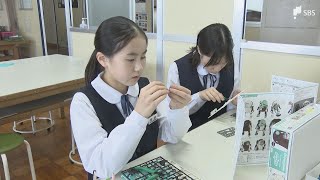
Shizuoka City, which promotes itself as the "World Capital of Models," is using plastic model kits as teaching materials in junior high schools, hoping to cultivate future leaders in the model industry.

A Japanese slang term describing children hooked on the instant stimulation of short videos and social media has been nominated for the country's 2026 New Words and Buzzwords Awards, highlighting growing concerns about declining attention spans and the pressure to consume digital content at ever-increasing speeds.

Delivery rooms in Japan are some of the safest with fewer than two infant deaths per 1,000 births. As a result, many families may assume that complications during delivery are unlikely to happen to them.