Mar 23, 2026 (News On Japan) - More people than ever nowadays are open about their mental health, but it doesn't mean that the stigma around mental health symptoms has disappeared completely.

People who try to figure things out by completing childhood trauma quizzes can still be viewed as weak or tied to the past.
In reality, childhood trauma tests are often healthy alternatives to avoiding stigma or getting help that is unavailable otherwise. They can also simply satisfy the curiosity that is inherent in people. Tests can help answer the question, "Why am I the way I am?"
At the same time, skepticism is important. Online self-assessments should never replace therapy. One exemplary test is that of Breeze, a mental health app. This review will explore the benefits of childhood trauma quizzes, using the reviews of the Breeze trauma test.
6 Benefits of Self-Assessments (From Breeze Trauma Reviews)
According to the CDC, approximately 1 in 6 people experienced at least 1 Adverse Childhood Experience (ACE) [1]. The truth is that each subsequent ACE increases the likelihood of the next one. It means that if a child experienced something traumatic once, they are more likely to experience other adverse events.
Childhood trauma isn't just something that can be overlooked. At least 5 out of 10 leading causes of death are associated with the consequences of childhood trauma, according to the CDC. Hence, it’s no surprise that try Breeze reviews often indicate almost physical relief, thanks to finally knowing and accepting what happened to users.
But how exactly can childhood trauma tests impact us so profoundly? Here are 6 ways supported by Breeze trauma reviews.
1. They Increase Self-Awareness
One Breeze user wrote, "Very thorough, very detailed, and easy to understand. I come from a weird background, and this app helped me understand who I am, rather than who I was" [2].
It seems this user realized that their past doesn't determine their present or future. This realization can be extended to important ideas: our mistakes don't define our personality, and one situation doesn't summarize us wholly as a person.
80% of Breeze users report feeling more self-aware [2]. But how does this actually help them in routine? Studies say that self-awareness can be useful for [3]:
- Emotional regulation.
- Deeper connections due to empathy.
- Increased self-care, hence, better physical health.
- Stress prevention.
- Self-confidence.
2. They Determine Risk of Mental Health Conditions
Childhood trauma tests cannot diagnose mental health conditions, but they can highlight risk factors associated with anxiety, depression, PTSD symptoms, or attachment difficulties.
Adults who experienced 4+ ACEs were about [4]:
- 4.6 times more likely to have had a depressed mood in the past year.
- 12.2 times more likely to have ever attempted suicide.
- 10 times more likely to develop anxiety.
Early screening can prevent these and give users a chance to seek support. It simply creates an opportunity for earlier intervention and more informed conversations with professionals.
3. They Improve Therapy Outcomes
Many users reported that Breeze Wellbeing was a pivotal instrument in their therapy. Since therapy often requires preparation and completing "homework," Breeze becomes a perfect platform for this.
When talking about childhood trauma quizzes, they give users an understanding of what could've happened. They reflect on what feels most true or particularly itchy and bring this to the therapist's office. Both parties benefit because they don't waste time on small talk and "Nothing really happened this week," which is usually not true.
One reviewer of the Breeze trauma test noted, "So far this app is one of the best I have found so far to help heal from what I experienced as a child..."
4. They Decrease Shame
Childhood trauma can instill a deep sense of shame. Shame for being in that situation, not telling everyone, going along with it, not doing anything about it, etc. Childhood trauma quizzes teach an important lesson: what happened to you in childhood isn't your fault, and all you did as a child was to survive.
One try Breeze review summarizes this revelation: "They [Breeze] make me understand that some of me isn't my fault..." Shame thrives in silence. If not shared somewhere, people may misinterpret their coping mechanisms as personal flaws.
A structured childhood trauma test reframes those patterns due to psychoeducation. A high-quality test will explain where certain habits came from and, most importantly, how to adapt them if they bother you.
5. They Help Build Better Relationships
Early trauma can disrupt the natural process of building attachment to primary caregivers. This, in turn, may lead to the development of insecure attachment styles (anxious, dismissive, and disorganized). This cycle usually ends in the inability to build healthy relationships and an inherent belief that there's something wrong with you.
Improved self-awareness lets the Breeze trauma test reviewer understand the weaknesses in their style of bonding with people. Is it the absence of boundaries? Or expectations that their partner will read their minds? Childhood trauma tests usually pinpoint these habits.
As one reviewer shared, "Breeze has really helped me gain a different perspective and new understandings within myself to help me become a better person for myself & others."
6. They Decrease the Likelihood of Risky Behaviors
People who experienced ACEs are 7 times more likely to consider themselves alcoholics [4]. It's not the alcohol they are drawn to, but quick dopamine and detachment from painful reality.
That's why the substance of use can be any type of drug, gambling, reckless driving, doomscrolling... Anything that brings a big rush of emotions for a short time.
Childhood trauma tests are not going to fix an addiction, but what they can do is highlight susceptibility. With this knowledge that you may be at a higher risk of addiction, you can ask for help and develop better coping mechanisms.
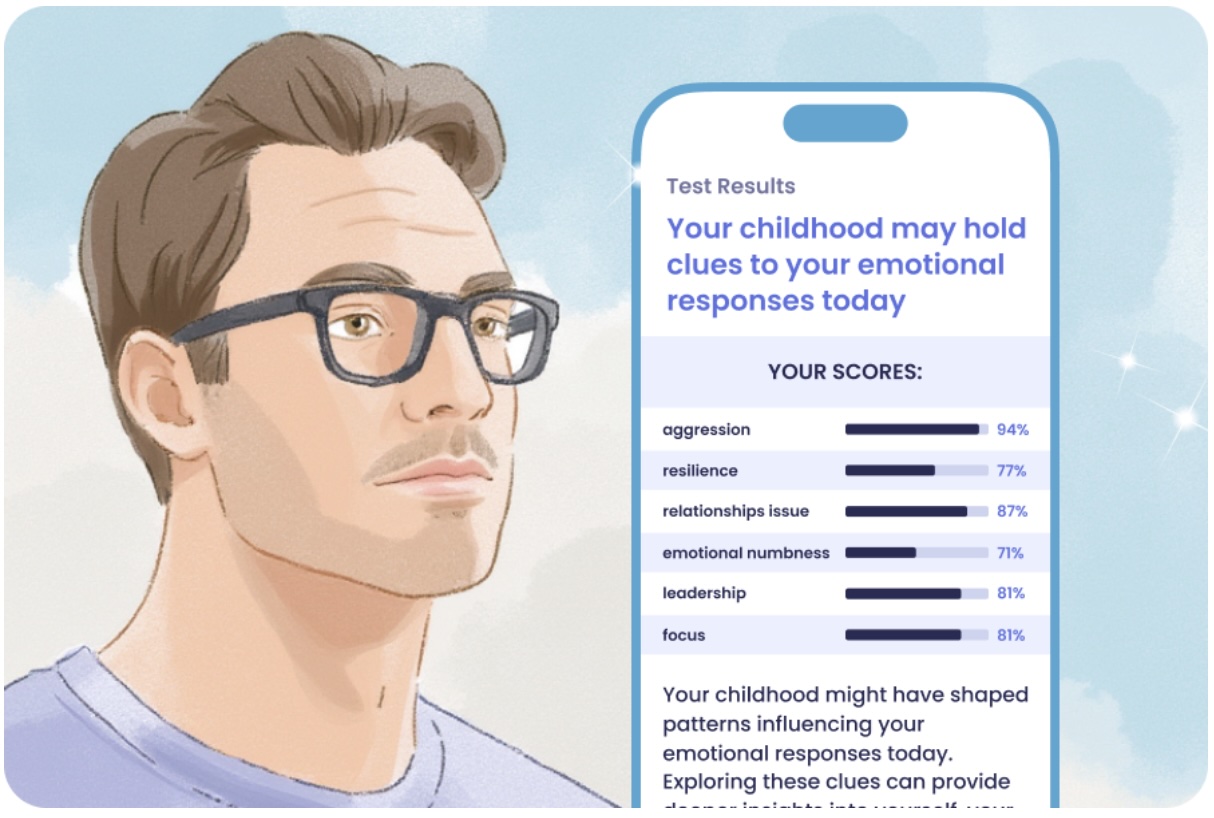
What Do High-Quality Childhood Trauma Quizzes Look Like?
If you decide to take a childhood trauma quiz, approach the process thoughtfully. Here are the key criteria to look for:
- Created or reviewed by mental health professionals.
This is an unskippable step to ensure that your feelings won't get manipulated. Look for names, credentials, or links to professional profiles.
- Based on evidence-informed frameworks.
High-quality tests often draw from established models. For example, the Breeze trauma test uses the ACEs framework and the Childhood Trauma Questionnaire (CTQ). These are your go-to frameworks when choosing the test.
- Balanced results.
Ethical tools avoid worst-case language. A red flag is any test claiming 100% accuracy or presenting results as a diagnosis.
- Explores both past experiences and present impact.
Strong quizzes do not get stuck in the past. A significant part of the questions should be devoted to the present: coping mechanisms, relationship habits, and self-esteem.
Reviews of the Breeze trauma test indicate that it's built similarly: exploring emotions, physical symptoms, disturbing thoughts, and relationship struggles.
- Clear and accessible language.
If questions are confusing or overly technical, it limits honest answers. A good assessment uses wording that is easy to understand without requiring clinical knowledge.
- Transparent disclaimers.
Responsible childhood trauma quizzes include disclaimers, saying that they do not replace therapy. They encourage further professional support rather than positioning themselves as a final answer.
More About Breeze
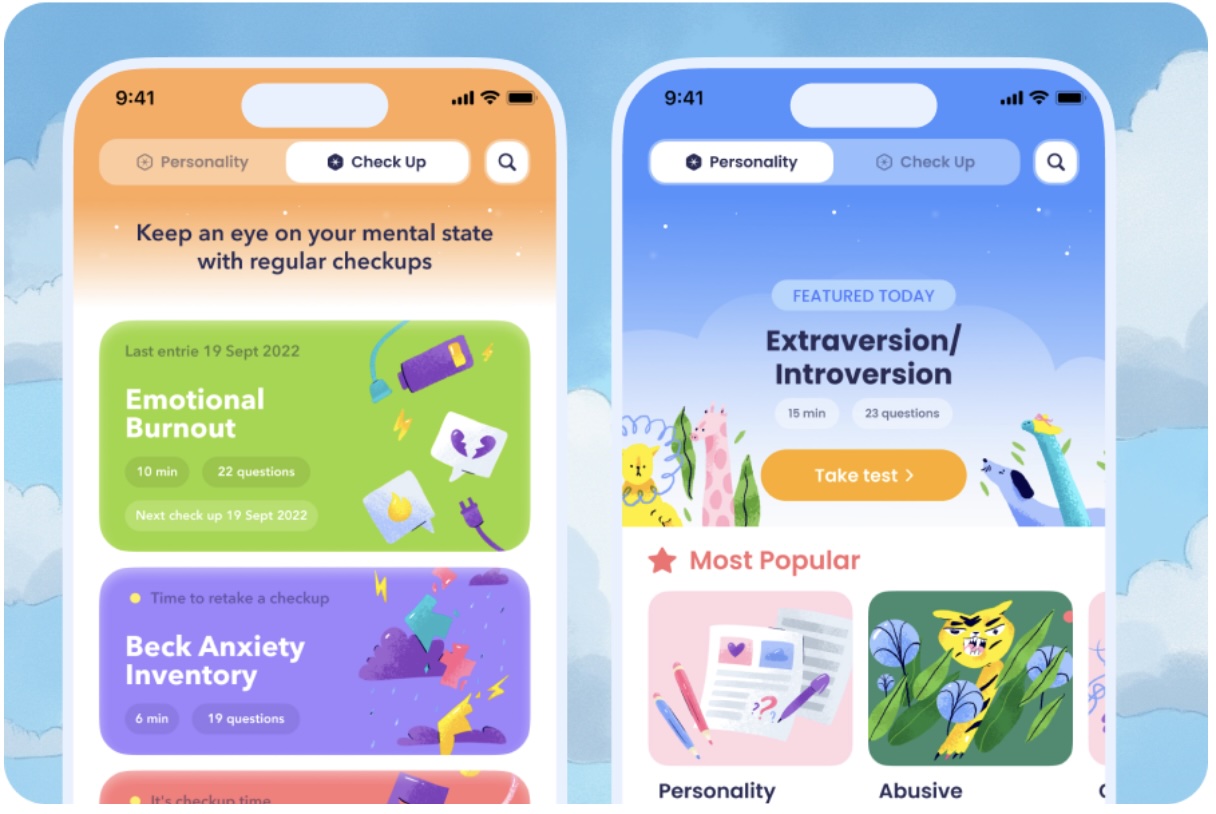
Breeze is a mental health and self-discovery app. The app was downloaded more than 14 million times, with a rating of 4.8/5.0.
Breeze's childhood trauma test is one of the most credible and popular for a reason. There are even more self-discovery quizzes within the app: attachment style, narcissist impact, love languages, etc. Overall, over 30 quizzes!
Besides quizzes, Breeze Wellbeing also offers:
- Journaling prompts.
- Mood tracker and analytics.
- Habit builder.
- Mindfulness exercises.
- Community feature.
- Psychoeducation (guides, insights, blog).
Breeze trauma reviews indicate that the app is highly customizable and focuses on personalized insights that make it a perfect choice for those who need complementary mental health support or an incentive to jumpstart self-exploration.
Sources:
1. Adverse Childhood Experiences (ACEs): Preventing early trauma to improve adult health. CDC. August 2021.
2. All reviews in this article are derived from: Breeze reflections: What our users say. Breeze Wellbeing. 2026.
3. The Mediating Role of Health Consciousness in the Relation Between Emotional Intelligence and Health Behaviors. Frontiers in Psychology. November 2018.
4. Prospective longitudinal associations between adverse childhood experiences and adult mental health outcomes: a protocol for a systematic review and meta-analysis. Systematic Reviews. September 2023.