News On Japan

Tokai and Kanto Enter Rainy Season as Heavy Rain Threatens Western Japan

TOKYO - Japan's Meteorological Agency announced on June 7th that the rainy season is believed to have begun in the Tokai and Kanto-Koshin regions, marking the seasonal shift to wetter weather across a broad area of the country.

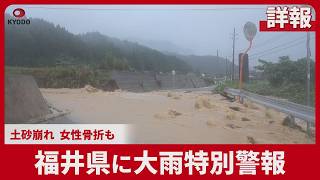
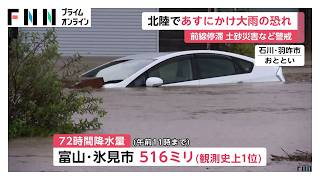
Atmospheric conditions have become highly unstable, particularly in western Japan, due to the influence of a seasonal rain front and a low-pressure system. Heavy rainfall is expected to continue through noon on June 8th, with rainfall totals forecast to reach up to 200 millimeters in Shikoku.

Authorities are urging residents to remain vigilant for landslides, rising river levels, flooding in low-lying areas, and other weather-related hazards associated with the prolonged rain.

According to the agency, the start of the rainy season in the Tokai region came one day later than the annual average, while the Kanto-Koshin region entered the season at roughly the usual time.

Compared with last year, when the rainy season arrived significantly earlier than normal, this year's onset was 21 days later in Tokai and 16 days later in Kanto-Koshin.

Rain is expected to affect parts of eastern Japan early next week, particularly on June 9th, although forecasters say there could be periods of sunshine afterward as the rainy season temporarily eases. However, localized downpours remain possible in inland and mountainous areas.

Meteorologists also warn that the Pacific high-pressure system south of Japan is expected to strengthen during June, increasing the likelihood that the seasonal rain front will remain stalled near Honshu. As a result, eastern Japan's Pacific coast could face periods of heavy rain, especially during the second half of June, raising the risk of flooding and other weather-related impacts.

Source: FNN

News On Japan
POPULAR NEWS

The family of James "Weston" Higginbotham, a 20-year-old American student who went missing while traveling in Kyoto, announced on June 7th that he has been found dead after a volunteer search-and-rescue group located his body in a mountainous area outside the city.

Japan's Meteorological Agency announced on June 7th that the rainy season is believed to have begun in the Tokai and Kanto-Koshin regions, marking the seasonal shift to wetter weather across a broad area of the country.

Expectations for Japan are unusually high heading into the 2026 World Cup, with the team now aiming not merely to reach the knockout stage but to finally break through the Round of 16 and advance to the quarterfinals for the first time.

Residents in Nara Prefecture are celebrating after UNESCO's advisory body recommended the archaeological complex known as the Asuka-Fujiwara Ancient Capitals for inscription as a World Heritage site, bringing the historic birthplace of Japan's ancient state one step closer to international recognition.

A tropical depression is expected to move northward this weekend and could bring another round of heavy rain to parts of Japan, following a week in which Typhoon Jangmi (Typhoon No. 6) caused significant rainfall and left some areas vulnerable to further weather-related damage.

MEDIA CHANNELS
         

MORE Travel NEWS

Residents in Nara Prefecture are celebrating after UNESCO's advisory body recommended the archaeological complex known as the Asuka-Fujiwara Ancient Capitals for inscription as a World Heritage site, bringing the historic birthplace of Japan's ancient state one step closer to international recognition.

Japan could face a more active typhoon season than usual in 2026, with private weather forecaster Weathernews predicting around 28 typhoons to form during the year—above the long-term average of 25.1—and warning that approximately 14 could approach Japan, increasing the risk of weather-related disruptions across the country.

Tourists are once again taking to the waters of the Kitayama River along the borders of Wakayama, Mie, and Nara prefectures, where a popular traditional rafting experience recreates the historic practice of transporting mountain timber by raft from Kitayama Village downstream to Shingu City.

A newly formed tropical depression in the South China Sea could bring another round of heavy rain to western Japan as it interacts with the seasonal rain front, meteorologists have warned, only days after Typhoon Jangmi (Typhoon No. 6) caused widespread damage across the country.

A bear that injured four people in Fukushima City escaped despite efforts to capture it using tranquilizer darts and box traps, prompting authorities to urge residents to remain on high alert.

Typhoon Jangmi (Typhoon No. 6) swept across Japan on June 3rd, bringing record-breaking rainfall, widespread flooding, landslides, transport disruptions, and powerful winds, while prompting Tokyo's first-ever issuance of a Level 4 danger alert under the country's new weather warning system.

A section of wall plaster and part of a roof eave were found damaged at Himeji Castle, the UNESCO World Heritage site in Hyogo Prefecture, on June 4th, with officials investigating whether strong winds from Typhoon Jangmi (Typhoon No. 6) were responsible.

A young Japanese macaque named Punch-kun has captured hearts around the world at a zoo near Tokyo, but the animal's growing popularity is now creating unexpected challenges, particularly after an American prankster dressed in a yellow suit entered the monkey enclosure, prompting renewed concerns over animal welfare and visitor behavior.