News On Japan

Currency Pairs to Trade During the Tokyo Session: A Guide for Beginner Forex Traders

Many beginner forex traders often frown upon the Tokyo trading session because of its low trading volume and liquidity levels. However, it can be a gold mine if you know which currencies to trade.
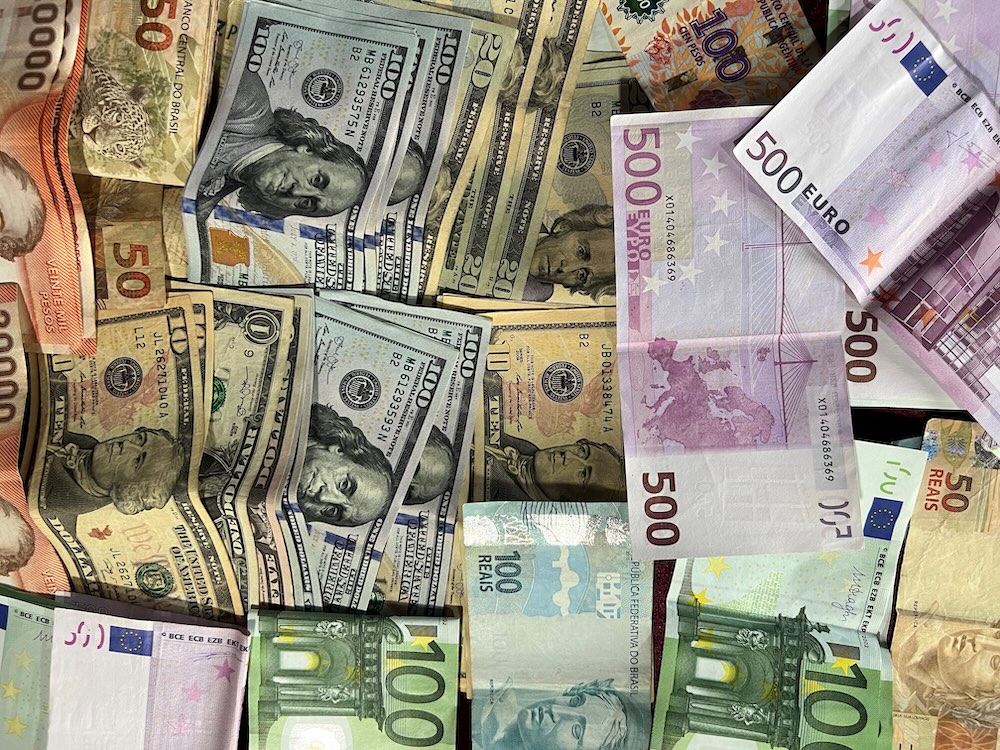
Currency Pairs to Trade During the Tokyo Session: A Guide for Beginner Forex Traders

For beginner forex traders, choosing the right currency pairs is just as important as developing a sound trading strategy. In this guide, we explore the top currency pairs to trade during the Tokyo session.

USD/JPY

The USD/JPY currency pair is regarded as the best pair to trade during the Tokyo session. It is one of the most liquid currency pairs, with liquidity levels increasing as Japanese banks and exporters enter the market. The high liquidity reduces the likelihood of erratic price movements.

Moreover, high liquidity leads to lower spreads, which make the USD/JPY pair more cost-effective to trade. The USD/JPY pair also responds quickly to Japanese and US economic news. The pair is also more predictable than many exotic or minor currency pairs, which makes it easier to trade.

EUR/JPY

Although many stakeholders and investors from Europe aren’t active during the Tokyo session, EUR/JPY still experiences noticeable movement. This often occurs because of active trading in the Japanese yen.

Price changes in the EUR/JPY pair are driven by changes in market sentiment, global risk appetite, and Japanese economic data. Now, compared to the USD/JPY, this pair often exhibits larger daily price swings and greater volatility.

While the increased volatility can create attractive profit opportunities, it also increases risk. As a beginner forex trader, you should trade smaller position sizes until you master the pair’s behavior.

AUD/JPY

Which currency pairs are traded at Sydney and Tokyo? The AUD/JPY is one of the most actively traded currency pairs during the Asian trading session. This happens because both Australia and Japan are located within the same regional trading hours.

Of all the currency pairs to trade during the Tokyo session, the AUD/JPY tends to develop clearer trends. As a result, it is attractive for traders on Weltrade who know how to use trend-following strategies.

NZD/JPY

This currency pair also pops up as one of the top currency pairs to trade during the Tokyo session. However, its trading volume is slightly lower than those of other currency pairs mentioned in this article.

According to many experienced traders, NZD/JPY offers opportunities similar to AUD/JPY while often displaying smoother price action. Thanks to its moderate volatility, you shouldn't worry too much about rapid and sudden price fluctuations.

AUD/USD

Although not as popular as the USD/JPY, this pair is still a favorite among many traders during the Tokyo trading session. It also ranks as the most actively traded currency pair because the Australian financial markets are open during this period.

The AUD/USD pair is influenced by movements and news from the Chinese markets, thanks to the close trade ties between Australia and China. The pair offers high liquidity and tighter spreads, with moderate volatility.

Wrapping up

The USD/JPY pair still carries the day as "currency pairs to trade during the Tokyo session." However, other pairs such as AUD/USD, NZD/JPY, and AUD/JPY offer excellent opportunities when Australian or New Zealand economic data is released.

News On Japan
POPULAR NEWS

Typhoon No. 15 (Chan-hom) is increasingly likely to make landfall between Fukushima and Ibaraki prefectures on the Pacific coast of eastern Japan from the evening through the night of August 11, after moving northwest over waters east of Japan at about 15 kilometers per hour as of 9 a.m. on August 10.

Raccoons are increasingly invading homes across Japan, damaging roofs and wiring, contaminating buildings with large amounts of urine and feces, and raising concerns over agriculture, native wildlife and the spread of disease as their population continues to expand.

Nagasaki marked the 81st anniversary of the U.S. atomic bombing on August 9 with a memorial ceremony near the hypocenter, where Mayor Shiro Suzuki declared nuclear weapons an "absolute evil" and called on the Japanese government to uphold its Three Non-Nuclear Principles.

Transport services were gradually returning to normal on August 9 after Typhoon No. 13 caused widespread cancellations and shutdowns across Okinawa, although air travel remained disrupted as airlines worked to restore schedules and accommodate passengers stranded during the opening days of Japan's busy Obon holiday period.

Typhoon No. 13 was moving slowly west on the night of August 8 and was expected to approach the Chinese mainland by the night of August 9, but Okinawa, Amami and parts of southern Kyushu remained at risk from strong winds, intermittent heavy rain and dangerous seas even as the storm's center moved farther away.

MEDIA CHANNELS
         

MORE Business NEWS

A repeat of the sharp yen appreciation seen in the summer of 2024 is unlikely under current conditions, with persistently high U.S. interest rates and continued structural pressure on Japan's currency making another rapid surge difficult, according to UBS wealth management chief investment officer Daiju Aoki.

Japanese companies delivered a wave of strong earnings on August 7, with Fujikura, Recruit Holdings, INPEX and several other major groups raising forecasts as artificial intelligence investment, higher resource prices and resilient consumer demand lifted profits.

Tokyo stocks ended slightly lower on August 7, with the Nikkei 225 closing at 65,606.71, down 76.55 points, or 0.12%, as selling in chip-related and artificial intelligence-linked shares outweighed solid buying in the broader market and a late recovery led by Fujikura.

Nippon Steel has completed a new production line at its Nagoya Works after investing about 300 billion yen, as Japan's largest steelmaker seeks to expand production of high-performance steel products primarily for automakers.

Hokkaido's minimum wage is expected to rise by 56 yen to a record 1,131 yen per hour in October, entering the 1,100-yen range for the first time, but workers and business owners are concerned that tax and social insurance thresholds could lead employees to limit their hours.

The average summer bonus paid by major Japanese companies rose above 1 million yen for the first time, reaching a record 1,042,537 yen as strong corporate earnings and substantial wage increases lifted employee compensation.

Japan's government and the Bank of Japan conducted a record 6.2787 trillion yen yen-buying, dollar-selling intervention on April 30, the Finance Ministry said on August 7.

Tokyo stocks diverged on August 6, with the Nikkei 225 closing at 65,683.26, down 617.18 points, or 0.93%, as selling in artificial intelligence and semiconductor-related heavyweights outweighed broad gains across the wider market.