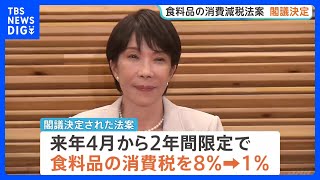
TOKYO - Prime Minister Sanae Takaichi moved on July 30 to turn food-tax relief from a campaign promise into government policy, instructing the ruling Liberal Democratic Party to proceed with a temporary cut in the sales tax on food as the Bank of Japan began a policy meeting that could shape the next phase of Japan’s currency, inflation and fiscal debate.
The plan would lower the consumption tax rate on food and soft drinks from 8% to 1% for two years starting in April 2027. The government is expected to finalize the details in early August and submit related legislation during an extraordinary Diet session in the autumn.
Takaichi said the measure is intended to ease the burden on households facing higher food prices, while the government will seek to avoid issuing deficit-financing bonds by using surplus tax revenue. That pledge is politically important because the tax cut is arriving at a time when investors are already questioning whether the administration can combine household relief, long-term investment and fiscal discipline.
The food-tax cut gives Takaichi a visible response to her sharp fall in public support. Her approval rating dropped to 57% in July from 69% in June, with rising living costs and the weak yen weighing on voter sentiment. For households, the pressure is immediate: imported food, fuel and raw materials have become more expensive as the yen trades near its weakest levels in about 40 years.
The proposal also shows how the administration’s political agenda has shifted. Takaichi began the summer trying to define her government around a 370 trillion yen public-private investment roadmap for strategic industries such as artificial intelligence, semiconductors, shipbuilding, energy, space and quantum technology. By the end of July, however, the main political test had become whether she could respond to household inflation without unsettling markets further.
That balance will be difficult. A food-tax cut is simple to explain and directly connected to daily living costs, but it could cost the government several trillion yen a year. Even if the administration uses surplus revenue rather than new deficit bonds, investors will want to know whether the funding is temporary, credible and insulated from future political pressure.
The two-year limit is meant to show restraint, but it creates its own political risk. Once the rate falls to 1%, restoring it to 8% in April 2029 could be attacked as a tax increase. Opposition parties are likely to argue that the government is offering short-term relief while creating a future burden for households.
The timing is also vulnerable. A start date of April 2027 gives retailers, tax authorities and businesses time to prepare, but it allows critics to say the government is moving too slowly. Some opposition parties have called for faster cash benefits, particularly for low- and middle-income households, arguing that direct payments would reach struggling families sooner than a tax-system change.
The government appears to be considering targeted benefits alongside the tax cut, especially for lower-income households. That could help blunt criticism that the measure is too slow or insufficiently focused, but it would also increase the need for a clear fiscal explanation.
The Bank of Japan meeting gives the issue wider significance. The central bank began its July 30-31 meeting with markets expecting it to keep the policy rate at 1%, after raising rates in June to the highest level in more than three decades. The main focus is not whether the BOJ hikes this week, but how strongly it signals the possibility of further increases later this year.
The BOJ faces growing pressure to prove that it will not fall behind inflation. The weak yen, higher energy costs, global supply pressures and wage growth have kept attention on whether Japan’s central bank may need to move from a cautious normalization stance toward a more active inflation-fighting posture.
For Takaichi, that creates a direct political problem. A more hawkish BOJ could help support the yen and reduce import-driven inflation, but it would also raise borrowing costs for the government, businesses and households. A cautious BOJ could preserve more favorable investment conditions, but it may allow the yen to weaken further and intensify public frustration over prices.
The government has spent recent weeks trying to reassure markets that it respects BOJ independence. Earlier wording in its economic blueprint raised concern that the administration wanted closer coordination with the central bank to support its growth strategy. The final version clarified that specific monetary policy tools remain under the BOJ’s authority.
Finance Minister Satsuki Katayama has also stressed that the government’s relationship with the BOJ is normal and smooth. Her comments were designed to calm fears that the administration was pressuring the central bank to delay rate hikes. The food-tax plan now complicates that reassurance because it adds a new fiscal measure just as the BOJ weighs how to respond to inflation risks.
The yen remains the clearest signal of market confidence. If investors believe the tax cut is fiscally manageable and the BOJ remains independent, the government may be able to contain pressure. If the plan is seen as another step toward expansionary fiscal policy without clear funding, the yen could weaken further and bond yields could rise again.
That would deepen Takaichi’s political difficulty. A weaker yen would make imported food and energy more expensive, reducing the benefit of the tax cut. Higher bond yields would raise the cost of financing government policy, making the administration’s long-term investment roadmap harder to defend.
The situation has become a test of sequencing. Takaichi must show households that relief is coming, reassure investors that the budget remains credible, and avoid appearing to influence the BOJ as it prepares its message on rates and inflation. Each objective is politically necessary, but each creates tension with the others.
The opposition is likely to frame the tax cut as evidence that Takaichi is reacting to falling approval ratings rather than presenting a coherent cost-of-living strategy. Critics will also question whether the government can really restore the food tax after two years, and whether targeted cash benefits would be faster and more effective.
Inside the ruling party, the proposal may also revive concerns among fiscal conservatives. Former Prime Minister Taro Aso and other senior LDP figures remain important because any large tax measure must be sold not only to voters but also to lawmakers worried about revenue, bond markets and the party’s reputation for fiscal management.
The coalition context matters as well. The Japan Innovation Party has secured a visible achievement through the secondary-capital law, while the LDP has secured the revised Imperial House Law. With the extended Diet session now over, the government’s next test is no longer passing bills but implementing policy. The food-tax cut will be the first major post-session battle over how the coalition manages household relief and fiscal credibility.
The July 30 political picture therefore shows Takaichi trying to regain control of the domestic agenda through a bold household-relief measure. But the timing means the policy will be judged immediately by markets and the BOJ, not only by voters.
The central question is whether the food-tax cut can stabilize public support without intensifying the market pressure that has already weakened the yen and pushed up bond yields. If Takaichi can explain the funding, keep the BOJ independence issue contained and deliver a credible relief package, the policy could help reset her administration after a difficult July. If markets see the plan as fiscally loose or politically reactive, the tax cut could become another part of the pressure cycle surrounding her government.
What To Watch Next
The BOJ’s July 30-31 policy meeting is the immediate focus. Markets will watch Governor Kazuo Ueda’s language on inflation, the yen and the possibility of further rate hikes later this year.
The cabinet is expected to finalize the food-tax cut plan in early August, including the funding source, the start date and whether targeted benefits will be added for lower-income households.
Opposition parties are likely to attack the April 2027 start date as too slow and the two-year limit as a future tax increase.
The yen remains the main market signal. Further weakness could reduce the political benefit of the food-tax cut by raising import costs.
Bond yields should be watched closely as investors assess whether the tax plan can coexist with Takaichi’s 370 trillion yen investment roadmap.
Ruling party discipline will matter as fiscal conservatives judge whether the government’s use of surplus tax revenue is credible enough to avoid new debt concerns.