
News On Japan

Move Over Matcha: Purple Ube Becomes Global Sensation

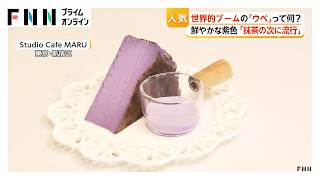
TOKYO - A vibrant purple ingredient from the Philippines is gaining popularity around the world, with ube, a type of yam known for its mild sweetness and striking color, emerging as a potential successor to matcha in the global dessert market.

At Studio Cafe MARU in Tokyo's Shin-Okubo district, customers are enjoying purple cheesecakes and lattes made with ube, an ingredient that has become increasingly popular on social media. One customer said she decided to try the dessert after hearing that ube could become the next big trend after matcha.

Native to the Philippines, ube is a type of yam distinguished by its vivid purple color and gentler sweetness compared with Japanese purple sweet potatoes. It is widely used in Filipino cuisine, particularly in jams and traditional desserts, and is considered an essential ingredient in the country's food culture.

Ube is also attracting attention as a healthy food because of its high dietary fiber content, adding nutritional appeal to its distinctive appearance and flavor.

Customers trying ube desserts described the taste as pleasantly mild and easy to enjoy. "It has a faint aroma of yam, and the sweetness is not overpowering," one customer said. Another noted that the dessert did not have a particularly strong yam flavor but had a smooth texture that made it easy to eat.

Beyond its taste, ube's vivid purple color has become a major selling point, particularly among younger consumers who share photos of visually appealing food on social media.

"It's really cute. The purple is even more intense than it looks in photos," one customer said. "I thought it would have a strong yam flavor because of the color, but it was surprisingly mellow, easy to eat and delicious."

The growing popularity of ube has been fueled largely by social media, with the ingredient gradually establishing a presence in markets including the United States, Britain and South Korea. Its expanding use in cafes and desserts has led some to describe it as the "second matcha," drawing comparisons with the international success of the Japanese green tea powder.

American tourists visiting Japan said ube has already become familiar to younger consumers in the United States. "Ube is popular among young people in America. You can find it at cafes everywhere," one visitor said, while another added, "I like ube-flavored pancakes."

The trend is also delivering commercial benefits for businesses introducing the ingredient.

Studio Cafe MARU began selling ube desserts in mid-May 2026 and has since seen sales increase by approximately 50%, demonstrating the potential of the purple ingredient to attract customers and generate interest in new menu items.

Food journalist Mayumi Satoi, who reportedly samples around 5,000 varieties of sweets each year, said ube's appeal extends well beyond its distinctive appearance.

"First, the bright purple color immediately catches your attention and looks beautiful," Satoi said. "Then, when you taste it, there is no overpowering flavor. It has a simple, natural sweetness that does not interfere with other ingredients."

Satoi said the combination of visual appeal, versatility and perceived health benefits makes ube particularly attractive to pastry chefs and other food professionals.

"When you consider that it is also a natural ingredient and has a healthy image, I think it offers chefs a great deal of creative potential," she said.

The timing of the trend may also be contributing to its popularity. With Halloween approaching in October, Satoi noted that ube's naturally vivid purple color fits particularly well with seasonal desserts and decorations, providing another opportunity for cafes and confectioners to capitalize on growing consumer interest.

Source: FNN

News On Japan
POPULAR NEWS

Japan experienced widespread thunderstorms, strong winds and sudden downpours on October 14 as a cold front swept across the country, while the Japan Meteorological Agency warned that a tropical depression south of Japan could develop into Typhoon No. 30 within 24 hours, marking the first time in 13 years that the annual typhoon count has reached 30.

Agriculture, Forestry and Fisheries Minister Yana submitted his resignation to Prime Minister Sanae Takaichi on the evening of October 14 over a controversy involving shuttle buses and other issues, prompting Takaichi to acknowledge her responsibility for appointing him and announce plans to name a successor on October 15.

Japan's first Disney cruise ship will be named "Disney Imagination," with Oriental Land and its partners planning to launch the service in spring 2029, offering a new Disney-themed travel experience departing from Tokyo.

Tokyo's 23 wards have decided to establish a new small-scale public crematorium to address rising fees at privately operated facilities and growing concerns that cremation capacity could become insufficient around 2040 as the city's aging population drives up the number of deaths.

Japan is facing a growing wave of cyberattacks as advances in artificial intelligence remove the language barrier that once made Japanese companies difficult targets for overseas hackers, with more than 68 million personal records potentially exposed in a series of security incidents over the past two weeks.

MEDIA CHANNELS
         

MORE Food NEWS

A vibrant purple ingredient from the Philippines is gaining popularity around the world, with ube, a type of yam known for its mild sweetness and striking color, emerging as a potential successor to matcha in the global dessert market.

Japanese family restaurant chain Saizeriya has announced its first major price increase since going public in 1998, raising menu prices by an average of 6% from October 29 as soaring ingredient and energy costs force the company to abandon its longstanding policy of keeping prices unchanged.

Highly poisonous mushrooms capable of causing severe skin damage through contact and even death if eaten are appearing in large numbers on Mount Takao in western Tokyo, raising concerns for hikers and families as unusually hot summer weather and prolonged autumn rainfall have created ideal conditions for fungal growth.

A long-established noodle shop in Nagoya has become known for extraordinarily large servings, including its signature "Pitcher Koro," a 1.5-kilogram dish combining kishimen, soba and udon in a giant pitcher.

The Hida Taste Festival, a long-running event that began in 1986, is held twice a year in spring and autumn and has become a popular attraction in Takayama. This autumn's festival features 22 vendors offering a wide variety of regional dishes, including grilled Hida beef skewers, mitarashi dango rice dumplings coated in a savory soy-based sauce, and salt-grilled ayu sweetfish.

A massive land-based Atlantic salmon farming facility is taking shape in a mountainous industrial district of Tsu City, Mie Prefecture, where foreign-owned Pure Salmon Japan has begun raising approximately one million young fish as part of an 80 billion yen project that is expected to become one of the world's largest operations of its kind, with plans to ship 10,000 tons of salmon annually from February 2028.

Prices of leafy vegetables are rising sharply across Japan as prolonged rainfall and reduced sunlight in September damage crops and disrupt harvesting, with farmers warning that shortages could continue into winter and push prices even higher during the peak season for hot pot dishes.

Prolonged rainfall in Tokyo lasting more than 20 days, combined with heavy rain from Typhoon No. 25 during the Silver Week holidays, has disrupted vegetable supplies and driven up prices, with some retailers facing the possibility of suspending sales of popular seasonal products such as roasted sweet potatoes.