News On Japan

Snow Crab Eating Contest Gives Contestants Just 5 Minutes

HYOGO - A winter seafood festival at Kasumi Fishing Port in northern Hyogo Prefecture is drawing visitors eager to enjoy Matsuba crab, a prized seasonal delicacy from the Sea of Japan, with a lively competition challenging participants to eat a crab worth 15,000 yen in just five minutes.

The annual crab festival celebrates the arrival of Matsuba crab season, offering visitors freshly landed live crabs and grilled crab sets at discounted prices. Limited quantities of sekogani crab soup, made using female snow crabs, are also available, giving visitors an opportunity to sample one of the region's traditional winter specialties.

The festival's main attraction is the "Matsuba Crab Eating Skills Contest," in which participants compete to see who can eat an entire Matsuba crab worth approximately 15,000 yen as quickly and neatly as possible within a five-minute time limit.

Contestants must demonstrate both speed and skill, carefully extracting the delicate crab meat while avoiding waste, turning the enjoyment of a luxury seafood delicacy into a competitive event.

The winner expressed mixed feelings about having to rush through such an expensive meal, saying, "It was my first time eating so much Matsuba crab, so I wish I could have enjoyed it more slowly. I'm happy because I now have something to take home for my children."

Matsuba crab, the regional name for male snow crabs caught in the Sea of Japan, is one of the most highly regarded winter delicacies in western Japan, attracting seafood enthusiasts to fishing communities along the coast during the colder months.

Additional crab festivals are scheduled to take place at fishing ports across northern Hyogo Prefecture, offering more opportunities for visitors to enjoy freshly caught seasonal seafood and experience the region's winter food culture.

Source: Kyodo

News On Japan
POPULAR NEWS

Keisei Electric Railway has suspended online seat reservations for its Skyliner express service connecting central Tokyo with Narita Airport after a cyberattack potentially exposed up to 3.37 million personal information records, with no indication of when the booking system will resume operations.

A crowd of 2,300 people dressed as Santa Claus marched through Tokyo's Shibuya district in the rain on November 15 as part of a charity event aimed at supporting children battling serious illnesses in Japan and those unable to receive adequate medical care overseas.

Japan's tourism industry is undergoing a major shift one year after China urged its citizens to avoid traveling to Japan, with Chinese visitor numbers falling sharply and businesses in Osaka struggling to recover lost revenue, while Kyoto has successfully attracted more Western tourists through a strategy aimed at reducing its dependence on the Chinese market.

The number of people taken to hospital after being injured by deer in and around Nara Park has reached a record high in 2026, with foreign tourists accounting for more than 70% of cases, prompting warnings about the dangers of approaching the wild animals during their autumn mating season.

A shrine in Gunma Prefecture has used a high-pressure cleaning drone to wash Japan's largest statue of Daikoku, cutting a maintenance job that previously took two to three weeks to just one day while reducing costs to around one-tenth of the conventional method.

MEDIA CHANNELS
         

MORE Food NEWS

A winter seafood festival at Kasumi Fishing Port in northern Hyogo Prefecture is drawing visitors eager to enjoy Matsuba crab, a prized seasonal delicacy from the Sea of Japan, with a lively competition challenging participants to eat a crab worth 15,000 yen in just five minutes.

Japanese researchers are developing a new generation of nursing care meals using 3D printing and other advanced food technologies, creating realistic-looking sushi, vegetables and other dishes that can be safely enjoyed by elderly patients and people who have difficulty chewing or swallowing.

Kyoto's Shin-Kyogoku Shopping Street, a bustling 500-meter arcade with more than 150 years of history, is home to some of the city's oldest restaurants, seven Buddhist temples and a Shinto shrine, while a recently rediscovered 90-year-old restaurant manual has revealed unusual dishes and the philosophy of a pioneering Western-style restaurant.

Osaka's iconic Midosuji boulevard hosted its first-ever bread-eating race on November 6 as part of a three-day event exploring new ways to use public space, with 1,200 servings of sweet bean buns and dorayaki pancakes prepared for participants over two days as the city moves ahead with plans to transform the major thoroughfare into a more pedestrian-friendly destination by 2037.

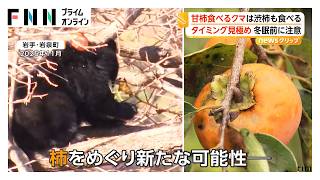
Bears preparing for winter hibernation may be able to determine when astringent persimmons have lost their bitterness and become suitable to eat, according to research by the University of Hyogo, which suggests that prioritizing the removal of sweet persimmon trees could help prevent bears from entering residential areas.

FamilyMart will introduce its first do-it-yourself Christmas cake for the 2026 holiday season, allowing customers to decorate their own cakes as the convenience store chain seeks to attract demand for affordable, at-home celebrations.

Japan by Food and Shizuka head into the mountains of Nagano to explore Karuizawa, a historic highland resort just over an hour northwest of Tokyo, to see if it’s truly Worth The Trip. Join Shizuka as she strolls the iconic street food and rolls up her sleeves to make Nagano soba from scratch! (Japan by Food)

Bean sprouts, long regarded as one of Japan's most affordable and dependable vegetables, are becoming increasingly expensive as rising raw material costs and soaring energy bills push up production expenses, putting pressure on ramen shops and hot pot restaurants that rely heavily on the ingredient.