Nov 21, 2023 (newsonjapan.com) - For many of us, particularly those of a certain age, Japan is the country that built the gaming industry.
Names like Nintendo, Sega, Capcom, Square Enix, and, of course, Sony PlayStation represent many of the pillars on which the sector was built, and the industry would be a lot poorer without them. Still, it is undeniable that the industry has become more globalized in recent years. We can see this in the figures: In 2002, Japan represented around 50% of global gaming revenues; today, it represents somewhere around 15%.
That certainly does not mean that Japan will stop being a global leader in the gaming industry. In fact, it continues to be at the forefront. But there is also a growing consensus that gaming is changing, both in terms of the experience of gaming and the economics of the sector. Of course, change has already come in recent years: The prevalence of mobile gaming, cloud gaming platforms, and the concept of Gaming as a Service (GaaS) are among the examples of that. But some industry experts believe that the coming years will see more seismic changes.
The experience of gaming is changing
First, we must consider the concept of gaming, which, as stated, was largely built on the back of Japanese ingenuity. We have the idea of a console, a screen (a television set in the past), and a controller. This was the prevailing idea from the 1970s to the 2000s, and it is still the dominant perception today. But will it be that way in 10, 20, or 30 years from now?
For a start, the idea of gaming hardware is starting to become less relevant. A gamer can experience mobile titles like Candy Crush and play casual games like Lantern Luck on any device, wherever and whenever they want. We also know that the console is becoming less important as the medium for playing. Xbox boss Phil Spencer has confirmed this. We know there will likely be a PlayStation 6 from Sony, as well as whatever ‘sequel’ consoles come from Nintendo and Xbox/Microsoft, but we might not see a PlayStation 7.
AR may transform the mechanics of gaming
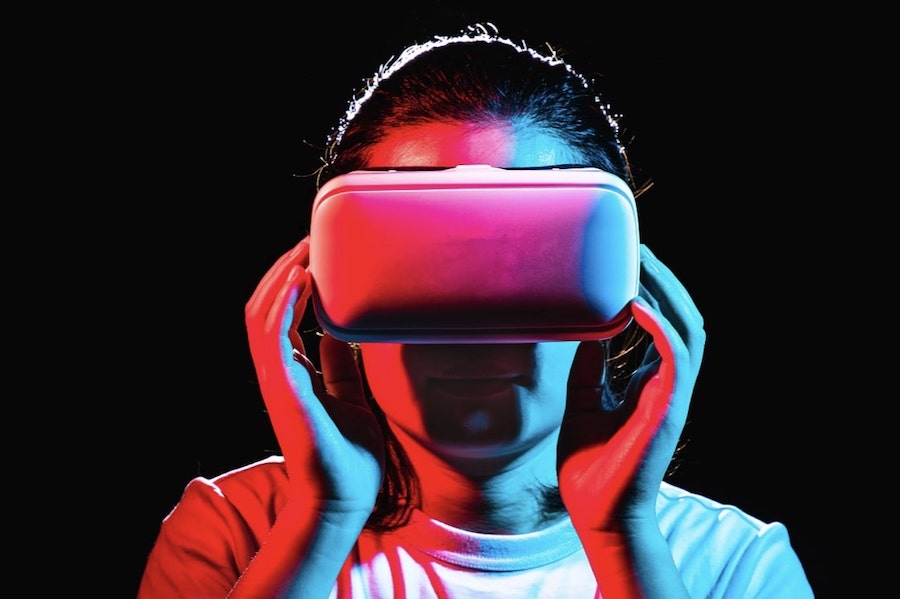
But we can go even further than this. Tech fans will not have failed to notice the exhibition of Apple’s Vision Pro AR headsets back at WWDC 2023 in June. The device will be due out next year. And while not strictly a gaming device, it will raise questions for the gaming industry. Namely, the way we are going, gaming might not necessarily be something you do on a screen, nor will you do with your hands via a controller. It may become a more sensory experience, something that happens all around you and that you control with your eye movements or voice commands.
As we mentioned earlier, Japan certainly is not asleep at the wheel. Indeed, when it comes to AR and changing the boundaries of gaming, consider one of the most successful titles of the last decade – Pokémon Go. Pokémon Go remains popular today, but it may be looked back upon in the history books as a pivotal title that began to show us that gaming was not something you did in your bedroom but could incorporate elements of the outside world. Of course, it proves our point about the globalization of gaming, as Pokémon Go was created in partnership with American (Niantic) and Japanese (Nintendo, The Pokémon Company) companies.
It is always possible that AR – and the VR gaming experiences we will find in the metaverse – fall a little flat. Perhaps we are not meant to play in virtual worlds, and maybe it will end up being viewed as boring. After all, we enjoy gaming to escape reality, not construct it. But it’s going to be interesting to see Japan’s influence on the industry in the coming years. The country has provided so much of the rich gaming landscape of the last 50 years, and we are sure the Japanese passion for gaming will influence the next great era around the world.