News On Japan

Why did Google's 'incorrect settings' cause serious network failure in Japan?

Sep 01, 2017 (Japan Today) - Google Inc has issued an apology for the large-scale communication failure that occurred around noon on Aug 25 in Japan, saying that its incorrect settings caused the failure.

"Due to incorrect network settings, a failure that makes it difficult to access Internet services occurred," the company said. "We apologize for the inconvenience and concern."

From the beginning, many experts considered that a large amount of route information sent from Google triggered the failure. And it turned out to be true.

Especially, NTT Communications Corp, KDDI Corp and companies/individuals using the two companies' communication services were severely affected. The failure affected Internet connection, the Internet-related services, financial transactions, payment services such as Mobile Suica, etc.

However, Google did not clarify whether the "incorrect network settings" were caused by human error or defects of software, devices, etc. And it said, "the information was updated within eight minutes."

So, only eight minutes of "incorrect network settings" had a great impact on Japan's communication infrastructures. Why did this happen? Is it possible that it will happen again?

Google owns data centers around the world and runs a gigantic network connecting them. Companies and communication carriers that have such large-scale networks exchange "route information" with one another to communicate with one another. For this purpose, "BGP (border gateway protocol)" is used. The internet can exist because of this interconnection of large-scale networks.

In the accident, the route information was wrong, and communication routes changed for some services.

News On Japan
POPULAR NEWS

Japan launched a new national disaster management agency on November 2nd to strengthen its response to major emergencies, just days before a powerful earthquake struck Aichi Prefecture, injuring 24 people and renewing concerns over the possibility of a catastrophic Nankai Trough earthquake.

Northern Japan experienced record-breaking cold on the morning of November 11th, with temperatures plunging to minus 20.2 degrees Celsius in Horokanai, Hokkaido, marking the first time in Japan's recorded history that temperatures have fallen below minus 20 degrees during the first half of November.

East Japan Railway (JR East) announced on November 10th that it will introduce touch-free ticket gates at 40 stations, including every station on Tokyo's Yamanote Line, from spring 2028, allowing passengers using Mobile Suica to pass through without taking their smartphones out of their pockets or bags.

Japan's Children and Families Agency unveiled its first national guidelines on November 10th for parental involvement in children's internet use, dividing those aged 0 to 18 into six developmental stages as the government considers tighter regulations on social media platforms to protect young people from online bullying, exploitation, and other growing risks.

As of 3 a.m. on Wednesday, November 11, Typhoon No. 32 was moving east-northeast over waters east of Chichijima in the Ogasawara Islands, gradually heading away from the Japanese archipelago after passing near the island between late Tuesday night and early Wednesday morning.

MEDIA CHANNELS
         

MORE Society NEWS

A 50-year-old woman accused of forcing her housemate to sew her own lips shut with a needle and thread admitted all charges at her first court hearing on November 11th, as prosecutors played disturbing audio recordings of the threats used to coerce the victim during an incident in Koga, Ibaraki Prefecture, in June 2026.

A 26-year-old woman from Nagoya has been arrested on suspicion of defrauding men by encouraging them to develop romantic feelings for her before repeatedly requesting money, with 13 men reporting losses totaling approximately 30 million yen in a scheme resembling the notorious "Itadaki Joshi" romance fraud case.

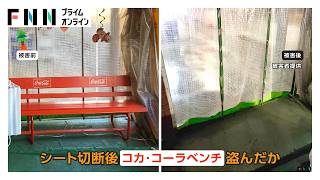
A rare red Coca-Cola bench was stolen from outside a prepared-food shop in Nagareyama, Chiba Prefecture, in the early hours of October 24th, with the owner suspecting the thieves intended to resell the collectible item to enthusiasts after similar benches were found listed online for as much as 180,000 yen.

Emperor Naruhito presented prestigious Grand Cordon decorations to Toyota Motor Chairman Akio Toyoda and other recipients of Japan's autumn honors at a ceremony held at the Imperial Palace on November 10th, recognizing their longstanding contributions to the country and society.

A 26-year-old yakuza member suspected of sending young women he met in Tokyo's Kabukicho entertainment district to Cambodia to work as telephone scammers has been arrested for the eighth time, this time on suspicion of conspiring with two women to defraud a man in his 30s of 9.5 million yen.

A 31-year-old Chinese national has been arrested in Tokyo on suspicion of operating an illegal mobile phone base station that forced more than 10,000 smartphones onto a 2G network in less than two hours, allowing phishing messages to be sent to unsuspecting users in busy shopping districts including Ginza, Shinjuku and Shibuya.

A male bear weighing approximately 270 kilograms was killed by hunters in Iwamizawa, Hokkaido, on November 8th after being caught in a box trap, with local hunters suspecting it was responsible for a series of attacks on a nearby poultry farm that left more than 100 chickens and ducks dead since August.

Princess Aiko, the only daughter of Emperor Naruhito and Empress Masako, attended an event in Tokyo aimed at raising awareness and encouraging support for crime victims and their families, becoming the first member of the Imperial Family to participate in the gathering.