News On Japan

Tokyo's Parks Blend Nature with Fashion

TOKYO - Parks in Japan are undergoing a transformation as private businesses work in collaboration with local authorities to develop and manage public leisure spaces.
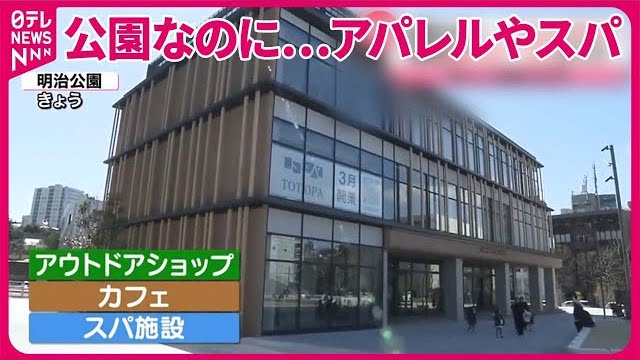
Tokyo's Parks Blend Nature with Fashion

On a beautiful day, families, adults, and dogs alike enjoy the Meiji Park near the National Stadium. This park, once surrounded by apartments and featuring an empty square, has been rejuvenated six months ago and is set to welcome an outdoor shop, cafe, and spa facility this year. The outdoor shop offers rentals for children's kick bikes, a service appreciated by many.

One visitor said, "It's safer to rent and ride in the park than on public roads."

Another commented, "Children can play to their hearts' content, and adults can relax at the cafe."

The transformation is partly due to the "Park PFI" system, which allows private businesses to develop and manage parks using their funds and expertise, rather than relying solely on public funding. This system has led to the introduction of cafes and other amenities in Meiji Park. The upcoming spa facility will feature three saunas and a 160 cm deep cold plunge pool, offering a unique experience.

A representative from Tokyo Tatemono, the company managing the spa, highlighted the benefits of Park PFI, saying, "Compared to regular parks, Park PFI can create a more vibrant atmosphere and offer advantages to both businesses and visitors. After enjoying outdoor activities, visitors can relax in the sauna, have a cup of tea at the cafe, and go home. This is what sets it apart from other parks."

The adoption of Park PFI is gaining momentum nationwide, with Chiba Park being one example. A representative from Chiba City mentioned, "We have a fitness club, cafe, bakery, and a covered event space."

Chiba Park, located near Chiba Station, spans an area equivalent to 3.4 Tokyo Domes. It once housed a baseball field and a velodrome, but these were removed due to aging. The park is now being redeveloped to include vast lawns and dining establishments, providing a relaxing space for many. The renovation is underway, with a reopening scheduled for April 26.

Some areas are planning renovations in collaboration with local major corporations. Shinjuku Transportation Park in Katsushika, Tokyo, is one such example. The park features real buses, train stations, level crossings, and public roads, allowing children to learn traffic rules in a fun way.

One child exclaimed, "It was fun to drive the car!"

The park's appeal is set to increase with the involvement of Takara Tomy, the manufacturer of Tomica and Plarail. The company's headquarters is in Katsushika, and they are currently discussing with the district how to incorporate Tomica and Plarail themes into the park.

A visitor expressed their anticipation, "My child loves Tomica and Plarail, so we're really looking forward to it."

While the adoption of Park PFI is still under consideration, the aim is to open the renovated park in the fiscal year 2029.

Source: 日テレNEWS

News On Japan
POPULAR NEWS

Record rainfall caused 19 rivers to overflow across Fukui Prefecture, flooding roads and homes, triggering landslides and temporarily forcing authorities to issue the highest-level heavy rain emergency warning from early Sunday morning.

Drones were used to deliver food and daily necessities to an isolated mountain community in Himi City, Toyama Prefecture, on August 30 after torrential rain triggered a landslide that cut off road access, while volunteers continued flood recovery work in neighboring Ishikawa Prefecture.

Two typhoons east of Japan were moving northward on August 30, with Typhoon No. 23 (Banlan) overtaking Typhoon No. 22 (Artau), although neither storm is expected to have a direct impact on Japan.

A 9-minute, 13-second drone video filmed inside Aeon Mall Kumamoto two days after the deadly explosion has provided a detailed view of the destruction, showing collapsed ceilings, heavy dust and widespread damage that may have affected between one-third and nearly half of the shopping center.

Strong Typhoon No. 18 was moving northwest through the East China Sea on the night of August 26, gradually pulling away from Okinawa and the Amami Islands as lingering rain, strong winds and high waves were expected to ease. As of 9 p.m. on August 26, the typhoon was over waters north-northwest of Kume Island and moving northwest.

MEDIA CHANNELS
         

MORE Travel NEWS

Record-breaking rainfall continued across the Hokuriku region on Saturday, with Himi City in Toyama Prefecture receiving more than 500 millimeters over 72 hours, as authorities warned of further heavy rain, landslides and river flooding through August 30.

Severe thunderstorms brought torrential rain, lightning, hail and a tornado to Hokkaido on August 28, disrupting rail and air travel and leaving some passengers stranded overnight at New Chitose Airport, as unstable atmospheric conditions triggered intense downpours across Japan.

JR Kyushu plans to restore full service on the Kyushu Shinkansen from the first train on September 18, nearly two months after the Kumamoto earthquake caused extensive damage to tracks and stations and forced the suspension of services on part of the line.

Bear sightings are increasing across Japan this summer as a shortage of food in the mountains drives the animals closer to areas where people live and visit, with authorities in Aomori Prefecture closing a lookout near Lake Towada after a foreign tourist was attacked.

United Airlines announced on August 25 that it will launch direct flights between San Francisco and Okinawa from March 27, 2027, as the U.S. carrier seeks to capture growing demand for travel to Japan.

ANA Holdings' All Nippon Airways and Japan Airlines will begin coordinating departure times on the Haneda-Okayama route from October 25, an unusual move by Japan's two largest airline groups as weak business travel, a weaker yen and rising fuel and labor costs put increasing pressure on domestic operations.

Haneda Airport has unveiled a new boarding area at Terminal 1 that will begin operations in September, featuring extensive wood interiors and self-driving transportation within the facility.

A new 220-meter pedestrian suspension bridge has been completed at Biwako Valley in Otsu, Shiga Prefecture, offering visitors sweeping views of Lake Biwa from mountains about 1,100 meters above sea level.