News On Japan

Cooking with Hydrogen: The Future of Sustainable Dining

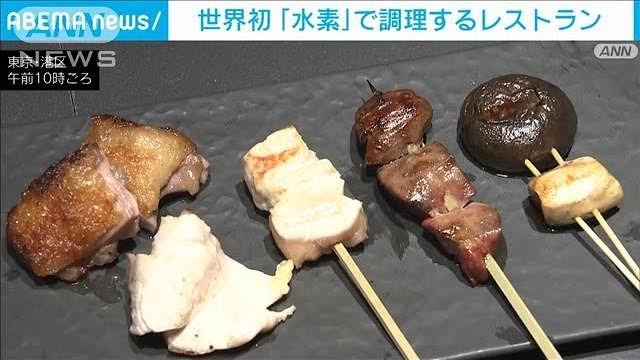
TOKYO - A restaurant that cooks with hydrogen, seen as a key to realizing a decarbonized society, has been unveiled in Tokyo, setting a global precedent.
Cooking with Hydrogen: The Future of Sustainable Dining

The restaurant "icHi," opening on April 12th, will utilize hydrogen stoves that emit no CO2 or other gases during cooking.

Although fuel costs are more than double that of conventional gas stoves, the flame is about 30% stronger, reducing cooking time. Moreover, as hydrogen combusts with oxygen, the food retains more moisture.

Currently, the menu is limited to set meals featuring grilled chicken and seafood, but diners can also compare these dishes with those prepared on gas stoves.

Mineyuki Fukuda, CEO of H2&DX Social Research Institute, emphasizes the uniqueness of the restaurant: "The highlight is not just that food tastes better with hydrogen, but also that no carbon dioxide is emitted during cooking. The challenge for widespread adoption is reducing costs. That will be a significant factor in spreading this concept."

Hydrogen, which can be produced from various resources with minimal environmental impact, is increasingly being explored for applications in transportation and beyond to achieve a decarbonized society.

According to the operating company, this is the first restaurant in the world to cook with hydrogen.

Source: ANN

News On Japan
POPULAR NEWS

Japan is likely to face increasingly long and dangerously hot summers as global temperatures continue to rise, with advanced climate simulations also pointing to more frequent torrential rain, rising seas and accelerating ice loss by the end of the century.

Japan's revised Imperial House Law was enacted after clearing the House of Councillors with majority support, allowing female members to retain royal status after marriage and male-line descendants of former imperial family branches to enter the Imperial Household through adoption.

A tropical depression near the Truk Islands is expected to strengthen into a typhoon within 12 hours, but forecasters say it is unlikely to have any direct impact on Japan.

A protest against Prime Minister Sanae Takaichi was held in Tokyo's Shibuya district on July 16 as public concern grew over a bill that would impose criminal penalties for damaging the Japanese flag.

Tobu Railway has introduced walk-through facial recognition ticket gates at Ikebukuro and Kami-Itabashi stations on the Tobu Tojo Line, allowing registered commuters to enter without presenting a ticket or IC card.

MEDIA CHANNELS
         

MORE Food NEWS

A single bunch of Ishikawa Prefecture's premium Ruby Roman grapes sold for 1 million yen at the season's first auction in Kanazawa on Friday, putting the price of each grape at about 30,000 yen.

The average cost of preparing curry rice at home fell for the first time in two months as lower rice prices offset rising pork costs, while potatoes and onions are also expected to become cheaper.

Japan’s breakfast market is gaining new momentum, with Starbucks launching morning offerings at some locations in May and a growing number of newcomers entering the increasingly lively sector.

The first Pacific saury of the season landed in Hokkaido fetched a record 1.112 million yen per kilogram at an auction in Sapporo on July 10, with one fish later displayed at a retail price of 216,000 yen.

Wasabi, a food ingredient native to Japan, has long been valued not only for enhancing the flavor of other foods but also for its reported antibacterial and antioxidant properties, making it an essential part of the Japanese table.

Mos Food Services, operator of the Japan-born hamburger chain Mos Burger, is riding a strong recovery, with sales surpassing 100 billion yen for the first time in the year ended March 2026 and both revenue and profit reaching record highs.

A Nepalese manager of a busy Indian restaurant in Kodaira, Tokyo, says he fears for the future of his business after Japan tightened the requirements for foreign entrepreneurs seeking to stay in the country under the business manager visa.

Sushiro, Japan’s leading conveyor-belt sushi chain, drew heavy crowds to a new outlet near Ayase Station in Tokyo on June 11, with the first day of business revealing both the brand’s strength and the pressure behind running a high-volume sushi restaurant.