News On Japan

Fish Consumption Hits Record Low in Japan

Fish Consumption Hits Record Low in Japan

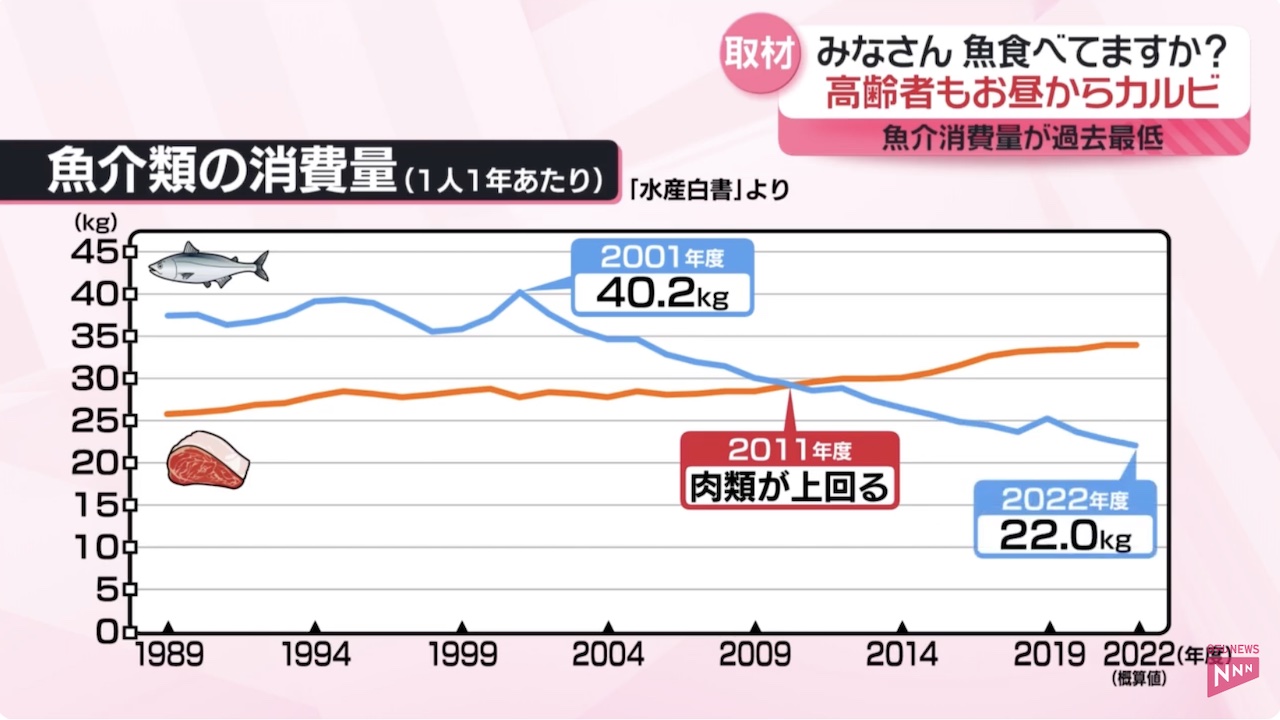
TOKYO - Fish consumption in Japan has hit a record low, with annual per capita intake dropping from about 40 kilograms in 2001 to roughly 22 kilograms in 2022. This decline is particularly notable among seniors, who are increasingly opting for meat over fish.

Factors contributing to this trend include family preferences for meat, high fish prices, and the inconvenience of fish preparation. Local fish shops' disappearance also plays a role.

In response, initiatives like Kikkoman's "FISH A WEEK" restaurant in Tokyo aim to encourage fish consumption by offering appealing fish dishes. The Ministry of Agriculture, Forestry and Fisheries emphasizes the need to highlight the health benefits of fish to boost its consumption.

Source: 日テレNEWS

News On Japan
POPULAR NEWS

A bear believed to be a mother that has been roaming residential neighborhoods in Maebashi, Gunma Prefecture, since November 17 was spotted again by a police officer early on November 21, prompting authorities to prepare for its capture as residents entered a three-day holiday weekend following days of repeated sightings, school closures and a frightening encounter involving a high school student.

Residents of Okinawa's remote islands are struggling to secure airline tickets as travelers seeking to accumulate loyalty points flood short-haul flights, with some boarding as many as 12 planes a day without stopping to sightsee, leaving essential routes fully booked and prompting calls for Japan Airlines (JAL) to reconsider its promotional campaign.

Traditional matchmaking is making a comeback in Japan as younger generations increasingly seek safer and more efficient ways to find marriage partners, with growing frustration over dating apps encouraging a return to arranged introductions once common among their parents and grandparents.

Nepalese police have detained 35 Japanese nationals and five Chinese nationals suspected of involvement in organized fraud operations at a mountain resort hotel near Kathmandu, where the group had allegedly established a sophisticated base equipped with a mock police station, photography studios and dozens of livestreaming booths.

A powerful surge of midwinter cold air is bringing heavy snow, strong winds and freezing temperatures to much of Japan ahead of the three-day holiday weekend beginning November 21st, with authorities warning of dangerous road conditions, possible landslides and traffic disruptions as snow and heavy rain continue along the Sea of Japan coast through the morning of November 22nd.

MEDIA CHANNELS
         

MORE Food NEWS

Japanese conveyor-belt sushi chain Sushiro opened its first restaurant in the United States in New York on November 19, offering plates of nigiri sushi starting at $5, or approximately 800 yen, as it seeks to attract American customers with competitive prices and a no-tipping policy.

The owner of a traditional Japanese restaurant in Awaji, Hyogo Prefecture, and another person have been arrested on suspicion of serving 86 portions of farmed pufferfish falsely advertised as the premium regional brand "Awaji Island Three-Year Tiger Pufferfish," with police finding that only 13 kilograms of the 233 kilograms purchased by the restaurant over a six-month period were genuine branded fish.

Octopus fishing off the coast of Nemuro in eastern Hokkaido has made a strong start to the season, with the first landing of around 22 tons on November 11th, four times the amount recorded in 2025, as stocks continue to recover from a devastating red tide outbreak five years ago.

A winter seafood festival at Kasumi Fishing Port in northern Hyogo Prefecture is drawing visitors eager to enjoy Matsuba crab, a prized seasonal delicacy from the Sea of Japan, with a lively competition challenging participants to eat a crab worth 15,000 yen in just five minutes.

Japanese researchers are developing a new generation of nursing care meals using 3D printing and other advanced food technologies, creating realistic-looking sushi, vegetables and other dishes that can be safely enjoyed by elderly patients and people who have difficulty chewing or swallowing.

Kyoto's Shin-Kyogoku Shopping Street, a bustling 500-meter arcade with more than 150 years of history, is home to some of the city's oldest restaurants, seven Buddhist temples and a Shinto shrine, while a recently rediscovered 90-year-old restaurant manual has revealed unusual dishes and the philosophy of a pioneering Western-style restaurant.

Osaka's iconic Midosuji boulevard hosted its first-ever bread-eating race on November 6 as part of a three-day event exploring new ways to use public space, with 1,200 servings of sweet bean buns and dorayaki pancakes prepared for participants over two days as the city moves ahead with plans to transform the major thoroughfare into a more pedestrian-friendly destination by 2037.

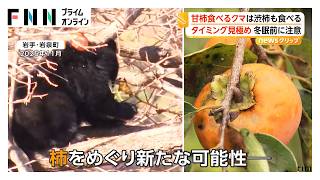
Bears preparing for winter hibernation may be able to determine when astringent persimmons have lost their bitterness and become suitable to eat, according to research by the University of Hyogo, which suggests that prioritizing the removal of sweet persimmon trees could help prevent bears from entering residential areas.