News On Japan

Capsule Hotel Prices in Tokyo Surge Past 20,000 Yen

TOKYO - As Golden Week approaches next weekend, one major headache for travelers is the soaring cost of hotel stays. In central Tokyo, a single night can now cost 23,000 yen—not for a luxury or business hotel, but for a capsule hotel.

The capsule hotel Nine Hours Hamamatsucho Sleep Lab in Minato Ward, Tokyo, reports that some nights during Golden Week are priced above 20,000 yen.

Located near Tokyo Tower and popular among foreign tourists, this hotel usually charges around 5,000 yen per night on off-peak days, with low pricing as its main draw.

Nine Hours manager Mitsuki Ai explained: "Our pricing system increases rates as bookings fill up, and this year we already have guests who booked a night at 23,000 yen during Golden Week."

A night without meals at 23,000 yen reflects not only rising labor costs but also higher prices at surrounding hotels.

Depending on location and dates, business hotels may actually offer better deals.

Business Hotels May Be a Bargain if You Adjust Your Dates

While some people are planning trips during Golden Week starting next weekend, many are struggling with accommodation costs.

A man in his 20s said, "I'm going to Yugawara in Kanagawa with my girlfriend."

When asked how many nights and how much it would cost, he replied, "Two nights at a standard hotel. It’s about 110,000 yen in total. We chose somewhere nearby to cut costs even a little."

Others are feeling the pinch too.

A man in his 60s from Ibaraki Prefecture said, "Hotel prices in Tokyo are crazy high right now. A few years ago, I could get a room for around 6,000 yen when visiting the city."

Hotel rates in Tokyo seem to know no ceiling. According to the Tokyo Hotel Association, which includes over 200 member hotels, the average room price for April and May, including Golden Week, exceeds 17,000 yen per night—far above pre-pandemic levels.

Even capsule hotels, once offering rooms for about 5,000 yen on cheaper days, now have nights priced over 20,000 yen.

So, are all hotels fully booked and hiking rates? Not quite. At the business hotel Vessel Inn Ueno Iriya Ekimae in Ueno, Tokyo, the manager shared a different picture.

Miyuki Kikuchi, the hotel’s manager, said, "On May 1st and 2nd, as well as the final day of Golden Week, we’re still only about 50% booked."

While weekend nights during the holiday period are nearly full, there is still availability on other days.

The hotel normally charges around 12,000 yen per night without meals, but prices peak at 19,400 yen during this time. However, by May 6th, the final day of Golden Week, rates drop sharply.

"Occupancy is below 50%, so we’ve reduced the price significantly to 8,600 yen," said Kikuchi.

By adjusting travel dates or choosing a different location, travelers may still be able to save on accommodation.

Source: TBS

News On Japan
POPULAR NEWS

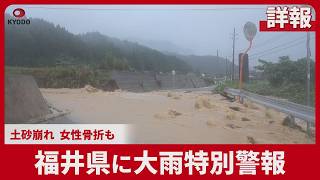
Record rainfall caused 19 rivers to overflow across Fukui Prefecture, flooding roads and homes, triggering landslides and temporarily forcing authorities to issue the highest-level heavy rain emergency warning from early Sunday morning.

Drones were used to deliver food and daily necessities to an isolated mountain community in Himi City, Toyama Prefecture, on August 30 after torrential rain triggered a landslide that cut off road access, while volunteers continued flood recovery work in neighboring Ishikawa Prefecture.

Two typhoons east of Japan were moving northward on August 30, with Typhoon No. 23 (Banlan) overtaking Typhoon No. 22 (Artau), although neither storm is expected to have a direct impact on Japan.

A 9-minute, 13-second drone video filmed inside Aeon Mall Kumamoto two days after the deadly explosion has provided a detailed view of the destruction, showing collapsed ceilings, heavy dust and widespread damage that may have affected between one-third and nearly half of the shopping center.

Strong Typhoon No. 18 was moving northwest through the East China Sea on the night of August 26, gradually pulling away from Okinawa and the Amami Islands as lingering rain, strong winds and high waves were expected to ease. As of 9 p.m. on August 26, the typhoon was over waters north-northwest of Kume Island and moving northwest.

MEDIA CHANNELS
         

MORE Travel NEWS

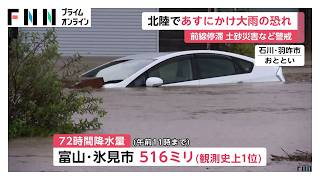
Record-breaking rainfall continued across the Hokuriku region on Saturday, with Himi City in Toyama Prefecture receiving more than 500 millimeters over 72 hours, as authorities warned of further heavy rain, landslides and river flooding through August 30.

Severe thunderstorms brought torrential rain, lightning, hail and a tornado to Hokkaido on August 28, disrupting rail and air travel and leaving some passengers stranded overnight at New Chitose Airport, as unstable atmospheric conditions triggered intense downpours across Japan.

JR Kyushu plans to restore full service on the Kyushu Shinkansen from the first train on September 18, nearly two months after the Kumamoto earthquake caused extensive damage to tracks and stations and forced the suspension of services on part of the line.

Bear sightings are increasing across Japan this summer as a shortage of food in the mountains drives the animals closer to areas where people live and visit, with authorities in Aomori Prefecture closing a lookout near Lake Towada after a foreign tourist was attacked.

United Airlines announced on August 25 that it will launch direct flights between San Francisco and Okinawa from March 27, 2027, as the U.S. carrier seeks to capture growing demand for travel to Japan.

ANA Holdings' All Nippon Airways and Japan Airlines will begin coordinating departure times on the Haneda-Okayama route from October 25, an unusual move by Japan's two largest airline groups as weak business travel, a weaker yen and rising fuel and labor costs put increasing pressure on domestic operations.

Haneda Airport has unveiled a new boarding area at Terminal 1 that will begin operations in September, featuring extensive wood interiors and self-driving transportation within the facility.

A new 220-meter pedestrian suspension bridge has been completed at Biwako Valley in Otsu, Shiga Prefecture, offering visitors sweeping views of Lake Biwa from mountains about 1,100 meters above sea level.