Nov 18, 2025 (News On Japan) - The global Counter-Strike 2 (CS2) economy has become one of the most active digital trading ecosystems in gaming, with millions of players buying and selling skins every day.
In Japan, this trend has surged in recent years, driven by a passionate community of players who treat their inventories as both a collection and an investment.
But when it comes to converting those virtual items into real-world cash, knowing where to sell CS2 skins instantly in Japan is key. While some players still rely on Steam’s internal market, it doesn’t allow direct cash withdrawals. That’s why specialized CS2 skin selling sites have become essential offering instant payouts, fair pricing, and safe transactions for Japanese players.
Why Players in Japan Are Selling CS2 Skins
For Japanese Counter‑Strike 2 (CS2) fans, skins are more than digital decorations; they’re tradable assets with real monetary value. Rare knives, gloves, and rifle skins can be worth hundreds or even thousands of yen, and the market is constantly shifting based on supply, demand, and player trends. With Japan’s gaming market alone generating around ¥2.483 trillion, and with the PC segment growing at about 16.2% year-on-year, it illustrates how serious digital gaming has become.
Selling skins instantly appeals to players who:
1. Want fast payouts instead of waiting for Steam wallet credits.
2. Prefer real cash over virtual balance.
3. Trade regularly and need quick liquidity for new purchases.
With Japan’s gaming economy thriving, the demand for CS2 instant payout Japan options has never been higher. Players want secure, localized platforms that support immediate withdrawals in yen and offer transparent conversion rates.
Japan’s high per-user spending, on average about US$223 per gamer annually – makes its market especially relevant for skin trading. And while CS2 specifically doesn’t have public player-count breakdowns for Japan, the strong growth in PC gaming suggests that more Japanese players are participating in competitive shooters and thus view skins as investable items, boosting the appeal of instant sell options.
The Limitations of Steam Market Sales
While the official Steam Community Market is still the largest hub for trading skins, it comes with major restrictions for cashouts. You can sell items and earn wallet funds but that balance stays locked within Steam. It can’t be transferred to PayPal, a bank account, or used outside of the platform.
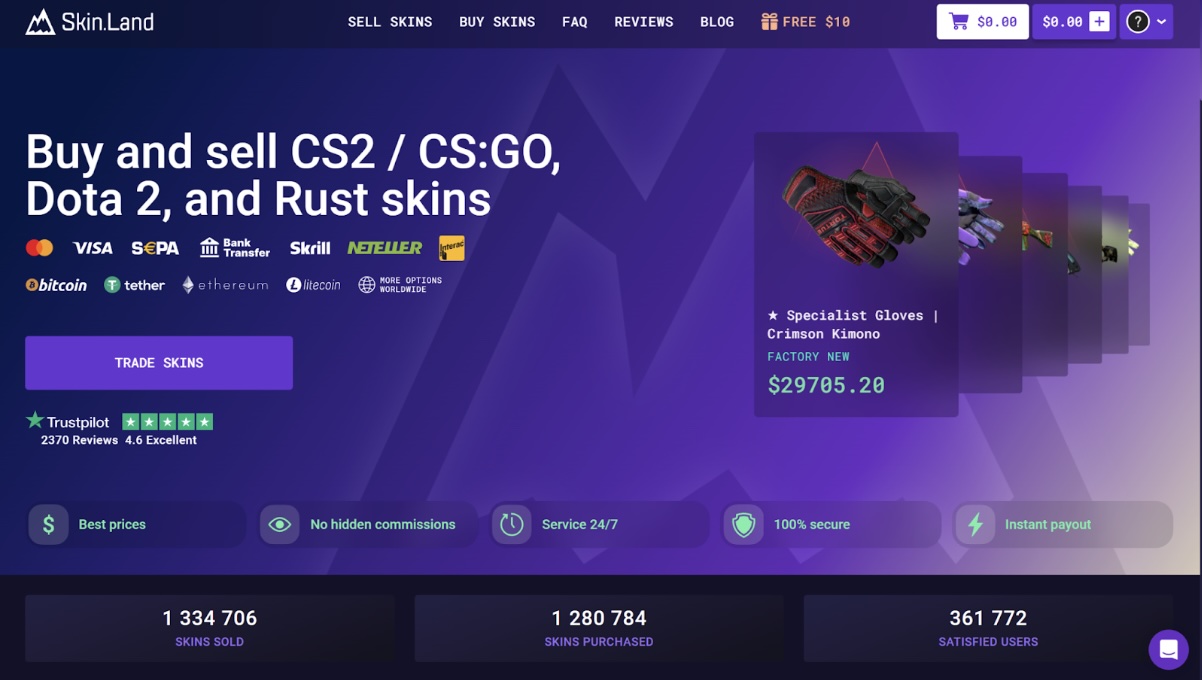
That’s why players seeking to instantly sell CS2 skins need to use verified third-party marketplaces. These external platforms like Skin.Land bridge the gap between in-game trading and real-world money, offering cashouts that Steam itself doesn’t provide.
How Instant CS2 Skin Selling Works
Instant skin selling works through automated bots and market integration systems. When you list your item, the platform automatically connects to your Steam inventory, evaluates your skin’s market price, and offers a cash amount.
Once you accept, the trade is processed instantly no need to wait for a buyer. You receive payment directly to your chosen method (such as PayPal, crypto, or card), depending on the platform’s supported options.
For players in Japan, this process has become smoother with the rise of region-optimized platforms offering CS2 instant payout Japan features.
Skin.Land – The Best CS2 Marketplace for Japanese Players
When it comes to speed, transparency, and reliability, Skin.Land leads the market. It’s not just another trading platform, it's one of the few that offers true instant payouts for CS2 players in Japan.
Instant Transactions: Players can instantly sell skins and receive their money right away with no waiting period, no trade lock delays.
- Global and Local Accessibility: Whether you’re trading from Tokyo, Osaka, or abroad, Skin.Land supports users worldwide with fast and secure access.
- Real-Time Market Pricing: The platform continuously updates item values to match the current Steam and third-party market rates, ensuring fair deals.
- Verified Steam Integration: Every transaction uses official Steam API connections to prevent scams and ensure safe item transfers.
- Tailored for Japanese Players: With intuitive navigation, multi-language support, and yen-compatible payouts, Skin.Land is optimized for the CS2 marketplace for Japanese players.
- Simple, Transparent Design: No complex menus or confusing steps just select your skin, confirm the offer, and get paid instantly.
How to Instantly Sell CS2 Skins on Skin.Land
1. Sign In via Steam: Connect your account securely through Steam’s official API.
2. Sync Your Inventory: The system will automatically list your available skins.
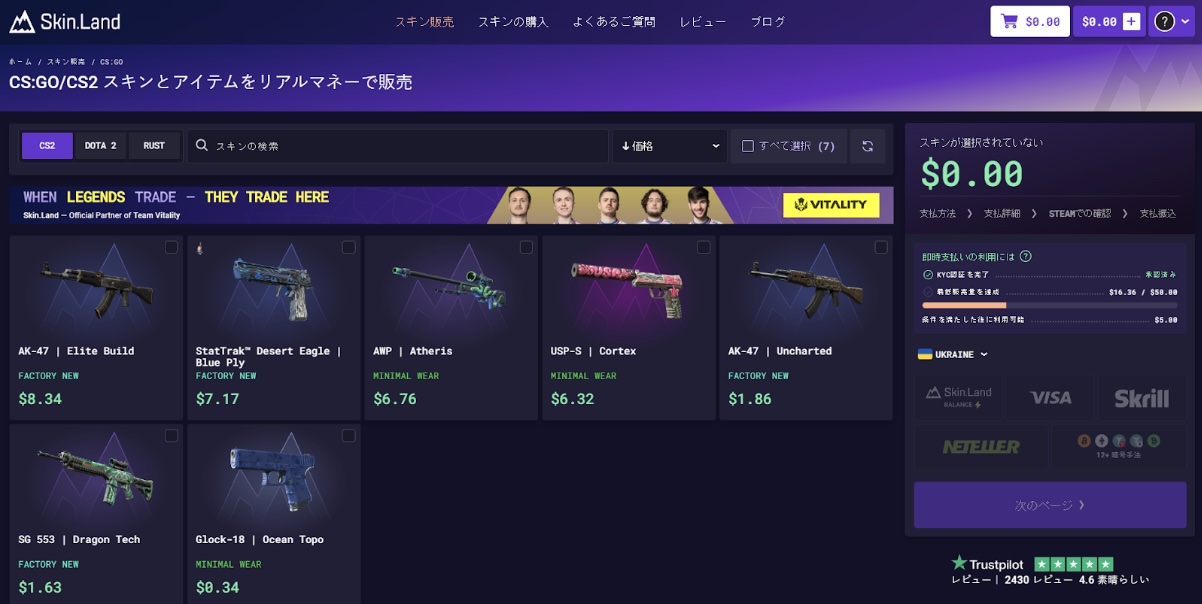
3. Choose Skins to Sell: Select the items you want to cash out.
4. Get an Instant Offer: Skin.Land’s real-time pricing tool shows the exact amount you’ll receive.
5. Confirm and Cash Out: Accept the offer and receive payment immediately. It's that simple.
Why Instant Selling Beats Traditional Trading
Traditional trading methods such as peer-to-peer swaps or auction listings often involve long waiting times and potential risks. By contrast, instant-selling platforms like Skin.Land give you full control and immediate access to funds.
Here’s why more Japanese players are switching to instant sales:
Speed: Immediate cashouts mean you can reinvest or withdraw instantly.
- Security: Steam API integration eliminates the risk of phishing or fake trades.
- Convenience: No need to negotiate prices or wait for buyers.
- Liquidity: Fast access to funds allows for smarter reinvestments in other CS2 marketplaces for Japanese players.