Dec 02, 2025 (News On Japan) - While the market is unstable by the end of 2025, Sui continues to be one of the fastest-growing Layer-1 ecosystems.
October-November brought several major network updates with new stablecoin integrations of USDi and suiUSDe and expanded DeFi infrastructure through Mysticeti v2. Despite market volatility, Sui has still remained one of the most resilient L1 tokens, with positions above $1.5, while analysts' midterm targets are in the $5-7 range, according to Coinpedia price prediction.
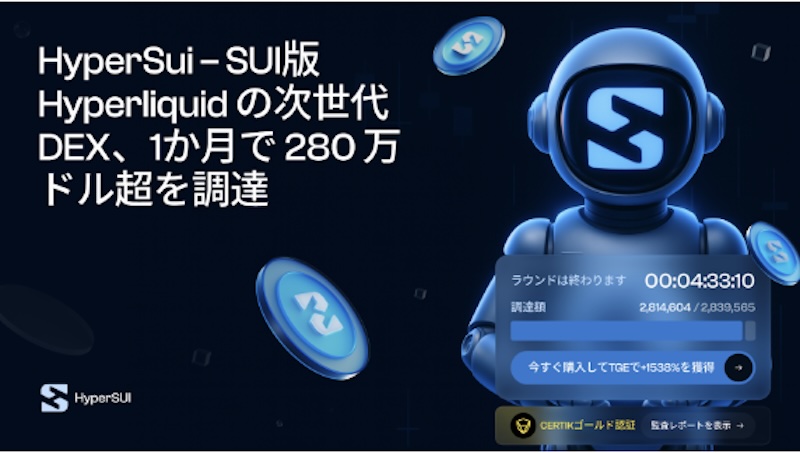
With over 150 active protocols and Sui ecosystem updates, DeFi protocols still await the next major market push with the arrival of native perpetual trading. HyperSui, a Sui native perpetual DEX, with over $2.8M raised just in a month, can become a trading hub that could boost Sui liquidity, attract ordinary traders and institutional investors, and drive DeFi expansion in 2026.
HyperSui Presale: First Perpetual DEX On Sui Network
HyperSui is developing into the first comprehensive perpetual DEX on the Sui blockchain due to its sophisticated liquidity structure and AMM trading. One of the fastest-growing DEXs with permanent trading on the Sui Network, it reached $2.8 million within a month of the presale announcement. The HyperSui team has already finished the CertiK Audit, become a sponsor of Web Summit in Lisbon, and focused on strategic partnerships with Sui DeFi platforms.
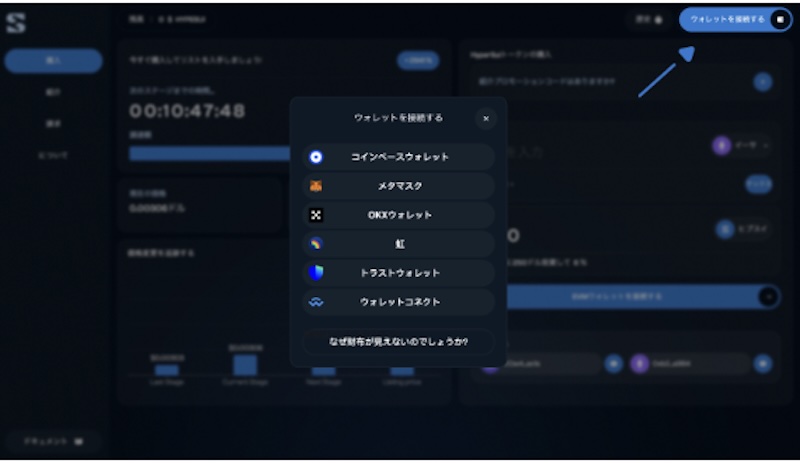
Early investors can take part in the HyperSui Presale by using major chains such as Sui, BNB Chain, Ethereum, and Solana, as well as direct smart contract purchases and bank card payments. The token price is currently $0.00573; however, the listing price will be $0.09, as the HyperSui Team previously announced. HyperSui Presale is compatible with Coinbase Wallet, Rainbow, OKX, Trust, and MetaMask.
Why Perpetual DEXs Are Driving the DeFi TVL
With consistent trade volumes and advanced leverage options, perpetual DEXs have surpassed traditional exchanges to become one of the most popular trends in cryptocurrency. Perpetual trading has been shown to raise TVL, draw in institutional traders, and significantly boost user activity on platforms such as Hyperliquid, GMX, and dYdX.
This powerful model is now making its way to the Sui Network with HyperSui. HyperSui can increase on-chain liquidity, strengthen SUI's DeFi TVL, and draw in thousands of new active users who are looking for quick, affordable, and transparent trading experiences by incorporating perpetual futures straight into the Sui ecosystem.
HyperSui can combine low transaction fees and full on-chain transparency to create an efficient environment for both retail and institutional investors and traders. With smart liquidity routing, the platform can maximizes trade efficiency and capital utilization across pools. All these elements can boost Sui to outperform major competitors like Solana and Arbitrum in the fast-expanding perpetual trading market.
HyperSui Roadmap: The Road Ahead
According to the roadmap, the HyperSui team is preparing a big update for Q4 2025 with the Mainnet Launch to introduce the infrastructure to investors and Sui holders. At the launch the HyperSui team plans to implement token swaps and an initial staking module to provide token holders with premium Liquidity Pools.
While the team is working on strategic collaborations with leading Sui-based DeFi protocols that will help to grow liquidity pools and deepen ecosystem integrations. The roadmap also includes the implementation of DAO governance, ensuring that key platform decisions are shaped by the community.
About
HyperSui is a next-generation perpetual DEX built on the Sui Network. With the combination of advanced technology, investor backing, and community-driven design, HyperSui is ready to lead the next bull run in decentralized perpetual trading.
To stay up-to-date on the current updates and recent news, users can follow HyperSui's official channels: