Feb 17, 2026 (News On Japan) - A phone can turn a whole stadium into a small, glowing rectangle.
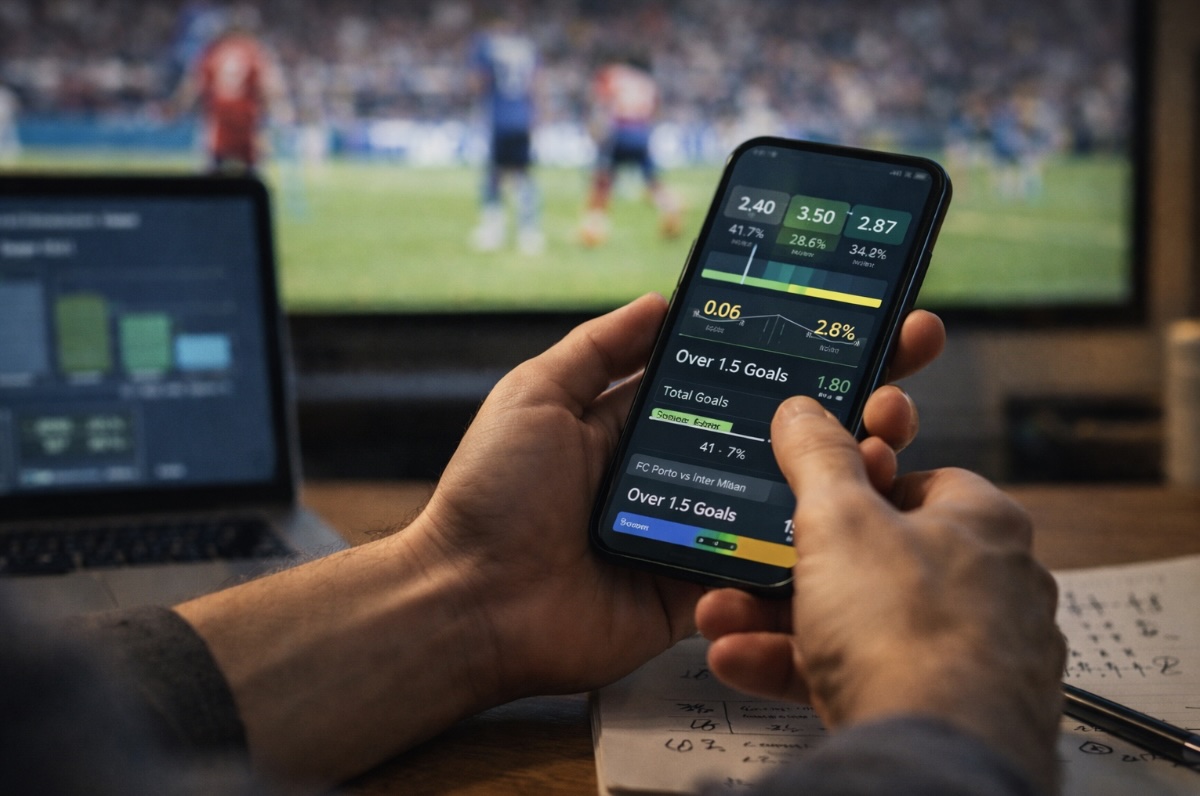
There still are matches in UEFA Champions League nights, NBA fourth quarters, and a Wimbledon tiebreak, but the numbers arrive faster than the chants. Odds, lines, live updates: they look like certainty, neatly packaged. Yet probability is not certainty. It is a way of speaking about the future without pretending it has already happened.
Mobile betting apps are a classroom with no bell. They teach, sometimes accidentally, that risk is not drama; it’s distribution, variance, and the quiet truth that outcomes don’t owe you anything. If you learn to read the screen as a set of questions instead of a set of promises, you start seeing where your thinking bends, and how to straighten it.
The odds aren’t prophecy, they’re a price tag
Odds are a translation device. They take a messy event, such as twenty-two players, wind, fatigue, tactics, injuries, etc., and compress it into a price. That price can be converted into an implied probability, which is where the learning begins. With decimal odds, the quick conversion is the reciprocal: 2.00 maps to 0.50 before any margin is considered. The point is not to worship the number; it’s to make it comparable to your own estimate.
Once you compare “their probability” to “your probability,” you stop treating a bet as a vibe. You start treating it as a claim you can test.
The margin hides in plain sight
People often look at odds and imagine they’re seeing pure likelihood. They’re not. In most fixed-odds markets, the set of prices includes a built-in margin, which is why the implied probabilities across all outcomes can add up to more than 1.00. That small excess is the house’s breathing room, and it matters because it changes what “fair” really means. A price can feel generous and still be expensive when you account for the total book.
This is one reason disciplined bettors focus less on being right in a single moment and more on whether their process repeatedly finds prices that beat their own baseline.
When the odds speak, listen like a statistician
Some people first arrive here by tapping melbet download apk and watching the file become an icon. The interesting part is not the download; it is what the screen teaches once the markets open. Live odds move as information arrives, and that movement is a practical lesson in conditional probability: the price updates when the world updates. When you watch a total-goals line shift after a red card, you’re seeing a new question replace the old one. The discipline is to notice the question changing, not to chase the motion.
A useful habit is to name the condition aloud in your head: “given the current score,” “given the tempo,” “given the lineup change.” It turns the app into a tool for thinking, not a trigger for impulse.
Bias loves convenience
The mind reaches for shortcuts, especially under time pressure. Confirmation bias can make a pre-match opinion feel like a destiny. A single stat, repeated in a group chat, can start sounding like proof. The app doesn’t create that bias, but it can amplify it by making selective evidence easy to find and easy to refresh.
Counter it with a small ritual: before you commit, write down one concrete reason the other side could be right. Not a slogan, not a mood; something measurable, like shot volume, pace, or injury impact. The goal is not to become hesitant; it’s to become honest.
The streak myth
Gambler’s fallacy is the seductive belief that random outcomes “should” correct themselves in the short run. After a team loses two in a row, people start saying the next win is “due.” After a coin lands heads repeatedly, people expect tails to arrive like an apology. In sport, the temptation is stronger because storylines are everywhere, and a losing run looks like a moral problem instead of a statistical one.
A better approach is to separate independence from causality. If the reasons for the previous outcomes remain, i.e., tactical mismatch, thin bench, and/or fatigue, then the next outcome doesn’t magically improve because you’re tired of the last one. If the reasons changed, as when rotation returns, schedule eases, or/and matchup improves, then you’re no longer talking about “due,” you’re talking about evidence.
Putting it together
A match preview is a story, but probabilities ask for quieter words: how often, how many, how uncertain. On melbet, toggling between markets shows how the same game is priced from multiple angles, and that’s a lesson in conditional thinking. Moneyline, totals, and player props are different questions, not different moods. When you treat each price as a probability statement, you can compare it to your own estimate, the app becomes less a temptation and more a calculator you carry. The screen stops shouting and starts explaining.
To keep the lesson practical, build a short checklist you can repeat:
- Convert odds to implied probability and compare it to your estimate.
- Ask what new information would justify a price move.
- Refuse “due” as a reason; demand a mechanism.
- Review one decision after the match, not to punish yourself, but to refine the method.