News On Japan

50 Future Jobs For The AI Age

TOKYO - A Tokyo exhibition is offering a look at 50 possible professions that could emerge in the AI age, from skin bacteria pharmacists who analyze microbes on the skin to ad walkers who use electronic textiles to deliver advertising while moving through the city.

The exhibition, The Future Jobs Exhibition 2045, opened on June 18 at Takanawa Gateway City in Tokyo's Minato Ward. It introduces professions that do not yet exist but could become part of daily life as technology develops.

Among the proposed jobs is a skin bacteria pharmacist, a specialist who analyzes the balance of microorganisms and bacteria living on the skin to choose the most suitable skincare. Another is an ad walker, who wears clothing made with electronic fibers and distributes effective advertising simply by walking around.

Visitors said the exhibits made the future feel close. "It is interesting to see analog ideas fused with digital technology. Wearing a cape with moving images is already possible, so this could be implemented," one visitor said. Another said, "I was very surprised because it was not just imagination but something that felt real."

The exhibition also includes jobs that visitors can experience firsthand. One attraction, Gesture Orchestra, allows participants to wear special gloves and create music that can only be produced in that moment by moving their hands and fingers.

The exhibition was organized by office furniture maker Okamura, which used about 6,000 patents it has acquired to consider what kinds of jobs might emerge beyond those technologies.

While some observers warn that advances in AI could take away existing jobs, the exhibition presents a more optimistic vision of a future in which technology expands human potential.

Naofumi Sato, executive officer at Okamura, said the company wants to use the idea of future professions as a starting point to create new solutions and new value. "Rather than thinking that human jobs will disappear or that people will have nothing to do, if 20 years from now we have a society where people can truly live vibrant lives, then jobs like these may exist, become reality, and allow everyone to live happily," Sato said.

AI時代の未来の職業50種

東京で開かれている展示会では、皮膚に住む微生物を分析する「美肌菌剤師」や、電子繊維を使って街を歩きながら広告を配信する「アドウォーカー」など、AI時代に生まれる可能性のある50種の職業が紹介されている。

AI时代的50种未来职业

东京一场展览正在展示AI时代可能出现的50种职业,包括分析皮肤微生物的“美肌菌剂师”,以及利用电子纤维服装在城市中行走并投放广告的“广告行者”。

Source: FNN

News On Japan
POPULAR NEWS

As of 3 p.m. on November 5, Typhoon No. 31 (In-fa) was accelerating northeast over waters north-northwest of Chichijima in the Ogasawara Islands, with the storm expected to become an extratropical cyclone far east of Japan on November 6 after triggering record November rainfall and landslide warnings across parts of the Kanto region.

Japanese calligraphy is set to be added to UNESCO's Intangible Cultural Heritage list after an evaluation body recommended its registration on November 5th, paving the way for the traditional art form to become Japan's 24th entry and its first since traditional sake brewing was recognized in 2024.

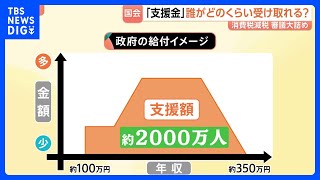
Japan's government is facing growing pressure from opposition lawmakers to clarify who will qualify for a new financial support program and how much they will receive, as deliberations on legislation to reduce the consumption tax on food and introduce payments for low- and middle-income earners enter their final stages in the House of Representatives.

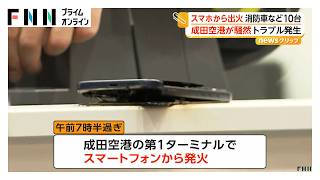
A smartphone caught fire at Narita Airport's Terminal 1 shortly after 7:30 a.m. on November 4th, prompting the dispatch of 10 fire trucks and other emergency vehicles before the blaze was extinguished about 30 minutes later, with no injuries reported.

A memorial service was held at a cemetery in Tokyo's Itabashi Ward on the morning of November 4 to honor police and security dogs that served in criminal investigations, disaster rescue operations, and other police duties, with 11 dogs newly laid to rest since late September 2025.

MEDIA CHANNELS
         

MORE Web3 NEWS

Japanese monthly magazine Nikkei Trendy has unveiled its ranking of the top 30 products and services expected to become hits in 2027, with "anti-AI" emerging as the central theme as consumers increasingly seek ways to distinguish genuine human activity from artificial intelligence-generated content.

Six thousand yen. That's the charge a Japanese citizen, or a foreigner who lives in the country, will pay at the casino door of the resort now going up on Yumeshima, the reclaimed island in Osaka Bay that hosted Expo 2025.

The AI Film Festival Japan 2026, one of Asia's largest international film festivals dedicated to works created using artificial intelligence, held its awards ceremony in Tokyo on November 1, attracting more than 730 submissions from over 60 countries and regions, with short films and animation accounting for the majority of entries.

A visitor stands outside a small restaurant in Kyoto trying to work out three things. Whether the place takes cards. Whether they need a reservation. And whether walking in without Japanese is going to be awkward for everybody.

Japanese retail giant Aeon unveiled a logistics warehouse on October 30 equipped with "physical AI" robots capable of independently sorting and stacking products, allowing the company to automate approximately half of its warehouse operations while increasing loading efficiency to four times that of manual labor.

Artificial intelligence is opening new possibilities for digital creativity, allowing people to transform ideas into illustrations, animated characters and short films without the extensive technical skills or expensive production equipment traditionally required, with platforms such as Japan-inspired AI art service PixAI bringing these capabilities to a growing community of creators.

Building a TikTok presence on a limited budget means weighing every expense. For creators comparing paid follower, like, and view packages, the headline price is only part of the decision.

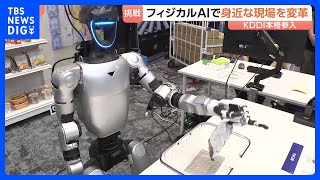
Japanese telecommunications giant KDDI announced on October 28 that it will invest 30 billion yen in physical artificial intelligence by fiscal 2030, aiming to deploy more than 1,000 autonomous robots across retail, logistics and manufacturing facilities as Japan searches for solutions to its worsening labor shortage.