News On Japan

Japan Airlines Reveals New Workwear

TOKYO - Japan Airlines has unveiled new cooling workwear for ground staff at Haneda Airport, where temperatures on the aircraft parking apron reached 39 degrees Celsius.

The new vests are equipped with air-circulation fans and feature an improved battery connector designed to keep the cooling system operating effectively for longer periods.

Despite the intense heat on the apron, wearing the same vest as ground staff significantly reduced the perceived temperature.

Japan Airlines is also distributing shaved ice in staff break rooms as part of efforts to protect employees' health and prevent heat-related illness.

Source: テレ東BIZ

News On Japan
POPULAR NEWS

Japan launched a new national disaster management agency on November 2nd to strengthen its response to major emergencies, just days before a powerful earthquake struck Aichi Prefecture, injuring 24 people and renewing concerns over the possibility of a catastrophic Nankai Trough earthquake.

Northern Japan experienced record-breaking cold on the morning of November 11th, with temperatures plunging to minus 20.2 degrees Celsius in Horokanai, Hokkaido, marking the first time in Japan's recorded history that temperatures have fallen below minus 20 degrees during the first half of November.

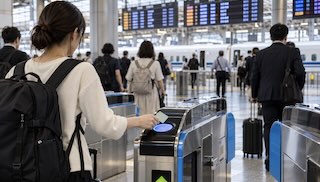
East Japan Railway (JR East) announced on November 10th that it will introduce touch-free ticket gates at 40 stations, including every station on Tokyo's Yamanote Line, from spring 2028, allowing passengers using Mobile Suica to pass through without taking their smartphones out of their pockets or bags.

Japan's Children and Families Agency unveiled its first national guidelines on November 10th for parental involvement in children's internet use, dividing those aged 0 to 18 into six developmental stages as the government considers tighter regulations on social media platforms to protect young people from online bullying, exploitation, and other growing risks.

As of 3 a.m. on Wednesday, November 11, Typhoon No. 32 was moving east-northeast over waters east of Chichijima in the Ogasawara Islands, gradually heading away from the Japanese archipelago after passing near the island between late Tuesday night and early Wednesday morning.

MEDIA CHANNELS
         

MORE Travel NEWS

A woman was seriously injured in a wild boar attack in Nishinomiya, Hyogo Prefecture, as sightings of unusually large boars increase across the Kansai region, with some weighing nearly 150 kilograms and capable of running at speeds of 45 kilometers per hour.

Japan's autumn foliage season is entering one of its most colorful periods, with spectacular displays of red and golden leaves attracting visitors to lakes, mountain valleys and historic temples across the country, while the latest forecasts suggest that Tokyo, Kyoto and other major cities will see some of their best autumn scenery later than usual this year.

Travel conditions across Hokkaido were showing signs of improvement on Wednesday morning, November 11, following heavy snowfall and freezing temperatures that disrupted rail services and prompted warnings for air travelers and motorists, with railway information updated at 4:23 a.m. showing no major delays or cancellations across the prefecture's principal routes.

As of 3 a.m. on Wednesday, November 11, Typhoon No. 32 was moving east-northeast over waters east of Chichijima in the Ogasawara Islands, gradually heading away from the Japanese archipelago after passing near the island between late Tuesday night and early Wednesday morning.

Odakyu Electric Railway unveiled images of its next-generation Romancecar limited express train on November 10, revealing a striking blue-green design featuring enormous circular windows that will allow passengers to enjoy panoramic views from ceiling to floor when the new trains enter service in March 2029.

A powerful cold air mass brought the lowest temperatures of the season to much of Japan on Tuesday, November 10, with Hokkaido recording a nationwide seasonal low of minus 11.8 degrees Celsius, heavy snowfall covering northern communities, and Tokyo experiencing midwinter conditions as temperatures fell sharply across the country.

The card worked on the subway, paid for a convenience-store coffee and still has plenty of yen left. Then the Shinkansen gate refuses to open. Another top-up seems the obvious fix, especially with a departure time creeping closer. But the balance may be perfectly healthy.

Japan's younger generation is increasingly turning away from driving and car ownership, with the number of driver's license holders aged 24 and under falling by approximately 590,000 over the past decade to around 5.15 million in 2025, reflecting changing attitudes toward transportation, spending and the traditional appeal of owning a car.