News On Japan

Japan eyes limit of 2,000 daily arrivals as it opens for Olympics

Mar 09, 2021 (Nikkei) - Japan looks to set a daily limit on the number of people entering the country even as it allows new exceptions to an arrival ban for international travelers, including those involved in the Olympics, Nikkei has learned.

A cap of around 2,000 people has been proposed, taking effect sometime after the Tokyo area's coronavirus state of emergency ends, people familiar with the matter say. The number includes Japanese nationals returning to the country.

This review of Japan's entry rules comes after the country halted nearly all new arrivals in late December in an attempt to stop a surge in coronavirus infections. The state of emergency in the capital area has been extended to March 21.

Chief Cabinet Secretary Katsunobu Kato met Monday with Tokyo Olympics chief Seiko Hashimoto. "We confirmed that we are going to move ahead steadily with preparations for the games," Kato said afterward.

The government plans to expand its exceptions to the entry ban to include athletes and people involved in organizing the Olympic and Paralympic games, scheduled to begin in July. Test events are to start in April.

The cap on entries would be managed by adjusting the number of passengers on Japan-bound flights.

Japan now makes exceptions in special circumstances, such as reuniting with separated family members and receiving medical treatment. Foreigners who hold permanent residency status also are allowed to reenter the country.

A ban on new entries by business travelers will continue. So-called business track arrangements for short-stay travel with four countries -- Singapore, South Korea, Vietnam and China -- are likely to remain suspended for the foreseeable future because coronavirus variants have been detected in all of these nations.

An average of 1,241 people entered Japan daily during February, a document presented at a meeting of the ruling Liberal Democratic Party's foreign affairs team shows. This average consisted of 494 foreigners and 747 Japanese. The figure was 3,235 in November, 4,108 in December and 2,611 in January.


News On Japan
POPULAR NEWS

The resignation of Nvidia CEO Jensen Huang on November 12 following allegations involving a woman suspected of links to Chinese intelligence has raised concerns in Japan over the potential impact on semiconductor investment, financial markets and the yen, as uncertainty surrounding the American AI chipmaker threatens to disrupt the global technology industry.

Japan launched a new national disaster management agency on November 2nd to strengthen its response to major emergencies, just days before a powerful earthquake struck Aichi Prefecture, injuring 24 people and renewing concerns over the possibility of a catastrophic Nankai Trough earthquake.

Russia's Foreign Ministry on November 11 defended the government's unilateral decision to place the local subsidiary of Japan Tobacco (JT) under the management of a Russian company, describing the move as a countermeasure against what it called Japan's "blatantly hostile actions."

East Japan Railway (JR East) announced on November 10th that it will introduce touch-free ticket gates at 40 stations, including every station on Tokyo's Yamanote Line, from spring 2028, allowing passengers using Mobile Suica to pass through without taking their smartphones out of their pockets or bags.

Japan's Children and Families Agency unveiled its first national guidelines on November 10th for parental involvement in children's internet use, dividing those aged 0 to 18 into six developmental stages as the government considers tighter regulations on social media platforms to protect young people from online bullying, exploitation, and other growing risks.

MEDIA CHANNELS
         

MORE Society NEWS

An artwork installed in Kyoto's historic Takase River has been broken in half during an autumn art festival, with organizers expressing anger after discovering that the sculpture had suffered further damage despite already being found broken two days earlier.

An anti-organized crime convention was held in Osaka City, bringing together police, government officials, and business representatives to reaffirm their commitment to eliminating organized crime groups, as authorities warned that shrinking yakuza organizations are increasingly cooperating with loosely organized criminal networks involved in fraud and robbery.

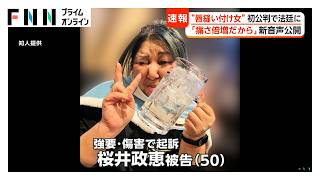
A 50-year-old woman accused of forcing her housemate to sew her own lips shut with a needle and thread admitted all charges at her first court hearing on November 11th, as prosecutors played disturbing audio recordings of the threats used to coerce the victim during an incident in Koga, Ibaraki Prefecture, in June 2026.

A 26-year-old woman from Nagoya has been arrested on suspicion of defrauding men by encouraging them to develop romantic feelings for her before repeatedly requesting money, with 13 men reporting losses totaling approximately 30 million yen in a scheme resembling the notorious "Itadaki Joshi" romance fraud case.

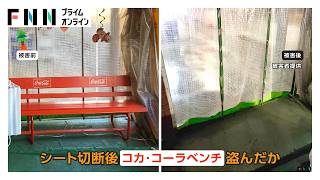
A rare red Coca-Cola bench was stolen from outside a prepared-food shop in Nagareyama, Chiba Prefecture, in the early hours of October 24th, with the owner suspecting the thieves intended to resell the collectible item to enthusiasts after similar benches were found listed online for as much as 180,000 yen.

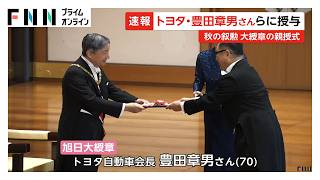
Emperor Naruhito presented prestigious Grand Cordon decorations to Toyota Motor Chairman Akio Toyoda and other recipients of Japan's autumn honors at a ceremony held at the Imperial Palace on November 10th, recognizing their longstanding contributions to the country and society.

A 26-year-old yakuza member suspected of sending young women he met in Tokyo's Kabukicho entertainment district to Cambodia to work as telephone scammers has been arrested for the eighth time, this time on suspicion of conspiring with two women to defraud a man in his 30s of 9.5 million yen.

A 31-year-old Chinese national has been arrested in Tokyo on suspicion of operating an illegal mobile phone base station that forced more than 10,000 smartphones onto a 2G network in less than two hours, allowing phishing messages to be sent to unsuspecting users in busy shopping districts including Ginza, Shinjuku and Shibuya.