News On Japan

'Glowing snail' discovered, first new species in 80 years

NAGOYA - When we think of luminescent creatures, we often envision fireflies emitting a fantastical, soft glow, or the stunning bioluminescence of deep-sea creatures like jellyfish and firefly squids. However, a new discovery has emerged after an 80-year hiatus - the 'glowing' snail.

This discovery was made by a collaborative research group from Chubu University in Aichi Prefecture, Japan, and a university in Thailand.

Until now, the only known luminescent snail species was found in Singapore in 1943. However, this recent discovery has unveiled five new species.

Professor Yuichi Oba, Faculty of Applied Biology, Chubu University, speculates, "It's possible that these snails glow as a means of self-defense."

According to Professor Oba, these snails might be mimicking other organisms, "Fireflies, for example, glow as a warning signal because they have a 'bad taste' and are toxic. It's conceivable that snails are also sending out a similar message, 'Attacking me is a bad idea,' or they might be mimicking fireflies to convey, 'Eating me is a bad idea.'"

Professor Oba believes that understanding the mechanism of this luminescence could have practical applications, such as using it to monitor metastatic cancer cells by making them glow.

News On Japan
POPULAR NEWS

Typhoon No. 6 was located about 40 kilometers south-southwest of Irozaki on the Izu Peninsula in Shizuoka Prefecture at noon on June 3rd and was moving east-northeast at 40 kilometers per hour as it made its closest approach to the Kanto region, bringing heavy rain, rough seas and a growing risk of strong northerly gusts even as the peak of rainfall began to pass in parts of the Tokyo metropolitan area.

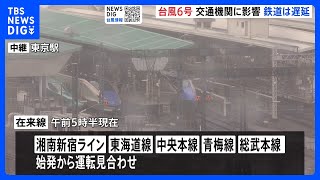
[updated 1:00 p.m.] Typhoon No. 6 is disrupting Japan's transport network on June 3rd, with JR East suspending some lines until the afternoon or for the full day, highway bus services canceled across major expressway routes, expressway operators warning of closures and speed restrictions, and airlines canceling more than 700 domestic flights, mainly on routes to and from Haneda Airport, as heavy rain from the storm spreads along the Pacific side of western and eastern Japan.

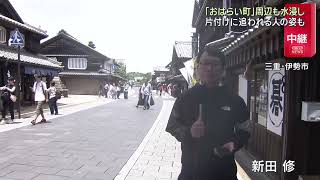
Flooding was reported around the popular tourist district of Oharai-machi in Ise City following the passage of Typhoon No. 6, with some businesses forced to clean up after floodwaters overflowed from a nearby river during the early hours of June 3rd.

A breaking weather alert was issued for the Izu region of Shizuoka Prefecture early Wednesday morning, after the formation of a linear rain band, a phenomenon capable of producing prolonged and extremely intense rainfall over the same area. Authorities warned that the risk of disasters has risen sharply as heavy rain continues to fall, increasing the likelihood of flooding, landslides, and other weather-related emergencies.

[updated 03:30 a.m.] Authorities issued a Level 5 Flood Occurrence Information alert for the Kuwano River and the Naka River tributary in Tokushima Prefecture, warning that flooding may already be underway and urging residents to take immediate action to protect their lives.

MEDIA CHANNELS
         

MORE Sci-Tech NEWS

A large solar power facility built on a mountainside in Fukushima City is generating reflected sunlight for far longer than originally projected, with a city survey finding that glare at some locations lasted up to 53 minutes per day—more than ten times the maximum duration predicted by the operator.

Japan’s largest space business exhibition opened at Tokyo Big Sight on May 27th, showcasing a growing wave of companies from outside the traditional aerospace sector entering the rapidly expanding space industry.

JR Tokai held its first-ever resident briefing session in Shizuoka City on May 26th regarding construction of the Linear Chuo Shinkansen, outlining measures for water resource management and environmental conservation as the company seeks to gain local support ahead of the start of construction in Shizuoka Prefecture.

A seasonal spectacle has begun on the Miwasaki coast in Shingu, Wakayama Prefecture, where tiny male chigogani crabs are emerging from their burrows at low tide and rhythmically waving their claws in a movement resembling a dance.

A small onshore wind turbine collapsed in Oga, Akita Prefecture, in March, raising fresh concerns among local residents following a series of wind turbine-related accidents in the city over recent years.

Japan's next-generation homegrown supercomputer, Fugaku NEXT, is being developed with a radically different strategy from its predecessors, abandoning the single-minded pursuit of the world's fastest calculation speed in favor of artificial intelligence capabilities expected to accelerate breakthroughs in fields ranging from drug development and batteries to disaster prevention and food production.

A safety alert is expected to be issued as early as May 21st over Tavneos, a drug used to treat vasculitis, after 20 patients who took the medication died from serious liver dysfunction, according to people familiar with the matter.

As aging underground infrastructure becomes an increasing concern across Japan, the city of Yokkaichi in Mie Prefecture has developed a digital underground map designed to improve the management of sewer, water, gas, and electrical systems.