News On Japan

Dressing Japan's schoolkids gets dearer as wool prices spike

Mar 17, 2018 (Nikkei) - Prices of school uniforms are on the rise in Japan, due to sharply climbing wool prices and changing fashion trends in neighboring China.

When Taimei Elementary School in Tokyo's fashionable Ginza district adopted new uniforms designed by the Italian luxury brand Armani, and the move sparked a nationwide uproar. The new uniforms for boys and girls carry price tags of over 80,000 yen ($754) each, including suggested accessories such as a matching bag.

The parents at the public elementary school were not alone in complaining about spiking prices of school uniforms in Japan.

In a country that has struggled with deflation for many years, prices for school uniforms are rising sharply, though not usually as high as the Ginza school's.

Uniforms in Japan averaged 32,000 yen to 33,000 yen in the fiscal year ended March 2017, a roughly 18% increase from a decade ago, according to the Ministry of Internal Affairs and Communications.

One reason for the higher prices is the added fashion element of school uniforms, inspired by the all-girl Nogizaka46 idol group, whose members perform in uniform-like costumes. Schools with cuter uniforms tend to attract more students, which has driven schools to pursue uniforms of a higher caliber. Limited production results in higher bills.

One reason for the higher prices is the added fashion element of school uniforms, inspired by the all-girl Nogizaka46 idol group, whose members perform in uniform-like costumes. Schools with cuter uniforms tend to attract more students, which has driven schools to pursue uniforms of a higher caliber. Limited production results in higher bills.

School uniform prices in Japan rose by about 5,000 yen on average in the nine years between fiscal 2007 and 2016.

News On Japan
POPULAR NEWS

Northern Japan experienced record-breaking cold on the morning of November 11th, with temperatures plunging to minus 20.2 degrees Celsius in Horokanai, Hokkaido, marking the first time in Japan's recorded history that temperatures have fallen below minus 20 degrees during the first half of November.

East Japan Railway (JR East) announced on November 10th that it will introduce touch-free ticket gates at 40 stations, including every station on Tokyo's Yamanote Line, from spring 2028, allowing passengers using Mobile Suica to pass through without taking their smartphones out of their pockets or bags.

Japan's Children and Families Agency unveiled its first national guidelines on November 10th for parental involvement in children's internet use, dividing those aged 0 to 18 into six developmental stages as the government considers tighter regulations on social media platforms to protect young people from online bullying, exploitation, and other growing risks.

As of 3 a.m. on Wednesday, November 11, Typhoon No. 32 was moving east-northeast over waters east of Chichijima in the Ogasawara Islands, gradually heading away from the Japanese archipelago after passing near the island between late Tuesday night and early Wednesday morning.

Odakyu Electric Railway unveiled images of its next-generation Romancecar limited express train on November 10, revealing a striking blue-green design featuring enormous circular windows that will allow passengers to enjoy panoramic views from ceiling to floor when the new trains enter service in March 2029.

MEDIA CHANNELS
         

MORE Society NEWS

A 26-year-old woman from Nagoya has been arrested on suspicion of defrauding men by encouraging them to develop romantic feelings for her before repeatedly requesting money, with 13 men reporting losses totaling approximately 30 million yen in a scheme resembling the notorious "Itadaki Joshi" romance fraud case.

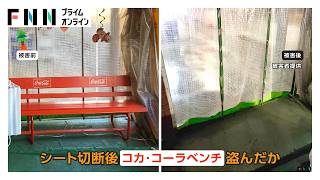
A rare red Coca-Cola bench was stolen from outside a prepared-food shop in Nagareyama, Chiba Prefecture, in the early hours of October 24th, with the owner suspecting the thieves intended to resell the collectible item to enthusiasts after similar benches were found listed online for as much as 180,000 yen.

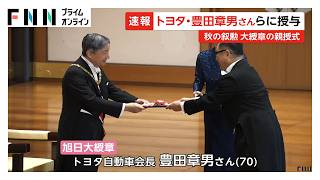
Emperor Naruhito presented prestigious Grand Cordon decorations to Toyota Motor Chairman Akio Toyoda and other recipients of Japan's autumn honors at a ceremony held at the Imperial Palace on November 10th, recognizing their longstanding contributions to the country and society.

A 26-year-old yakuza member suspected of sending young women he met in Tokyo's Kabukicho entertainment district to Cambodia to work as telephone scammers has been arrested for the eighth time, this time on suspicion of conspiring with two women to defraud a man in his 30s of 9.5 million yen.

A 31-year-old Chinese national has been arrested in Tokyo on suspicion of operating an illegal mobile phone base station that forced more than 10,000 smartphones onto a 2G network in less than two hours, allowing phishing messages to be sent to unsuspecting users in busy shopping districts including Ginza, Shinjuku and Shibuya.

A male bear weighing approximately 270 kilograms was killed by hunters in Iwamizawa, Hokkaido, on November 8th after being caught in a box trap, with local hunters suspecting it was responsible for a series of attacks on a nearby poultry farm that left more than 100 chickens and ducks dead since August.

Princess Aiko, the only daughter of Emperor Naruhito and Empress Masako, attended an event in Tokyo aimed at raising awareness and encouraging support for crime victims and their families, becoming the first member of the Imperial Family to participate in the gathering.

Police across Japan are struggling to contain a rapidly spreading social media trend known as "Shorinji Racing," in which children and teenagers shout "Shorinji" outside police stations and police boxes before running away, with Osaka police recording approximately 280 related incidents and taking around 50 minors aged between 7 and 16 into protective custody or questioning them.