News On Japan

Japanese hot spring tourism at a crossroads

Jul 25 (asiatimes.com) - Hot springs, justifiably, are a major tourism resource for Japan. The 27,000 hot springs dotted around the country generated US$11.8 billion in revenue in 2013, representing more than one-fifth of the $50 billion global hot-springs market.

Japanese hot springs were set for a further boom as analyses noted that the rapid growth in global “wellness tourism” would provide the industry with an additional boost in the coming years.

Certainly, as the number of foreign tourist arrivals in Japan jumped from 3.3 million in 1995 to 31.9 million in 2019, the country’s hot springs have also seen a proportional rise in the number of foreign visitors.

That was, of course, before Covid-19 struck. To say that the Japanese tourism market has been derailed is an understatement.

After the country closed its borders to foreign visitors and residents alike to contain the spread of the epidemic, Japan is set to lose $1.9 billion and face declines amounting to 80% in overall tourist traffic.

The “Go To Travel” campaign, the Japanese government’s latest effort to revive domestic tourism through subsidies for travelers, has faced concerns over its potential hastening of the virus’ spread, and the last-minute exclusion of Tokyo, the country’s wealthiest and most populous prefecture, from the program.

Hot springs are expected to face a disproportionate decline as Covid-19 lays waste to the Japanese tourism industry.

Not only are the signature communal baths that define hot-spring resorts completely inadequate in the age of “social distancing,” but cautious tourists are also keen to avoid the process of getting to remote hot-spring towns, densely built up with inns and hotels amidst narrow streets, often reachable only through normally packed trains and buses.

News On Japan
POPULAR NEWS

Bear sightings across Japan have already climbed to nearly twice the level recorded during the same period last year, prompting entry bans in mountain areas behind Kyoto’s Ninna-ji Temple and the cancellation of hiking events in Kansai, while new research suggests that the key to reducing encounters may lie in understanding what bears eat in each region.

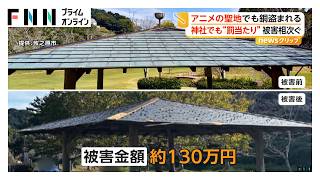
Copper roofing panels were stolen from several shrines in Hamamatsu, Shizuoka Prefecture, including a city-designated cultural property, in the latest case amid a nationwide surge in copper thefts targeting shrines and temples across Japan, where soaring metal prices have fueled crimes that leave historic religious buildings damaged, exposed to the elements, and facing repair costs of millions of yen.

Flames broke out on the morning of May 20th on Miyajima Island in Hiroshima Prefecture, home to one of Japan's World Heritage sites, destroying Reikado Hall near the summit of Mount Misen.

Uncertainty surrounding the situation in the Middle East is beginning to affect daily life in Japan, as concerns over crude oil supplies spread to restaurants, cleaning services and even household garbage disposal systems across the Kansai region.

A 25-year-old woman arrested as a suspected ringleader in a robbery-murder case in Tochigi Prefecture once posted cheerful dance videos on social media and was remembered by those who knew her as an energetic and outgoing young woman.

MEDIA CHANNELS
         

MORE Society NEWS

A fire that broke out in Kagamino, Okayama Prefecture, shortly after noon on May 20th destroyed three buildings, including a home, after flames from open burning spread to dead leaves and then to nearby structures.

Six people, including a senior member of a group affiliated with the Sumiyoshi-kai crime syndicate's Kohei-ikka faction, have been arrested on suspicion of opening a gang office in a prohibited area near a nursery school in Tokyo's Itabashi Ward.

A man who visited a police station in Hiratsuka, Kanagawa Prefecture, in the early hours of May 21st allegedly sprayed a transparent liquid inside the building, causing six police officers to complain of eye and throat pain and be taken to hospital with minor injuries.

The Tokyo Metropolitan Police Department held a review ceremony for its riot police units at Meiji Jingu Gaien in Tokyo on May 20th, with around 1,700 officers marching in formation as part of a large-scale demonstration of security preparedness.

A 25-year-old woman arrested as a suspected ringleader in a robbery-murder case in Tochigi Prefecture once posted cheerful dance videos on social media and was remembered by those who knew her as an energetic and outgoing young woman.

Two women were found dead with stab wounds at a house in Tatsuno, Hyogo Prefecture, on May 19th, with police suspecting they were victims of a violent crime.

Bear attacks continue to occur across Japan, while a new problem has emerged as false reports of bear sightings flood local alert systems, placing growing pressure on municipal authorities and emergency responders.

A man in his 30s was referred to prosecutors after allegedly feeding a chocolate snack to a marmot at an animal cafe in Osaka Prefecture, despite the risk that the treat could cause poisoning or even death in the squirrel-family animal.