News On Japan

'Hands Free' Tourist Bus Begins in Kyoto

'Hands Free' Tourist Bus Begins in Kyoto

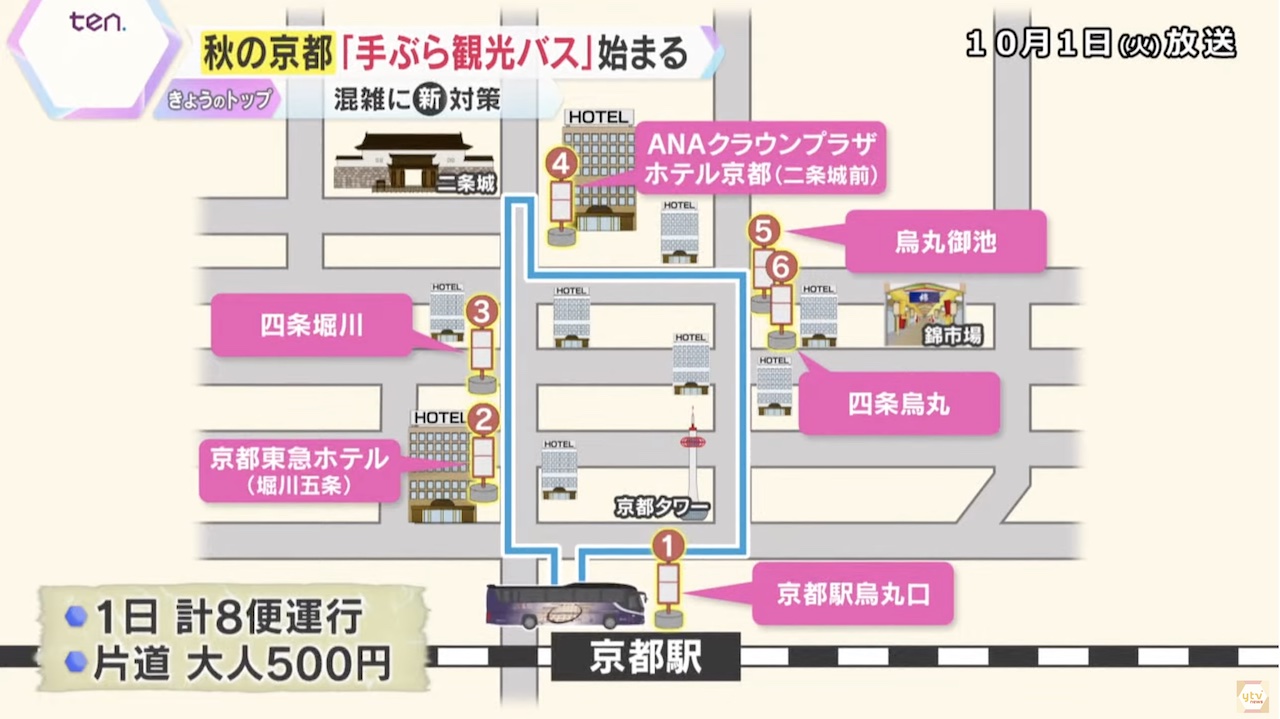
KYOTO - Kyoto has launched a pilot project called the 'HANDS FREE BUS' to tackle overtourism and alleviate congestion on city buses, particularly caused by tourists with large luggage.

The new bus service allows tourists to store their luggage in the trunk, promoting a hands-free sightseeing experience. Despite the service’s potential to ease public transportation crowding, initial uptake has been low, with no users reported on the first day.

The initiative addresses chronic issues in Kyoto's public transportation system, where tourists carrying large suitcases often prevent local residents from boarding crowded city buses. Additionally, the city faces a severe shortage of bus drivers, a problem that extends nationwide. By 2030, Japan is expected to face a shortfall of 36,000 bus drivers due to the job's demanding nature, irregular hours, and increased responsibilities.

Experts suggest that Japan's current bus operation model, which relies heavily on fare-based revenue from peak commuting hours, may require a shift. Nationwide subsidies could be necessary for the sustainable operation of bus services, especially in light of declining ridership and changing passenger expectations.

Source: YOMIURI

News On Japan
POPULAR NEWS

Prime Minister Sanae Takaichi has drawn criticism over a social media post describing five hours of sleep as a rare luxury, as the extended Diet session prepares to begin Upper House debate on a controversial bill to establish secondary capitals outside Tokyo.

Japan began applying a new numerical alcohol threshold for dangerous driving offenses on July 21, introducing a clearer standard for cases involving impaired driving that could lead to fatal accidents.

Breathtaking 4K footage filmed from a helicopter offers a sweeping aerial view of Mount Fuji and its majestic surrounding landscape.

A covert network of shuttle tankers is carrying crude through the increasingly dangerous Strait of Hormuz as renewed fighting between the United States and Iran disrupts shipping and raises concerns over how Japan will secure the oil it needs.

Russian Deputy Foreign Minister Andrey Rudenko has criticized moves by Japanese and Ukrainian companies to cooperate on drone technology, warning that such ties would be regarded by Moscow as a "clear hostile act."

MEDIA CHANNELS
         

MORE Travel NEWS

Haneda Airport is emerging as a destination where visitors can spend an entire day, offering aviation-themed attractions, distinctive restaurants, unusual vending machines and observation decks with sweeping views of aircraft taking off and landing.

Japan’s newest luxury cruise ship, Asuka III, offers passengers the experience of a high-end hotel at sea, combining private balconies, fine dining, Japanese-style bathing and personalized service on voyages around the country.

The rainy season ended in the Kanto-Koshin and Tokai regions on July 20 as strengthening high pressure brought intense heat across Japan, with temperatures forecast to reach 38 C in Kumagaya, Saitama Prefecture, and Kofu.

Nagashima Jumbo Seawater Pool in Kuwana, Mie Prefecture, was packed with visitors on Marine Day, the final day of a three-day weekend, as families sought relief from intense summer heat following the end of the rainy season in the Tokai region.

A beach where visitors can swim alongside whales has opened in Taiji, Wakayama Prefecture, drawing families and children eager to see the animals at close range.

An interactive exhibition recreating the world of Studio Ghibli will open at Osaka's ATC complex on July 18, offering visitors of all ages the chance to experience famous scenes and characters from the studio's animated films.

Heavy rain flooded railway tracks in Hokkaido, forcing the cancellation of 32 trains, including limited express services linking Sapporo and Hakodate.

Japan is likely to face increasingly long and dangerously hot summers as global temperatures continue to rise, with advanced climate simulations also pointing to more frequent torrential rain, rising seas and accelerating ice loss by the end of the century.