TOKYO - A new chapter opened in Japan’s political history on October 21st as Sanae Takaichi was elected the nation’s first female prime minister. Following her appointment by the Diet, Takaichi declared that her new cabinet would be one of “decision and progress,” pledging to move swiftly on policies from the very first day.
In her inaugural press conference, Takaichi expressed determination to face Japan’s domestic and external crises head-on. “I will devote myself entirely to the nation and its people, unafraid of change. This cabinet will deliver results. We will build a strong Japan and never give up. Japan stands at the center of the world, and I will restore its proud diplomacy,” she said. Stressing urgency, she added, “Japan faces serious challenges both at home and abroad. There is no time to stand still. From day one, I and my ministers will operate at full speed.”
The prime-ministerial vote began at 1 p.m. in the lower house. Amid light moments such as opposition and Ishin leaders yielding their turns to each other, Takaichi’s name drew loud applause when ballots were cast. She won 237 votes—more than half—securing her election as Japan’s 104th prime minister.
In her hometown in Nara Prefecture, residents celebrated the historic moment. “I’ve known her since she was a child, so I feel truly happy,” said one woman. Another mother added, “Prices have been tough lately—if her administration can ease that burden for families, that would be wonderful.” Children in the neighborhood sent messages like, “Keep going, Takaichi! We know you’ll do it!”
At a local beauty salon connected to Takaichi, owner Yuki Arai recalled cutting the politician’s hair when she first joined the Liberal Democratic Party (LDP). “We called it the Takaichi Cut—a kind of graduation-bob style that reveals the face when tucked behind the ears, showing you listen carefully to others,” she said. When news of Takaichi’s victory arrived mid-appointment, Arai paused to watch the announcement video. “I got goosebumps,” she said. “It’s incredible to see what she always talked about finally come true. I hope she brings hope and dreams to young people.”
Born in 1961 to a salaried family in Nara, Takaichi attended Kobe University, where she rode motorcycles and played drums in a heavy-metal band called Honey Bee. After graduation she became a TV anchor and commentator, known for her outspoken political views. “Japan shouldn’t act just to please American justice,” she once said. “We must base our decisions on what is right for Japan.”
She first won a seat in the lower house in 1993 and married fellow LDP lawmaker Yamamoto in 2004. At their wedding, then-Prime Minister Shinzo Abe—her close ally and fellow freshman legislator—gave the toast. Under Abe’s leadership, Takaichi served in her first cabinet post and came to be viewed as one of his ideological successors. In her earlier LDP presidential bids she fell short, finishing third, and once reflected, “When I first ran, being young and female was a huge obstacle. People said, ‘What can a woman do in the Diet?’ It was very painful.”
After three attempts, she finally won the LDP presidency and ascended to the nation’s highest office. The markets quickly responded: in early October, the Nikkei Average surged to an unprecedented 48,000 yen following her party victory, then fell to 46,000 after the Komeito coalition split, only to rebound to 49,000 yen after the Ishin alliance was finalized. On the day of her inauguration, stocks briefly neared the symbolic 50,000 yen mark amid investor optimism.
From abroad, responses were mixed. A Chinese Foreign Ministry statement called on Tokyo to “adhere to past political commitments on Taiwan and other issues, preserving the foundation of bilateral relations.” South Korean President Lee Jae-min wrote on social media that he looked forward to “frequent shuttle diplomacy and open communication.” Yet some outlets expressed concern: South Korea’s Dong-A Ilbo described her as “Japan’s female Abe,” while major U.S. media labeled her a “conservative hawk advocating a Japan-First stance.” Responding to such views, Takaichi said lightly, “I’ve heard various concerns, but I love Korean food, use Korean cosmetics, and watch Korean dramas. I look forward to meeting President Lee in person soon.”
At 4:30 p.m., incoming Chief Cabinet Secretary Kihara announced the new cabinet lineup. Former foreign minister Yoshimasa Hayashi, who recently competed against Takaichi in the LDP leadership race, was reappointed as internal affairs minister. Motegi Toshimitsu returned as foreign minister, and Koizumi Shinjiro became defense minister. Among new faces, Akazawa Kazuyuki was named economy and industry minister, continuing his prior post, and Katayama Satsuki became finance minister. Oda Takashi entered the cabinet for the first time as minister in charge of economic security and immigration policy, having previously argued for tougher measures against the abuse of Japan’s residency systems. Wakamiya Kenji, another newcomer, was appointed children’s policy minister.
Following the emperor’s attestation ceremony, Takaichi and her ministers began their first official day of work. After her election, she visited opposition party leaders, including Constitutional Democratic Party leader Noda, a former classmate at the Matsushita Institute. “I look forward to our debates in the Diet,” Noda said, to which Takaichi replied with a smile, “We might not have time for that yakiniku dinner anymore.” When she met with Komeito—now an opposition party—handshakes were polite but eyes did not meet. In contrast, her meeting with the new coalition partner Nippon Ishin no Kai was warm and joking. Ishin leader Endo even presented her with a pulse bracelet as a gift, saying he had prepared it a week in advance.
In her remarks after the meetings, Takaichi stressed cooperation. “We will continue to call on all opposition parties for collaboration. As long as proposals do not conflict with our basic policies, we will accept them in principle and engage in forward-looking discussions,” she said. “If it is for the sake of the nation and its people, we will never give up.”
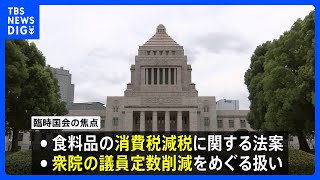
At 10 p.m., she held a second press conference after the first cabinet meeting, reiterating her call for ministers to tackle inflation and compile a supplementary budget swiftly. Commentators noted that her “Cabinet of Decision and Progress” would be judged on its execution and speed. She has already rejected Komeito’s proposal for direct cash handouts, while agreeing to consider Ishin’s idea of a temporary zero-percent consumption tax on food for two years. Observers expect her administration to prioritize cutting lawmakers’ seats and implementing economic measures in parallel.
Political analyst Iwata commented on television, “Takaichi’s decision to create new cabinet posts—such as ministers for tax-subsidy reform, growth strategy, wage-increase promotion, and orderly coexistence with foreign residents—signals her focus on structural reform and social cohesion.” Another commentator added, “This leadership marks a historic shift. To make this sight normal, Japan needs a more inclusive society where diverse voices can speak freely.”
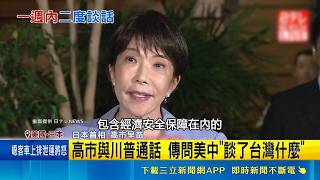
As markets watch closely and foreign leaders prepare to engage, Takaichi’s first major test will come soon with an expected visit from former U.S. President Donald Trump. “I want to build a relationship of trust through frank exchanges,” she said. Known for her pragmatic but observant style, Takaichi once remarked, “Negotiations start by studying people carefully.” Her first days as Japan’s new leader may test that philosophy at full speed—just as she promised.
Source: TBS