News On Japan

LDP-Komeito Coalition Collapses

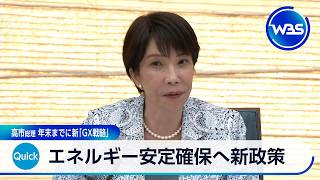
TOKYO - Komeito leader Saito informed Liberal Democratic Party (LDP) president Takaichi on October 10 that his party intends to withdraw from their coalition, bringing an end to a political partnership that has lasted 26 years, including periods when the LDP was in opposition. Leaders and secretary-generals of both parties met in the Diet at 1:45 p.m. on October 10 to discuss whether to continue the alliance, with Komeito insisting during the meeting that strengthening regulations on corporate and organizational political donations be accepted as a condition for maintaining the coalition.

With the two sides failing to reach an agreement, Saito conveyed to Takaichi that Komeito would leave the coalition. Since its formation in 1999, the partnership between the two parties had endured even during the LDP’s time out of power, but growing public anger over political funding scandals triggered the decision to end their cooperation.

With the Diet expected to convene for a prime ministerial selection vote after October 20, Komeito plans not to support Takaichi in the ballot. As a result, it is now uncertain whether she will be chosen to succeed Prime Minister Ishiba.

Source: TBS

News On Japan
POPULAR NEWS

Typhoon No. 15 (Chan-hom) is increasingly likely to make landfall between Fukushima and Ibaraki prefectures on the Pacific coast of eastern Japan from the evening through the night of August 11, after moving northwest over waters east of Japan at about 15 kilometers per hour as of 9 a.m. on August 10.

Raccoons are increasingly invading homes across Japan, damaging roofs and wiring, contaminating buildings with large amounts of urine and feces, and raising concerns over agriculture, native wildlife and the spread of disease as their population continues to expand.

Nagasaki marked the 81st anniversary of the U.S. atomic bombing on August 9 with a memorial ceremony near the hypocenter, where Mayor Shiro Suzuki declared nuclear weapons an "absolute evil" and called on the Japanese government to uphold its Three Non-Nuclear Principles.

Transport services were gradually returning to normal on August 9 after Typhoon No. 13 caused widespread cancellations and shutdowns across Okinawa, although air travel remained disrupted as airlines worked to restore schedules and accommodate passengers stranded during the opening days of Japan's busy Obon holiday period.

Typhoon No. 13 was moving slowly west on the night of August 8 and was expected to approach the Chinese mainland by the night of August 9, but Okinawa, Amami and parts of southern Kyushu remained at risk from strong winds, intermittent heavy rain and dangerous seas even as the storm's center moved farther away.

MEDIA CHANNELS
         

MORE Politics NEWS

Prime Minister Sanae Takaichi’s economic strategy faced renewed pressure on August 7 as attention shifted toward the Bank of Japan’s September policy meeting, with central bank officials preparing a series of public appearances that could signal whether another interest-rate hike is becoming likely after recent yen turmoil and fiscal concerns.

Hiroshima marked the 81st anniversary of the atomic bombing on August 6 with a peace memorial ceremony at Peace Memorial Park, where Mayor Kazumi Matsui warned of the growing danger that nuclear weapons could be used and called for renewed action toward their abolition.

Prime Minister Sanae Takaichi’s government formally approved a plan on August 5 to reduce the consumption tax rate on food and nonalcoholic beverages from 8% to 1% for two years beginning in April 2027, setting the stage for a difficult parliamentary battle over how to cover an estimated 10 trillion yen revenue shortfall and whether the politically sensitive tax can be restored afterward.

Japan’s latest defense white paper has sparked controversy by presenting the country’s expanding military buildup not only as a national security necessity but also as a potential engine of economic growth, drawing criticism from China and raising fresh domestic questions over how far Prime Minister Sanae Takaichi’s government is prepared to link defense, industry and fiscal policy.

Prime Minister Sanae Takaichi’s food-tax cut plan cleared a major ruling party hurdle on August 5, intensifying debate over whether her government can deliver household relief without weakening fiscal credibility or drawing the Bank of Japan deeper into the administration’s economic agenda.

Ukrainian President Volodymyr Zelenskyy instructed diplomatic officials on August 3 to strengthen relations with Japan, expressing disappointment with the results achieved so far and raising speculation that Kyiv is seeking Japanese weapons supplies.

Japan's Immigration Services Agency on August 4 released draft guidelines that would tighten the requirements for foreign nationals seeking permanent residency, including new income and pension standards designed to ensure applicants have economic conditions equal to or better than those of Japanese people.

Prime Minister Sanae Takaichi’s government faced a widening policy test on August 4 as officials tried to calm inflation concerns after rare U.S.-Japan yen intervention, while the latest defense white paper framed Japan’s military buildup as part of a broader strategy for economic growth and national resilience.