News On Japan

Beijing Escalates Pressure on Japan as Diplomatic Rift Widens

BEIJING, Nov 21, 2025 (News On Japan) - China’s backlash to Prime Minister Takaichi’s comments on a Taiwan contingency has intensified day by day, with the Chinese military now uploading a series of satirical illustrations to social media depicting a figure believed to be Takaichi.

China’s Ministry of State Security, which oversees espionage investigations, also issued a statement hinting at possible crackdowns on Japanese nationals as it announced strengthened enforcement measures, deepening the rift in bilateral relations and raising questions over whether Takaichi will retract the remarks that triggered the dispute.

One image shows a character resembling Takaichi burning a book labeled “Constitution,” from whose flames a demon-like figure wrapped in an extreme nationalist flag emerges to attack. Another illustration portrays the same Takaichi-like figure walking toward a building marked “Ankoku Shrine,” with a caption suggesting she is proceeding down a path from which she cannot dig herself out. These images were posted by the Chinese military, which also released a video aimed at amplifying criticism of Takaichi’s Taiwan-related Diet remarks.

China’s response has escalated steadily. Alongside warnings urging Chinese citizens to reconsider travel and study in Japan, Beijing has effectively halted imports of Japanese marine products. Then, on November 19th, the Ministry of State Security issued a statement stressing its record of uncovering numerous alleged infiltration attempts by “Japanese spy institutions,” asserting that it has played a decisive role in safeguarding national security. By highlighting past arrests under the banner of “exposing espionage cases,” the ministry is widely seen as signaling that Japanese nationals could be targeted as a means of applying pressure on Tokyo.

Attention is now turning to the G20 Summit in South Africa this coming weekend, which had been considered a potential opportunity for a diplomatic reset. However, when asked about possible contact between national leaders, China’s Foreign Ministry reiterated that Premier Li Qiang has no plans to meet Takaichi. While Japan maintains that it remains open to dialogue, Beijing continues to stress that no meeting is scheduled.

In the Diet, Foreign Minister Ishikawa again faced questions over the prime minister’s remarks. Opposition lawmakers argued that successive governments have traditionally avoided making definitive statements about Japan’s response to a Taiwan contingency and pressed Ishikawa to explain whether the recent deterioration in bilateral relations stems from Tokyo’s actions. Ishikawa replied that Takaichi’s comments were consistent with the government’s long-standing policy, adding that lawmakers may each hold their own views even within the same party, and declined to comment on whether the prime minister should retract her statements.

As tensions continue to mount, Takaichi departed for the G20 Summit on November 20th, heading into the international gathering with Japan–China relations at one of their lowest points in recent years.

Source: TBS

News On Japan
POPULAR NEWS

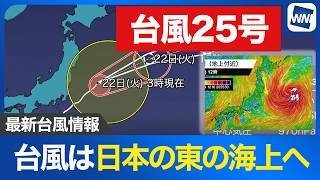
A large new typhoon formed near the Ogasawara Islands on August 12 and could approach Honshu around the end of the Obon holiday period, while the remnants of Typhoon No. 15 continue to bring unstable weather and a risk of heavy rain across a wide area of Japan.

Hiroko Saito was 19 years old when she left Japan for North Korea in June 1961 with her Korean husband and their one-year-old daughter, persuaded by assurances that they were heading to a "paradise on earth" and that she could return to Japan after three years. Instead, she would spend four decades in North Korea, enduring chronic hunger, the deaths of her husband and children and a desperate struggle to survive before finally escaping and returning home in 2001.

Transport disruption caused by Typhoon No. 15 was easing across eastern Japan on the morning of August 12, with most major railway and airline services returning to normal after dozens of flight cancellations and widespread rail disruption during the storm's landfall in Ibaraki Prefecture the previous evening.

Japan's H3 Rocket No. 9 successfully placed the Michibiki No. 7 navigation satellite into its planned orbit after lifting off from the Tanegashima Space Center in Kagoshima Prefecture at 4:23 a.m. on August 11, marking the country's second consecutive successful H3 launch.

The Tokaido Shinkansen operated its first overnight service ahead of the Obon holiday period, offering travelers a 15,000 yen trip from the Tokyo area to Kyoto and Shin-Osaka while allowing them to save on hotel costs and arrive earlier than the first regular morning trains.

MEDIA CHANNELS
         

MORE Politics NEWS

Prime Minister Sanae Takaichi held a telephone call with Iranian President Masoud Pezeshkian on August 12, urging an early easing of military tensions in the Middle East while stressing the importance of free and safe navigation through the Strait of Hormuz without additional costs.

Prime Minister Takaichi said on August 10 that the government expects to apply the Disaster Victims' Livelihood Recovery Support Act across all of Kumamoto Prefecture, allowing households whose homes were completely destroyed in the Kumamoto earthquake to receive up to 3 million yen in assistance.

Nagasaki marked the 81st anniversary of the U.S. atomic bombing on August 9 with a memorial ceremony near the hypocenter, where Mayor Shiro Suzuki declared nuclear weapons an "absolute evil" and called on the Japanese government to uphold its Three Non-Nuclear Principles.

Prime Minister Sanae Takaichi’s economic strategy faced renewed pressure on August 7 as attention shifted toward the Bank of Japan’s September policy meeting, with central bank officials preparing a series of public appearances that could signal whether another interest-rate hike is becoming likely after recent yen turmoil and fiscal concerns.

Hiroshima marked the 81st anniversary of the atomic bombing on August 6 with a peace memorial ceremony at Peace Memorial Park, where Mayor Kazumi Matsui warned of the growing danger that nuclear weapons could be used and called for renewed action toward their abolition.

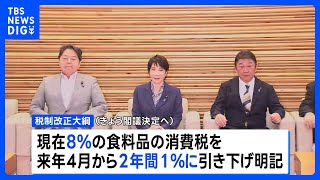
Prime Minister Sanae Takaichi’s government formally approved a plan on August 5 to reduce the consumption tax rate on food and nonalcoholic beverages from 8% to 1% for two years beginning in April 2027, setting the stage for a difficult parliamentary battle over how to cover an estimated 10 trillion yen revenue shortfall and whether the politically sensitive tax can be restored afterward.

Japan’s latest defense white paper has sparked controversy by presenting the country’s expanding military buildup not only as a national security necessity but also as a potential engine of economic growth, drawing criticism from China and raising fresh domestic questions over how far Prime Minister Sanae Takaichi’s government is prepared to link defense, industry and fiscal policy.

Prime Minister Sanae Takaichi’s food-tax cut plan cleared a major ruling party hurdle on August 5, intensifying debate over whether her government can deliver household relief without weakening fiscal credibility or drawing the Bank of Japan deeper into the administration’s economic agenda.