News On Japan

Japan Plans Major Increase in Immigration Fees

TOKYO - The Japanese government is moving to substantially raise fees for residence-related administrative procedures for foreign nationals, aiming to secure stable funding for its foreign resident policy as the number of foreign residents in Japan continues to grow.

The population of foreign residents reached approximately 3.96 million at the end of June, the highest on record, and the government has been seeking ways to strengthen programs that support coexistence between foreign nationals and local communities. Securing the necessary funding for these initiatives has become a pressing issue.

According to government sources, the fees for key residence procedures are now being considered for steep increases. The cost for changing residence status or renewing a visa for a period of one year or longer—currently set at 6,000 yen—would be raised to around 30,000 to 40,000 yen. Fees for obtaining permanent residency would increase from the current 10,000 yen to more than 100,000 yen.

Revenue from the higher fees would be allocated to improving conditions for accepting foreign nationals, including strengthening support systems, as well as funding the deportation of individuals residing illegally.

At a relevant cabinet meeting on November 4th, Prime Minister Takaichi instructed ministers to review the fee structure based on levels found in major Western countries.

Currently, the upper limit for residence procedure fees is capped at 10,000 yen under the Immigration Control and Refugee Recognition Act. Raising fees beyond this ceiling will require amending the law, and the government plans to submit a revision bill during next year’s ordinary Diet session.

Source: TBS

News On Japan
POPULAR NEWS

[Updated 5:53 p.m.] A powerful earthquake struck off Mindanao Island in the southern Philippines at 8:38 a.m. (Japan time) on June 8th, generating tsunami waves across parts of the Pacific, causing building collapses and casualties near the epicenter, and prompting the Japan Meteorological Agency to issue tsunami advisories along a wide stretch of Japan's Pacific coastline, which remained in effect as of 5:53 p.m.

A clinic director and a former Peruvian staff member have been referred to prosecutors after the man allegedly performed medical procedures without a license, including an external cephalic version—a procedure used to manually turn a baby into the correct position before birth—at an obstetrics and gynecology clinic in Fukuoka City, raising concerns about patient safety and oversight in maternity care.

A large bear was captured on security camera footage running through a shopping arcade in central Utsunomiya, Tochigi Prefecture, in the early hours of June 7th, as authorities stepped up warnings following a series of bear sightings across the city.

The family of James "Weston" Higginbotham, a 20-year-old Auburn University student who disappeared during a family vacation in Japan, announced on June 7th that he has been found dead after a volunteer search-and-rescue group located his body in a mountainous area outside Kyoto, bringing a week-long multinational search to a tragic end.

Japan's Meteorological Agency announced on June 7th that the rainy season is believed to have begun in the Tokai and Kanto-Koshin regions, marking the seasonal shift to wetter weather across a broad area of the country.

MEDIA CHANNELS
         

MORE Politics NEWS

For several months, Japan has been moving in a more nationalist and conservative direction. The shift has been fuelled by economic challenges at home and growing regional tensions with China.

Prime Minister Sanae Takaichi's administration is facing mounting scrutiny over allegations that members of her campaign were involved in distributing online videos that disparaged rival candidates during the February House of Representatives election, with opposition parties intensifying their questioning in the Diet and demanding further clarification.

The Japanese government approved its 2026 Environment White Paper at a Cabinet meeting on June 5th, warning that a record-high 50,000-plus bear sightings recorded nationwide during fiscal 2025 have become a serious threat to public safety while also highlighting growing concerns over Japan's aging hunting population and the need to train a new generation of hunters.

Prime Minister Sanae Takaichi faced intense questioning in the House of Representatives Budget Committee on June 4th over allegations surrounding defamatory campaign videos, telling lawmakers she had not verified newly released audio published by Weekly Bunshun because she had no intention of becoming a paid subscriber to the magazine's online service.

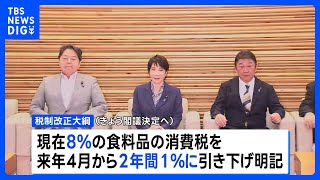
The Japanese government has presented estimates showing how long it would take to implement a reduction in Japan's consumption tax on food products, indicating that cutting the rate to either zero percent or 1 percent would require significant preparation time.

The Japanese government approved a supplementary budget proposal exceeding 3 trillion yen on June 3rd, including the creation of a new contingency reserve aimed at responding to developments in the Middle East and addressing rising energy prices.

The leader of the Democratic Party for the People, Yuichiro Tamaki, suggested on June 2nd that his party may oppose a bill drafted by the Liberal Democratic Party to establish a new criminal offense for desecrating the national flag, arguing that it could unduly restrict freedom of expression.

Japanese Prime Minister Sanae Takaichi held a telephone conversation with Iranian President Masoud Pezeshkian on June 1st, urging Iran to demonstrate maximum flexibility in its ongoing discussions with the United States and expressing hope that an agreement on the nuclear issue can be reached as soon as possible.