News On Japan

JAXA’s Oldest Astronaut Set for Long-Term Stay on ISS

TOKYO - Osamu Suwa, an astronaut with the Japan Aerospace Exploration Agency (JAXA), is set to undertake his first long-term stay aboard the International Space Station, becoming the eighth Japanese astronaut to do so.

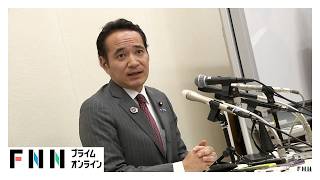
JAXA announced at a press conference on January 9th that Suwa, 49, is scheduled to remain on the ISS for around six months beginning in 2027. The mission will mark his debut long-duration assignment in orbit.

Suwa was certified as an astronaut in 2023 at the age of 47, making him the oldest individual ever selected as a JAXA astronaut at the time of qualification.

His primary responsibilities will include maintenance of ISS facilities, including Japan’s Kibo laboratory module, though Suwa said at the press conference that he hopes to fully enjoy every experience available during the mission, adding that he wants to “make the most of everything I can experience.”

Source: TBS

News On Japan
POPULAR NEWS

Google opened its first flagship store in Japan in Tokyo's Omotesando district at 2 p.m. on August 13, marking the company's first flagship retail location outside the United States.

Fifteen days after the Kumamoto earthquake, restoration of electricity and transport infrastructure is progressing, but thousands of people are believed to remain outside official shelters, while rising construction costs and interest rates are creating new challenges for rebuilding homes and restoring livelihoods.

A mysterious red light stretching vertically across the night sky over Kanagawa Prefecture has been identified as a rare "sprite," a brief luminous phenomenon that occurs high above thunderclouds at roughly the same time as powerful lightning strikes.

Street performances began across Tokushima on August 12 as the city's Awa Odori festival entered its second day, with leading dance groups showcasing graceful routines after months of practice.

A large new typhoon formed near the Ogasawara Islands on August 12 and could approach Honshu around the end of the Obon holiday period, while the remnants of Typhoon No. 15 continue to bring unstable weather and a risk of heavy rain across a wide area of Japan.

MEDIA CHANNELS
         

MORE Sci-Tech NEWS

New research is reshaping long-held assumptions about Tyrannosaurus rex, including suggestions that the giant predator may have lived to around 40 years rather than 28, while advances in fossil analysis are also offering new clues about dinosaur growth, posture and even color.

Japan's H3 Rocket No. 9 successfully placed the Michibiki No. 7 navigation satellite into its planned orbit after lifting off from the Tanegashima Space Center in Kagoshima Prefecture at 4:23 a.m. on August 11, marking the country's second consecutive successful H3 launch.

Requests for rapidly constructed "instant houses" are growing across areas of Kumamoto Prefecture devastated by the recent earthquake, providing air-conditioned temporary shelter for residents who have been sleeping in tents and vehicles beside their damaged homes.

University students in Shizuoka have designed a future lunar city using the globally popular game Minecraft and educational materials supervised by the Japan Aerospace Exploration Agency, combining programming and spatial design to explore how people could live safely and sustainably on the moon.

Toyota Motor has begun recruiting residents of Shizuoka Prefecture to live in Woven City, its experimental community for developing future technologies, with about 25 households expected to move into the site for two years from March 2027.

A 29-year-old Osaka University researcher is developing technology to produce sugar from carbon dioxide in the air, seeking to create a faster and more sustainable source of livestock feed as population growth, extreme weather and poor harvests raise fears of future food shortages.

The Kego Fault Zone running through central Fukuoka could produce an earthquake with a maximum seismic intensity of 7, leaving 1,800 people dead, 800 disaster-related deaths and 319,000 evacuees, according to prefectural damage estimates, as experts warn that an unruptured section may remain under stress.

The powerful earthquake that struck Kumamoto Prefecture on July 28 was caused by essentially the same mechanism as the devastating earthquakes that hit the region 10 years ago, according to a leading seismologist, who warned residents to prepare for strong aftershocks and take precautions against heatstroke even during the night.