News On Japan

Shirahama Approves Accommodation Tax Up to 1,000 Yen Per Night

Wakayama - Shirahama, one of the Kansai region's leading tourist destinations, has approved the introduction of an accommodation tax, becoming the third municipality in the region after Osaka Prefecture and Kyoto City to adopt such a measure.

Under a new ordinance approved by the Shirahama Town Assembly on June 16, guests staying at hotels and other lodging facilities in the town will be charged an accommodation tax ranging from 200 yen to 1,000 yen per person per night, depending on the cost of their stay. Children under the age of 12 and students on school excursions will be exempt from the tax.

The town government has been considering the measure as a way to secure a stable source of funding for tourism promotion while addressing concerns over declining tax revenues caused by a shrinking population.

According to town officials, the accommodation tax is expected to generate approximately 650 million yen in additional annual revenue. Following approval from the national government and completion of other required procedures, Shirahama aims to begin collecting the tax from March next year.

Source: YOMIURI

News On Japan
POPULAR NEWS

Typhoon No. 9 (Bavi) caused widespread transport disruption across Okinawa on July 11, grounding hundreds of flights, suspending ferry services and delaying mail and parcel deliveries as violent winds and dangerous seas continued to affect the prefecture's southern island chains.

Large and powerful Typhoon No. 9 (Bavi) continued moving northwest on July 11, bringing violent winds, torrential rain, and widespread power outages to Okinawa as authorities warned that dangerous conditions would persist well into the afternoon despite the storm's center gradually moving away.

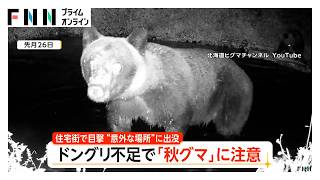
A wave of bear sightings across Japan has forced the cancellation of traditional summer events, while one animal entered a home and came within inches of a sleeping resident's face.

Japan is expected to remain under intense summer heat through next week as the Pacific high-pressure system continues to dominate the country, bringing widespread temperatures above 30 degrees Celsius and increasing the risk of heatstroke.

Akie Abe, the wife of former Prime Minister Shinzo Abe, has said she is only now becoming able to grieve honestly over her husband’s death, four years after he was shot and killed during an election campaign speech in Nara.

MEDIA CHANNELS
         

MORE Travel NEWS

Large numbers of deer are appearing in residential neighborhoods around Nara, raising concerns over traffic accidents, crop damage and the spread of ticks and fleas as the animals move farther beyond Nara Park in search of food.

Plans to extend the Hokuriku Shinkansen from Tsuruga in Fukui Prefecture to Shin-Osaka have been narrowed from eight proposals to two main options, the Obama-Kyoto route and the Maibara route, as concerns grow over construction costs and the potential impact on Kyoto's groundwater and cultural heritage.

Japan welcomed a record 42.68 million foreign tourists in 2025, while spending by overseas visitors also reached an all-time high of 9.5 trillion yen, according to the 2026 Tourism White Paper approved by the Cabinet on July 10.

A mobile battery in a passenger's carry-on luggage began emitting smoke aboard an international flight before departure from New Chitose Airport in Hokkaido, delaying the plane by one hour and 40 minutes but causing no injuries.

Ghibli Park in Nagakute, Aichi Prefecture, opened a new exhibition on July 8 that lets visitors experience the worlds of Studio Ghibli films through three-dimensional box displays.

A new top-tier seating category above Green Car will be introduced on the Tokaido and Sanyo Shinkansen, offering private rooms and semi-private seats with customizable lighting, air conditioning and reclining features.

A new landmark has emerged in Osaka’s rapidly redeveloping city center, with Yodoyabashi Gate Tower, one of the city’s largest mixed-use buildings, completed at the gateway to Midosuji.

A nine-year dispute over the Linear Chuo Shinkansen effectively came to an end on July 7 as Shizuoka Governor Yasutomo Suzuki told the prefectural assembly that he would allow Central Japan Railway to begin construction on the Shizuoka section of the project.