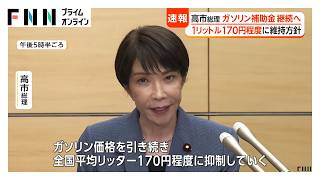
TOKYO - Japan’s political agenda on June 29 centered on Prime Minister Sanae Takaichi’s attempt to connect economic growth, national security and technological resilience, as the government moved toward a long-term economic blueprint while also responding to China’s expanded export controls and preparing a revision of Japan’s Arctic policy.
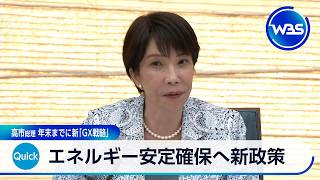
The government’s draft economic and fiscal blueprint calls for Japan to lift annual real growth above 1% as soon as possible, more than double the average pace of recent years, while seeking nominal growth of more than 3%. The plan reflects Takaichi’s effort to move Japan away from decades of weak investment and position industrial policy as a central tool of national strategy.
The draft sets out a target of more than 370 trillion yen in combined public and private investment through fiscal 2040, with emphasis on strategic sectors including artificial intelligence, semiconductors, shipbuilding, energy, quantum technology and other advanced industries. It also aims to raise annual private-sector capital investment to around 230 trillion yen and expand gross domestic product to nearly 1,100 trillion yen.
The size and ambition of the proposal give Takaichi a clear economic banner, but they also sharpen questions over fiscal discipline. The draft says the government will continue seeking fiscal sustainability and a steady reduction in the debt-to-GDP ratio, while treating the primary balance as an indicator to be managed over multiple years. That language suggests the administration wants room to spend on growth while avoiding the appearance of abandoning fiscal restraint.
Monetary policy is becoming an increasingly sensitive part of the political debate. The draft urges the Bank of Japan to coordinate closely with the government and support private demand through stable price increases. While Japanese law guarantees the central bank’s independence, the wording points to Takaichi’s preference for keeping borrowing conditions supportive as the government pursues a large-scale investment strategy.
The position could create tension with the BOJ, which has been moving away from years of ultra-loose policy as inflation remains elevated. The central bank raised its policy rate to 1% earlier this month, the highest level in more than three decades, and markets are watching for signs of whether further tightening will follow. For Takaichi, higher interest rates could complicate both public spending and private investment plans.
China policy also returned to the center of the political agenda. The Japanese government lodged a protest after Beijing announced an expanded export ban on dual-use items, including rare earths, targeting Japan. China had already imposed restrictions on 20 Japanese companies and organizations in January following Takaichi’s remarks in the Diet last November on a possible Taiwan contingency. Beijing added another 20 Japanese firms and organizations to its export ban list on June 29.
Chief Cabinet Secretary Minoru Kihara called the expanded ban "extremely regrettable" and said Japan was strongly urging China to withdraw the decision. Kihara said the measures, which target only Japan, differ significantly from international practice and are unacceptable.
The dispute highlights the growing overlap between foreign policy, industrial policy and economic security. Rare earths and dual-use technologies are critical for both civilian production and defense-related applications, making China’s export restrictions a direct challenge to Japan’s supply chains and Takaichi’s broader plan to strengthen strategic industries.
The government also signaled that it will revise Japan’s Arctic policy in fiscal 2027, the first such revision since the policy was created in 2015. Takaichi told a meeting of the government’s Headquarters for Ocean Policy that the Arctic is becoming more significant because of geopolitical concerns, potential resources and sea routes.
The revision reflects Japan’s concern that China and Russia are stepping up activity in the Arctic, including resource development and efforts to secure maritime routes. Japan is expected to seek closer cooperation with the United States and other like-minded countries as it updates its policy.
Although the Arctic may appear distant from day-to-day Japanese politics, the issue fits neatly into the Takaichi administration’s wider security agenda. Sea lanes, energy resources, satellite infrastructure, maritime surveillance and strategic competition with China and Russia are all becoming part of the same policy conversation.
Technology regulation was another part of the day’s agenda. A government panel called for easing building standards affecting data centers, particularly rules on lithium-ion batteries used to stabilize power supply. Because lithium-ion batteries are treated as hazardous materials under the fire service law and building standards law, operators can face limits on installing enough of them for large-scale data center operations.
The panel proposed excluding such batteries from current restrictions by introducing new safety standards. It also pointed to the need for legal revisions to allow full-scale demonstration tests for physical AI systems, including robots that can walk and operate in fields such as logistics, construction and elderly care.
Takaichi said the government would promote regulatory and system reforms suited to the AI era. The proposal is closely tied to the administration’s broader growth strategy, which depends on expanding data center capacity, AI infrastructure and next-generation industrial technology.
On the diplomatic front, Japan and South Korea continued efforts to deepen defense cooperation. On June 28, Defense Minister Shinjiro Koizumi met South Korean Defense Minister Ahn Gyu-back in Seoul, where the two sides reaffirmed their commitment to the denuclearization of the Korean Peninsula and agreed to revive joint search-and-rescue drills. The two governments also agreed to pursue closer bilateral cooperation and trilateral coordination with the United States.
The defense talks show that Takaichi is maintaining the recent trend toward closer Japan-South Korea security ties despite unresolved historical and territorial disputes. The two countries remain divided over issues including wartime history and the Takeshima/Dokdo islands, but both governments appear to be prioritizing coordination over North Korea, China and regional security.
For Takaichi, the day’s developments show a governing strategy built around three connected themes: growth, security and resilience. The economic blueprint seeks to raise Japan’s long-term growth potential. The China protest underscores the risks of dependence on rival powers for strategic materials. The Arctic policy revision expands Japan’s security focus into new geographic areas. The data center proposal links deregulation to AI and industrial competitiveness.
The political risk is that each part of this agenda creates its own opposition line. Fiscal conservatives may question how the 370 trillion yen investment plan will be funded. BOJ watchers may worry about political pressure on the central bank. Business groups may welcome deregulation but press for clearer implementation. Opposition parties may accuse the government of using economic security to justify expansive state intervention. China policy could also raise concerns among companies exposed to trade restrictions.
Still, the June 29 agenda gives the Takaichi administration a coherent political narrative. Japan, in the government’s telling, must invest more, regulate faster, secure strategic supply chains and prepare for a more contested international environment.
What To Watch Next
The government is expected to finalize its economic and fiscal blueprint in July, making the details of funding, sector priorities and fiscal rules the next major focus.
The Bank of Japan’s next policy meeting will be closely watched for signs of whether political pressure from the government affects the timing of future rate hikes.
Japan’s protest over China’s expanded export controls could become a wider diplomatic and industrial issue if Beijing refuses to reverse the measures or adds further restrictions.
The Arctic policy revision will not be completed until fiscal 2027, but the process could generate debate over maritime security, energy routes, cooperation with allies and Japan’s role in the far north.
The data center deregulation proposal could become an important test of whether Takaichi can turn her AI and growth agenda into practical regulatory changes.