News On Japan

Hiroshima Marks 81 Years Since Atomic Bombing With Peace Ceremony

HIROSHIMA - Hiroshima marked the 81st anniversary of the atomic bombing on August 6 with a peace memorial ceremony at Peace Memorial Park, where Mayor Kazumi Matsui warned of the growing danger that nuclear weapons could be used and called for renewed action toward their abolition.

At 8:15 a.m., the exact time the atomic bomb was dropped on the city, participants observed one minute of silence as the Peace Bell rang across the park.

In his annual Peace Declaration, Matsui expressed alarm over an international climate in which nuclear weapons could be used and urged countries and individuals to take action to eliminate them.

"Military invasions in which nuclear weapons are used as tools of intimidation and the high-handed conduct of major powers that disregard international law are being repeated," Matsui said. "We must once again learn from the lessons of the past, when the United Nations was established and the world resolved to abolish nuclear weapons."

Prime Minister Sanae Takaichi also attended the ceremony and delivered remarks.

"As the only country to have suffered atomic bombings in war, Japan has a mission to continue its tireless efforts toward realizing a world without nuclear weapons," Takaichi said.

During the ceremony, a register containing the names of 4,393 atomic bomb victims whose deaths were confirmed over the past year was placed inside the cenotaph.

A participant whose mother survived the bombing called for Hiroshima's message to be carried to the international community.

"I want them to use opportunities like this to communicate the call for nuclear abolition to the world," the participant said. "There are not many chances to send that message globally."

広島、原爆投下から81年 平和記念式典を開催

広島への原爆投下から81年となる8月6日、平和記念公園で平和記念式典が開かれ、松井一実市長は核兵器が使用される危険性が高まっているとして、核兵器廃絶に向けた新たな行動を呼びかけました。

广岛原子弹爆炸81周年举行和平纪念仪式

8月6日是广岛遭受原子弹轰炸81周年,和平纪念公园举行纪念仪式。广岛市长松井一实警告称,核武器被使用的风险正在上升,并呼吁各方再次采取行动推动废除核武器。

Source: テレ東BIZ

News On Japan
POPULAR NEWS

A large and strong Typhoon No. 13 is expected to strike Okinawa's main island on August 7, bringing destructive winds, torrential rain and widespread flight cancellations, while a newly formed Typhoon No. 15 could approach the Pacific coast from Hokkaido to Kanto during the Obon holiday period.

Buildings damaged in the 2026 Kumamoto earthquake may collapse some time after the initial shaking, authorities warned, urging residents never to approach structures that are leaning or appear unstable.

Toyota Motor has begun recruiting residents of Shizuoka Prefecture to live in Woven City, its experimental community for developing future technologies, with about 25 households expected to move into the site for two years from March 2027.

Nine days after the Kumamoto earthquake, a supermarket in Hikawa, where the strongest seismic intensity of 7 was recorded, is moving toward reopening while providing free groundwater to residents as about 3,200 households remain without running water.

Japan's Immigration Services Agency on August 4 released draft guidelines that would tighten the requirements for foreign nationals seeking permanent residency, including new income and pension standards designed to ensure applicants have economic conditions equal to or better than those of Japanese people.

MEDIA CHANNELS
         

MORE Politics NEWS

Hiroshima marked the 81st anniversary of the atomic bombing on August 6 with a peace memorial ceremony at Peace Memorial Park, where Mayor Kazumi Matsui warned of the growing danger that nuclear weapons could be used and called for renewed action toward their abolition.

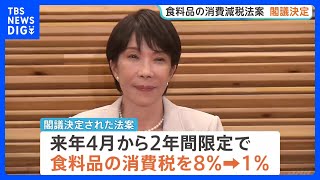
Prime Minister Sanae Takaichi’s government formally approved a plan on August 5 to reduce the consumption tax rate on food and nonalcoholic beverages from 8% to 1% for two years beginning in April 2027, setting the stage for a difficult parliamentary battle over how to cover an estimated 10 trillion yen revenue shortfall and whether the politically sensitive tax can be restored afterward.

Japan’s latest defense white paper has sparked controversy by presenting the country’s expanding military buildup not only as a national security necessity but also as a potential engine of economic growth, drawing criticism from China and raising fresh domestic questions over how far Prime Minister Sanae Takaichi’s government is prepared to link defense, industry and fiscal policy.

Prime Minister Sanae Takaichi’s food-tax cut plan cleared a major ruling party hurdle on August 5, intensifying debate over whether her government can deliver household relief without weakening fiscal credibility or drawing the Bank of Japan deeper into the administration’s economic agenda.

Ukrainian President Volodymyr Zelenskyy instructed diplomatic officials on August 3 to strengthen relations with Japan, expressing disappointment with the results achieved so far and raising speculation that Kyiv is seeking Japanese weapons supplies.

Japan's Immigration Services Agency on August 4 released draft guidelines that would tighten the requirements for foreign nationals seeking permanent residency, including new income and pension standards designed to ensure applicants have economic conditions equal to or better than those of Japanese people.

Prime Minister Sanae Takaichi’s government faced a widening policy test on August 4 as officials tried to calm inflation concerns after rare U.S.-Japan yen intervention, while the latest defense white paper framed Japan’s military buildup as part of a broader strategy for economic growth and national resilience.

The conflict involving Iran, the United States and Israel may be entering a more dangerous phase, with Tehran appearing increasingly willing to initiate attacks rather than merely respond to US strikes, while disruptions around the Strait of Hormuz threaten oil and liquefied natural gas supplies worldwide.