TOKYO - Japan’s latest defense white paper has sparked controversy by presenting the country’s expanding military buildup not only as a national security necessity but also as a potential engine of economic growth, drawing criticism from China and raising fresh domestic questions over how far Prime Minister Sanae Takaichi’s government is prepared to link defense, industry and fiscal policy.
The white paper argues that investment in defense can benefit the wider economy and people’s lives, marking a notable shift in how the government is explaining Japan’s largest military expansion in decades. The document places defense procurement, weapons development, drones, missile systems, startups and dual-use technology inside a broader strategy for industrial renewal.
That framing has become the most politically sensitive part of the report. Japanese governments have traditionally justified defense spending mainly through deterrence and the country’s security environment. The latest white paper goes further by suggesting that arms production and defense-related technology can support growth, strengthen supply chains and create benefits beyond the Self-Defense Forces.
The approach fits Takaichi’s wider governing strategy. Her administration has sought to connect national security, economic security and industrial policy through large-scale investment in sectors such as artificial intelligence, semiconductors, shipbuilding, space, energy and quantum technology. The defense white paper places military modernization within the same economic narrative.
Supporters say the shift is realistic. They argue that Japan faces a more severe security environment because of China’s military expansion, North Korea’s missile and nuclear programs, Russia’s activity around Japan and the growing importance of Taiwan Strait security. In that view, a stronger defense industrial base is needed not only to deter threats but also to reduce dependence on foreign suppliers and ensure that Japan can sustain itself in a crisis.
The white paper singles out China as Japan’s most significant strategic challenge, pointing to increased Chinese military activity around Taiwan and growing coordination between China and Russia near Japan. It also says lessons from modern conflicts, including Ukraine, show the growing importance of drones, unmanned systems, missiles and resilient supply networks.
China reacted sharply. Beijing rejected the sections of the white paper concerning the Chinese military, accusing Japan of spreading false narratives and using regional tensions as an excuse to ease restrictions on its military buildup. The reaction underlines how Japan’s annual defense report has become a diplomatic flashpoint at a time when Tokyo-Beijing relations are already strained over Taiwan, export controls and economic security.
The controversy also reflects Japan’s changing security identity. Since the end of World War II, Japan has maintained a constitutionally constrained defense posture and has often emphasized that it would not become a military power threatening other countries. The latest white paper still presents Japan’s policy as defensive, but the language around industrial growth and defense technology has intensified debate over whether the government is normalizing a larger military role.
Domestic critics are likely to question whether economic growth should be used to justify military expansion. The concern is not only about the size of the defense budget, but about the political message: if weapons production is presented as a path to prosperity, opposition parties and pacifist groups may argue that the government is changing public attitudes toward defense spending by tying it to jobs, technology and regional development.
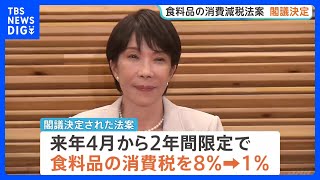
Fiscal conservatives may raise a different objection. Japan is already under pressure from rising bond yields, a weak yen, food-price inflation and the government’s planned temporary cut in the consumption tax on food. Takaichi is also promoting a 370 trillion yen public-private investment roadmap through fiscal 2040. Adding defense expansion to that broader spending agenda raises the question of how the government will pay for all of its priorities while maintaining fiscal credibility.
The white paper therefore lands in the middle of a larger political debate. Takaichi wants to present defense, technology and economic revival as mutually reinforcing. But the more the government treats defense spending as industrial policy, the more it invites scrutiny over procurement costs, corporate beneficiaries, regional subsidies and the risk of crowding out civilian investment.
There is also a practical problem. Japan’s defense industry has long faced thin profit margins, strict export rules and limited domestic demand compared with major arms-producing countries. Expanding the sector will require companies to invest in production capacity, research, skilled workers and supply chains. That may be difficult at a time when Japan is dealing with labor shortages and demographic decline.
The white paper’s emphasis on drones and advanced systems also raises questions about Japan’s ability to move quickly. Modern warfare has shown that cheap, rapidly produced systems can be as important as expensive platforms. Japan’s procurement culture has often been criticized as slow and costly, and the government will need to show that its new defense-industrial strategy can produce practical results rather than only larger budgets.
For the Takaichi administration, the political opportunity is clear. The white paper gives the government a way to argue that defense spending is not simply a burden, but part of a national investment strategy. By linking security to technology, manufacturing and economic resilience, Takaichi can appeal to conservatives, business groups and voters concerned about Japan’s long-term competitiveness.
The risk is that the same argument could deepen public unease. If households are struggling with food prices and the weak yen, they may be skeptical of claims that defense spending will improve daily life. If markets are already nervous about fiscal discipline, they may see defense-industrial policy as another large commitment without a clear funding plan. If China responds with more diplomatic or economic pressure, businesses exposed to the Chinese market may worry about the costs of a harder security line.
The controversy surrounding the white paper is therefore not only about defense policy. It is about the direction of Takaichi’s government and how Japan defines national strength. The administration is trying to build a political model in which military preparedness, economic security and industrial revival all support one another. Critics are warning that this risks blurring the line between defensive security policy and a broader push toward militarization.
What comes next will depend on whether the government can turn the white paper’s language into credible policy. If defense investment produces stronger supply chains, new technologies and clearer deterrence without destabilizing public finances, Takaichi may be able to argue that the strategy is working. If costs rise, tensions with China worsen and household relief remains delayed, the white paper could become a symbol of a government asking voters to accept a larger military role before explaining how it will be paid for.