TOKYO - Prime Minister Sanae Takaichi’s government faced a widening policy test on August 4 as officials tried to calm inflation concerns after rare U.S.-Japan yen intervention, while the latest defense white paper framed Japan’s military buildup as part of a broader strategy for economic growth and national resilience.
The yen remained the most immediate political and market issue. A former Bank of Japan official said Japan and the United States are likely to intervene again if the currency resumes its decline, following a rare joint yen-buying operation that temporarily strengthened the yen after it had fallen to 40-year lows.
The warning matters because the intervention has become more than a currency-market event. It has turned into a test of whether Takaichi’s administration can stabilize prices, protect household purchasing power and maintain investor confidence while pursuing an expansionary growth agenda.
The yen was trading around 157.60 to the dollar after the intervention, with expectations that it may move between 155 and 162 in the near term. That range still leaves Japan vulnerable to renewed import-price pressure, especially if markets decide that the underlying policy mix has not changed.
The joint intervention also carries political significance because U.S. support gives Tokyo more room to act. Former BOJ official Atsushi Takeuchi said American backing removes some of the constraints on Japan’s intervention strategy and sends a strong signal to speculators betting against the yen. But he also warned that without changes in Japan’s fiscal stance and BOJ interest-rate policy, lasting yen strength may be difficult to achieve.
That is the core problem for Takaichi. Her administration is trying to present itself as pro-growth, pro-investment and responsive to household pain. But markets are watching whether the government can finance tax relief and long-term industrial policy without increasing pressure on bond yields or appearing to lean on the BOJ.
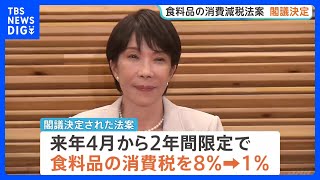
The government’s food-tax plan remains central to that debate. Takaichi is moving toward a temporary cut in the consumption tax rate on food and soft drinks from 8% to 1% for two years starting in April next year. The policy is designed to give households visible relief from rising food prices, but it has also raised questions over funding, fiscal discipline and whether the rate can realistically be restored after two years.
Economy Minister Minoru Kiuchi tried to strike a calmer tone on inflation on August 4, saying consumer price increases have been moderate despite geopolitical tensions and higher costs. He said the pass-through of costs to consumers has been limited so far, pointing to June consumer price inflation of 1.7% from a year earlier.
Kiuchi’s comments suggest the government is trying to avoid creating the impression that inflation is out of control. He also said average real wages are expected to rise by nearly 1% in the current fiscal year ending in March 2027, while noting that fuel subsidies and other government measures are helping to ease household burdens.
The message is politically useful for Takaichi because it supports the argument that the government can manage cost-of-living pressure without abandoning its broader growth agenda. But it also contrasts with the Bank of Japan’s more cautious stance. The BOJ has warned that inflation could exceed its 2% target as the weak yen, energy prices and corporate pricing behavior continue to affect the economy.
That difference in tone may become important. Kiuchi has long been associated with a preference for looser monetary policy, and he has urged the BOJ to maintain flexibility. The central bank, however, must protect its credibility after raising rates in June to 1%, the highest level in more than three decades, and then keeping rates unchanged at its July 30-31 meeting.
The BOJ’s decision to hold rates has left the government with temporary breathing room, but not a solution. If the yen weakens again, pressure for another rate hike could grow. If the BOJ tightens too quickly, it could raise borrowing costs and complicate Takaichi’s investment and tax-relief plans.
The August 4 inflation debate therefore has a political edge. The government wants to say price pressure is manageable and household relief is coming. The BOJ wants to keep open the option of further hikes if inflation risk rises. Investors want assurance that fiscal policy will not make the central bank’s job harder.
Defense policy added a second major theme. Japan’s latest defense white paper presented the country’s military buildup not only as a response to threats from China, Russia and North Korea, but also as a path to economic prosperity. The document links defense investment with industrial development, startup funding and the use of commercial technology in weapons systems.
That framing fits Takaichi’s wider governing philosophy. Her administration has tried to connect national security, economic security and industrial policy into a single strategy. The government’s 370 trillion yen public-private investment roadmap through fiscal 2040 already targets areas such as artificial intelligence, semiconductors, shipbuilding, space, quantum technology and energy. The defense white paper now places military modernization inside the same political story.
The white paper identifies China as Japan’s most significant strategic challenge, especially in relation to Taiwan, while also pointing to threats from Russia and North Korea. It emphasizes the need to develop missiles, unmanned systems, drones and other technologies that reflect lessons from modern warfare, including Ukraine’s experience against Russia.
The political significance is that defense spending is being sold not only as deterrence but as economic policy. The government is arguing that defense investment can support advanced manufacturing, encourage startups, strengthen supply chains and generate future industries. That may help broaden public support for higher military spending, especially among voters who are more concerned with jobs and growth than strategic doctrine.
But the funding question remains unresolved. Japan has moved toward defense spending equivalent to 2% of gross domestic product, and the fiscal 2026-27 budget has reached a record 122.3 trillion yen, with additional funds added to cushion households from rising energy costs. The government has not fully explained how future defense increases will be financed without adding to pressure on public finances.
That makes the defense white paper part of the same political problem as the food-tax cut and the yen. Takaichi wants to expand the state’s role in strategic investment, strengthen defense, cut food taxes and support households. Each individual policy has a clear political purpose. Together, they raise the question of how much the government can promise before markets demand a stronger fiscal explanation.
The opposition is likely to attack this from two directions. Fiscal critics can argue that the government is combining tax cuts, defense expansion and industrial subsidies without a convincing funding plan. Security skeptics can argue that economic growth is being used to normalize a major military buildup. Cost-of-living critics can say households need faster relief, not long-term arguments about defense-linked prosperity.
For Takaichi, the opportunity is also clear. If she can present defense modernization as part of an industrial revival, and food-tax relief as a temporary measure within a disciplined budget, she may be able to turn three pressures into one coherent political message: Japan must protect households now while rebuilding national strength for the long term.
The risk is that voters and markets may judge the parts separately. Households may see food prices and the yen. Investors may see debt and bond yields. Opposition parties may see a government using security language to justify wider spending. The BOJ may see fiscal policy making inflation harder to manage.
The August 4 political picture therefore shows the Takaichi administration trying to defend a broad governing model under sharper scrutiny. Currency intervention has bought time, but not stability. Kiuchi’s inflation message may calm some concerns, but the BOJ remains cautious. The defense white paper strengthens the government’s security narrative, but it also raises new questions over funding and priorities.
The central question is whether Takaichi can keep her economic, fiscal and security policies aligned. If the yen remains stable, inflation moderates and the government presents credible funding for tax relief and defense, the administration can argue that its strategy is working. If the yen weakens again or bond yields rise, the same policies may be seen as evidence that the government is trying to do too much at once.
What To Watch Next
The yen remains the most immediate test. Any move back toward the 160 range could raise pressure for another round of U.S.-Japan intervention.
The government’s early-August decision on the food-tax cut will be closely watched for funding details, timing and whether additional cash benefits are included.
The BOJ’s next signals on inflation and rates will matter after Kiuchi’s relatively calm assessment of price pressures contrasted with the central bank’s warnings.
Bond yields remain a key measure of whether investors believe Takaichi can combine tax relief, long-term investment and fiscal discipline.
The defense white paper will shape debate over whether Japan’s military buildup is being framed as economic policy as well as national security policy.
Opposition parties are likely to press the government on how it plans to fund defense expansion, household relief and strategic industrial investment without weakening fiscal credibility.