TOKYO - Prime Minister Sanae Takaichi entered August facing a sharper test of her economic leadership after Japan and the United States carried out a rare coordinated currency intervention to support the yen, turning the government’s cost-of-living agenda, fiscal policy and relationship with the Bank of Japan into one of the most politically sensitive issues of her administration.
The intervention followed a renewed fall in the yen to its weakest level against the dollar since the mid-1980s. The dollar dropped from above 163 yen to around 155.20 yen after the market action before later trading around 156.75 yen, underscoring the scale of the move and the seriousness of concern in Tokyo and Washington.
Japan’s Finance Ministry confirmed that it had acted in coordination with U.S. authorities and signaled that further action remains possible if currency movements become excessive. Finance Minister Satsuki Katayama said Japan would continue to respond as needed, while U.S. Treasury Secretary Scott Bessent also emphasized coordination between the two governments.
The involvement of the United States makes the intervention politically significant beyond the currency market. Joint yen-buying action is rare, and U.S. participation suggests that Washington sees yen instability not only as a Japanese problem but also as a risk to wider financial stability. Analysts have pointed to concern that further yen weakness could force Japan to sell large amounts of foreign securities, including U.S. Treasuries, to fund intervention, potentially adding pressure to global bond markets.
For Takaichi, the intervention is a double-edged development. On one hand, it gives her government a visible response to the weak yen and rising import prices, two issues that have damaged public support. On the other, it highlights how dependent the administration has become on emergency market action while deeper questions remain unresolved over fiscal policy, interest rates and household inflation.
The weak yen has become the clearest threat to Takaichi’s political standing. It raises the cost of imported food, energy and raw materials, squeezing households and small businesses. It also makes it harder for the government to argue that its long-term growth strategy is improving living standards.
Takaichi has promoted a 370 trillion yen public-private investment roadmap through fiscal 2040, targeting strategic sectors such as artificial intelligence, semiconductors, shipbuilding, energy, space, quantum technology and advanced manufacturing. The government’s argument is that Japan must rebuild industrial strength and raise growth potential in order to support wages, tax revenue and confidence in the yen.
But markets have increasingly focused on the risks. Investors are watching whether the government can combine large-scale investment, household tax relief and fiscal discipline without relying on the BOJ to keep borrowing costs low. Earlier wording in the government’s economic blueprint raised concern that the administration was trying to pull the BOJ closer to its growth agenda, forcing the final version to clarify that specific monetary policy tools remain under the central bank’s authority.
The BOJ is now under even greater scrutiny. At its July 30-31 policy meeting, the central bank kept its policy rate at around 1%, saying it needed to assess the impact of June’s rate hike. It also maintained a path toward further rate increases while monitoring risks from the Middle East, AI-related demand and currency-market movements.
The BOJ’s latest outlook warned that global demand for artificial intelligence could have a lasting inflationary effect on Japan. The central bank said AI-related investment may lift demand in the short term, while the weak yen and higher energy costs could keep inflation elevated even outside fresh food and fuel.
That creates a difficult policy dilemma. If the BOJ raises rates more quickly, it may help support the yen and reduce import-driven inflation. But higher rates would raise borrowing costs for the government, households and businesses, making Takaichi’s investment agenda more difficult to finance. If the BOJ moves too slowly, the yen may weaken again and household inflation could worsen.
The U.S.-Japan intervention also complicates perceptions of BOJ independence. If the central bank sounds more hawkish after a coordinated market operation involving Washington, critics may ask whether monetary policy is being shaped by political and diplomatic pressure. If it resists that pressure, the yen could again come under strain.
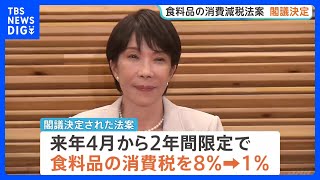
Takaichi’s food-tax plan adds another layer to the issue. The government is moving toward a temporary cut in the consumption tax rate on food and soft drinks from 8% to 1% for two years starting in April next year. The policy is intended to provide visible relief to households facing higher food prices, but it could cost several trillion yen a year and has raised questions over funding.
The administration has said it wants to avoid issuing deficit-financing bonds and may rely on surplus tax revenue. That pledge is politically necessary, but markets will want clearer evidence that the measure is temporary and credible. If investors view the tax cut as an unfunded response to falling approval ratings, it could increase pressure on bond yields and the yen.
The two-year limit is also politically risky. Once the food tax falls to 1%, restoring it to 8% could be attacked as a tax increase. Opposition parties are likely to argue that the policy offers delayed relief while creating a future burden. They may also press for faster cash benefits, especially for low- and middle-income households.
For voters, the issue is straightforward. A stronger yen may ease some import pressure, but households will judge the government by food prices, utility bills and wages. If the tax cut does not start until April next year, Takaichi will need a convincing explanation of what relief comes sooner.
The intervention therefore turns the food-tax debate into a credibility test. The government must show that it can support households without worsening the fiscal anxieties that helped weaken the yen in the first place. It must also show that currency intervention is not being used to buy time for policies that markets see as inflationary or fiscally loose.
Foreign policy is also part of the story. The Trump administration’s willingness to support Japan in the currency market reflects the strategic importance of the alliance and the risks of instability in one of the world’s largest bond markets. It may also strengthen Takaichi’s image among conservatives as a leader closely aligned with Washington on security and economic policy.
But U.S. involvement does not solve the domestic political problem. The core issue remains whether Japan can maintain confidence in the yen while pursuing tax cuts, investment programs and debt management at the same time. Currency intervention can stop disorderly moves, but it cannot replace a credible policy mix.
The opposition is likely to use the intervention as evidence that Takaichi’s economic agenda is under market stress. Critics can argue that the government’s expansionary instincts, food-tax plan and ambiguous relationship with the BOJ helped create the conditions that required emergency action. The administration will respond that the weak yen reflects global factors, including interest-rate differentials and energy prices, and that Japan acted responsibly to prevent excessive volatility.
The August 3 political picture is therefore one of temporary stabilization but unresolved pressure. The yen has strengthened, but the policy contradictions remain. The BOJ has paused, but inflation risks are still present. The government has promised food-tax relief, but funding details remain unclear. Takaichi has U.S. support, but domestic voters still want practical relief from prices.
The central question is whether the intervention gives Takaichi enough breathing room to present a credible household-relief and fiscal plan in early August. If the government can explain the food-tax cut, preserve BOJ independence and keep the yen stable, the intervention may mark a turning point. If the yen weakens again or bond yields rise, the joint action could instead be remembered as a warning that markets are testing the limits of Takaichi’s economic program.
What To Watch Next
The yen’s movement after the intervention will be the most immediate test. A return toward the 160 range would increase pressure for further action and weaken the political benefit of the U.S.-Japan operation.
The government’s early-August decision on the food-tax cut will be closely watched for funding details, timing and whether additional cash benefits are included.
The BOJ’s next signals on inflation and rates will matter more after its decision to keep the policy rate at 1% while maintaining a path toward future hikes.
Bond yields remain a key measure of whether investors believe Takaichi can combine tax relief, long-term investment and fiscal discipline.
Opposition parties are likely to frame the intervention as evidence that the government’s economic policy has unsettled markets and failed to protect households from inflation.
The U.S. role in the yen intervention will remain diplomatically important, especially if Japan needs further support or if the issue becomes tied to broader alliance and financial-stability discussions.
Source: Kyodo