News On Japan

Trump Calls Yen-Buying Intervention a Sign of Friendship

WASHINGTON DC - U.S. President Donald Trump said the United States intervened to buy yen because of its strong relationship with Japan, describing the action as a sign of friendship and pledging that Washington would always support the country.

Explaining the decision on August 2, Trump said, "Japan and we have a good relationship. We have very strong financial power. Japan was facing a weak yen and was asking for a little help."

"We will always be there for Japan," Trump said, calling the country "a very good friend of the United States" and stressing that the intervention demonstrated the friendship between the two nations.

Trump also said the United States would gain economic benefits from the intervention and expressed the view that the move would have a positive effect on the global economy.

Source: FNN

News On Japan
POPULAR NEWS

Large and very strong Typhoon No. 13, known as Dolphin, was moving west-northwest near the Ogasawara Islands as of the 3 p.m. update on August 3 and is forecast to make its closest approach to the islands on August 4 before heading toward Okinawa and the Amami Islands later in the week.

Six airlines, including All Nippon Airways, Japan Airlines and Air Do, will move the baggage check-in deadline for domestic flights at Haneda Airport to 30 minutes before departure from September 1.

Geisha and maiko in Kyoto's Gion district made their traditional rounds on August 1 to express gratitude to teahouse proprietors, teachers and others who support them throughout the year as part of the annual Hassaku observance.

Authorities ended the five-day search and rescue operation at Aeon Mall Kumamoto on August 1 after confirming that all people reported missing had been accounted for, leaving seven dead and five others injured in an explosion that devastated the shopping complex shortly after the powerful Kumamoto earthquake.

Kyushu Shinkansen services between Hakata and Kumamoto resumed on a reduced schedule on July 31 after a three-day suspension caused by the earthquake, while extensive rail damage has left no timetable for reopening the section south to Kagoshima-Chuo.

MEDIA CHANNELS
         

MORE Politics NEWS

Prime Minister Sanae Takaichi entered August facing a sharper test of her economic leadership after Japan and the United States carried out a rare coordinated currency intervention to support the yen, turning the government’s cost-of-living agenda, fiscal policy and relationship with the Bank of Japan into one of the most politically sensitive issues of her administration.

U.S. President Donald Trump said the United States intervened to buy yen because of its strong relationship with Japan, describing the action as a sign of friendship and pledging that Washington would always support the country.

Japan and the United States conducted coordinated yen-buying intervention in the foreign exchange market to curb the currency's excessive decline, with Finance Minister Satsuki Katayama expected to announce the move on August 3, according to people familiar with the matter.

US Treasury Secretary Scott Bessent said the yen is undervalued, making an unusually direct assessment of the currency and signaling that Washington is unwilling to accept excessive weakness.

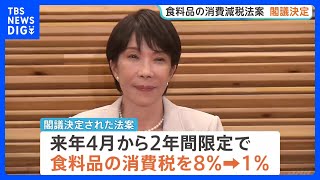
Prime Minister Sanae Takaichi announced that Japan will cut the consumption tax rate on food and beverages to 1% from April 2027, pledging to secure the necessary funding without relying on deficit-financing bonds and to restore the rate to 8% after two years.

Prime Minister Sanae Takaichi moved on July 30 to turn food-tax relief from a campaign promise into government policy, instructing the ruling Liberal Democratic Party to proceed with a temporary cut in the sales tax on food as the Bank of Japan began a policy meeting that could shape the next phase of Japan’s currency, inflation and fiscal debate.

Prime Minister Sanae Takaichi moved closer on July 29 to adopting a sharp temporary cut in Japan’s food sales tax, turning cost-of-living relief into the next major political test for her government as markets remained uneasy over the weak yen, rising bond yields and the administration’s expansionary fiscal agenda.

Prime Minister Sanae Takaichi’s government moved on July 28 to reassure investors that it respects the Bank of Japan’s independence, as Finance Minister Satsuki Katayama said relations between the government and the central bank remain smooth despite market concern over rising bond yields, yen weakness and the administration’s growth-oriented fiscal agenda.