TOKYO - Prime Minister Sanae Takaichi closed the Diet session on July 17 under pressure from both parliament and financial markets, as lawmakers enacted a revised Imperial House Law while the government moved to clarify that monetary policy tools remain under the sole authority of the Bank of Japan.
The most politically symbolic development was the passage of the revised Imperial House Law. The legislation allows female imperial family members to remain in the Imperial House after marriage and permits adoption from former male-line imperial branches, but it preserves Japan’s male-line succession system and does not open the way for female emperors.
The government and ruling Liberal Democratic Party argued that the revision is needed to maintain the number of imperial family members and secure stable imperial activities. Supporters say the measure offers a practical way to preserve continuity without changing the order of succession.
The law remains controversial because it avoids the broader question of whether women should be allowed to ascend the throne. Emperor Naruhito’s only child, Princess Aiko, remains outside the line of succession, while the future of the monarchy continues to depend on a small number of male heirs.
The debate has placed Takaichi in a politically delicate position. As Japan’s first female prime minister, she has supported a conservative solution that maintains male-line succession, even as many voters and opposition lawmakers have called for a wider discussion on female succession and the role of women in the imperial family.
The timing also drew criticism. Opposition parties and commentators argued that legislation touching the future of the Imperial House should not have been pushed through in the final days of the Diet session. For the LDP, however, passage of the bill gives Takaichi a clear conservative achievement before the session closes.
Takaichi also faced intensive questioning in the House of Councillors Budget Committee on July 17. The session gave opposition parties a final opportunity to press her on economic policy, the Bank of Japan, inflation, bond yields, the Imperial House bill and the government’s handling of parliamentary proceedings.
The Budget Committee appearance followed weeks of opposition criticism that Takaichi had not appeared often enough for direct questioning. Her decision to attend helped normalize Diet proceedings, but it also concentrated several difficult issues into the final day of the session.
The biggest economic issue was the government’s final economic and fiscal blueprint. After earlier draft language triggered concern that the administration was trying to pressure the BOJ, the final document is set to affirm that decisions on specific monetary policy tools belong solely to the central bank.
The clarification is important because markets had reacted negatively to wording suggesting closer policy coordination between the government and the BOJ. Investors worried that Takaichi’s administration wanted the central bank to keep financial conditions loose to support its growth strategy, even as inflation and bond yields remained elevated.
Finance Minister Satsuki Katayama emphasized that monetary policy tools are under the BOJ’s jurisdiction, while the government remains committed to maintaining market confidence by reducing the debt-to-GDP ratio over time. The final blueprint also includes a footnote referring to legal provisions protecting the BOJ’s autonomy.
The wording change is an attempt to calm markets without abandoning Takaichi’s core economic message. Her administration wants to mobilize more than 370 trillion yen in public and private investment through fiscal 2040, targeting strategic sectors such as artificial intelligence, semiconductors, shipbuilding, energy, space and quantum technology.
The challenge is that Takaichi’s growth strategy depends on supportive investment conditions, while the BOJ must respond to inflation, wage growth and the weak yen. The central bank raised its policy rate to 1% in June, its highest level in more than three decades, and its next meeting on July 30 and 31 is now a major political and market event.
Bond yields remain a central risk. Japan’s 10-year government bond yield recently reached around 2.865%, its highest level in roughly three decades. A former BOJ policymaker has warned that if the yield rises above 3%, the central bank could face pressure to increase bond purchases, reviving questions over the boundary between monetary policy and government financing.
That would be politically dangerous for Takaichi. Her economic program relies on the idea that stronger growth and investment can help Japan manage its debt burden. If markets instead focus on higher borrowing costs and fiscal uncertainty, the administration’s main policy banner could become a source of vulnerability.
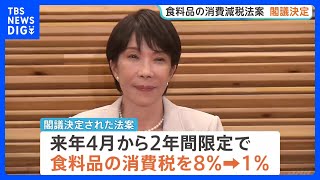
The blueprint also leaves open a politically sensitive decision on possible cuts to the 8% consumption tax rate on food, with the government expected to decide by early August. Takaichi has previously supported food-tax relief, but any cut would raise questions over funding, fiscal discipline and whether temporary tax relief can offset household pressure from inflation.
For households, the policy debate is practical rather than abstract. The weak yen has pushed up import costs and kept pressure on food and energy prices. Wage growth has improved, but many voters remain concerned that higher prices are eroding living standards. Opposition parties are likely to continue framing the government’s economic strategy around the cost of living rather than long-term investment targets.
The closing day of the Diet session therefore brought together the two sides of Takaichi’s political identity. On the Imperial House, she secured a conservative institutional reform that reinforces male-line succession. On economic policy, she had to reassure markets that her pro-growth agenda would not undermine BOJ independence or fiscal credibility.
Coalition management will remain important after the session. The LDP achieved movement on Imperial House legislation, but bills linked to the Japan Innovation Party’s priorities, including Lower House seat reduction and secondary-capital policy, have faced delays or uncertainty. The ruling bloc may need to repair expectations with Ishin before the next phase of the political calendar.
Takaichi leaves the session with tangible achievements, but also with unresolved risks. The Imperial House law may please conservatives while drawing criticism from advocates of female succession. The economic blueprint may calm markets temporarily, but it does not end the tension between growth spending, inflation control and fiscal discipline.
The next test will come quickly. The government must finalize decisions on the economic blueprint, manage market reaction, prepare for the BOJ’s July policy meeting and explain whether food-tax relief will be included in its broader cost-of-living response.
What To Watch Next
The final wording of the economic and fiscal blueprint will be closely examined for its treatment of BOJ independence, fiscal discipline and the government’s 370 trillion yen investment strategy.
The BOJ’s July 30-31 policy meeting will be the next major political and market event, especially after the government moved to clarify the central bank’s autonomy.
The government is expected to decide by early August whether to pursue a cut to the 8% consumption tax rate on food, a move that could become a major household-relief policy but also a fiscal flashpoint.
Reaction to the revised Imperial House Law will matter beyond the Diet session, particularly among voters who support female succession or believe the monarchy needs a broader solution.
Coalition management with Ishin should be watched after the LDP prioritized Imperial House legislation while other reform items, including seat reduction and secondary-capital policy, remained unresolved.
Bond yields remain a key risk. A move toward or above 3% on the 10-year Japanese government bond would intensify pressure on both the government and the BOJ.