News On Japan

Japan Sets Investment Strategy

Prime Minister Sanae Takaichi's government approved its first annual basic economic and fiscal policy on Tuesday, pledging "responsible and proactive fiscal policy" and envisioning about 370 trillion yen in public- and private-sector investment in strategic industries through fiscal 2040.

"The Takaichi Cabinet will break away from excessive fiscal restraint and the chronic lack of investment in the future, and will thoroughly strengthen domestic investment," Takaichi said.

The policy, known as the Basic Policy on Economic and Fiscal Management and Reform, designates the current fiscal year as the starting point for responsible and proactive fiscal policy.

The government expects investment totaling about 370 trillion yen to flow into strategic sectors including artificial intelligence and semiconductors by fiscal 2040.

It also aims to achieve a strong economy with real growth exceeding 1% and nominal growth above 3% as soon as possible.

On fiscal management, the policy removes the term "fiscal consolidation," which had appeared in previous versions, and instead places stable reductions in the ratio of outstanding government debt to gross domestic product at the center of its approach.

Source: TBS

News On Japan
POPULAR NEWS

Typhoon No. 15 (Chan-hom) is expected to make landfall near Ibaraki Prefecture between around 6 p.m. and 9 p.m. on August 11, bringing rapidly strengthening winds, high waves and heavy rain to parts of Kanto and southern Tohoku, with unsettled weather potentially continuing even after the storm moves inland.

Japan's H3 Rocket No. 9 successfully placed the Michibiki No. 7 navigation satellite into its planned orbit after lifting off from the Tanegashima Space Center in Kagoshima Prefecture at 4:23 a.m. on August 11, marking the country's second consecutive successful H3 launch.

The Tokaido Shinkansen operated its first overnight service ahead of the Obon holiday period, offering travelers a 15,000 yen trip from the Tokyo area to Kyoto and Shin-Osaka while allowing them to save on hotel costs and arrive earlier than the first regular morning trains.

Typhoon No. 15 is expected to approach and likely make landfall somewhere in the Kanto region on August 11, bringing strong winds and heavy rain that could disrupt conventional rail services, expressways and flights while also affecting a wider area extending into Tohoku.

Raccoons are increasingly invading homes across Japan, damaging roofs and wiring, contaminating buildings with large amounts of urine and feces, and raising concerns over agriculture, native wildlife and the spread of disease as their population continues to expand.

MEDIA CHANNELS
         

MORE Politics NEWS

Prime Minister Takaichi said on August 10 that the government expects to apply the Disaster Victims' Livelihood Recovery Support Act across all of Kumamoto Prefecture, allowing households whose homes were completely destroyed in the Kumamoto earthquake to receive up to 3 million yen in assistance.

Nagasaki marked the 81st anniversary of the U.S. atomic bombing on August 9 with a memorial ceremony near the hypocenter, where Mayor Shiro Suzuki declared nuclear weapons an "absolute evil" and called on the Japanese government to uphold its Three Non-Nuclear Principles.

Prime Minister Sanae Takaichi’s economic strategy faced renewed pressure on August 7 as attention shifted toward the Bank of Japan’s September policy meeting, with central bank officials preparing a series of public appearances that could signal whether another interest-rate hike is becoming likely after recent yen turmoil and fiscal concerns.

Hiroshima marked the 81st anniversary of the atomic bombing on August 6 with a peace memorial ceremony at Peace Memorial Park, where Mayor Kazumi Matsui warned of the growing danger that nuclear weapons could be used and called for renewed action toward their abolition.

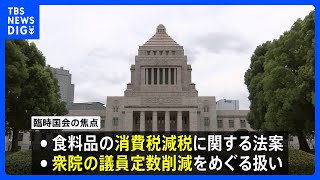
Prime Minister Sanae Takaichi’s government formally approved a plan on August 5 to reduce the consumption tax rate on food and nonalcoholic beverages from 8% to 1% for two years beginning in April 2027, setting the stage for a difficult parliamentary battle over how to cover an estimated 10 trillion yen revenue shortfall and whether the politically sensitive tax can be restored afterward.

Japan’s latest defense white paper has sparked controversy by presenting the country’s expanding military buildup not only as a national security necessity but also as a potential engine of economic growth, drawing criticism from China and raising fresh domestic questions over how far Prime Minister Sanae Takaichi’s government is prepared to link defense, industry and fiscal policy.

Prime Minister Sanae Takaichi’s food-tax cut plan cleared a major ruling party hurdle on August 5, intensifying debate over whether her government can deliver household relief without weakening fiscal credibility or drawing the Bank of Japan deeper into the administration’s economic agenda.

Ukrainian President Volodymyr Zelenskyy instructed diplomatic officials on August 3 to strengthen relations with Japan, expressing disappointment with the results achieved so far and raising speculation that Kyiv is seeking Japanese weapons supplies.