News On Japan

Japan Startup Pushes Autonomous Driving Into Saudi Vision 2030

OSAKA - Saudi Arabia is advancing its national project Vision 2030 to achieve a post-oil society by the end of the decade, with the Riyadh Expo positioned as its grand culmination, and Japan is aiming to secure a foothold in the initiative by providing technologies such as decarbonization systems and expertise in hosting world expos, while also looking to translate this involvement into domestic economic growth.

Against this backdrop, Tier IV, a Japanese startup specializing in autonomous driving technology, has announced plans to expand into the Saudi market, signing a memorandum of understanding with a local company to jointly develop self-driving vehicles, while the Riyadh Expo is also expected to feature an autonomous car race.

The Osaka-Kansai Expo will close on October 13th, with Riyadh set to host the next edition in October 2030. Envisioned as a massive event fully aligned with Vision 2030, the Riyadh Expo will cover an exhibition area of 6 million square meters—roughly four times the size of the Osaka Expo and equivalent to about 128 Tokyo Domes. While Saudi Arabia remains a major oil producer, it is working to transform its industrial structure under Vision 2030, and the Expo has been positioned as a symbolic event showcasing this national transformation.

Japan, seeing significant business opportunities, is strengthening ties through frameworks such as the Japan-Saudi Vision Ministerial Meeting, co-chaired recently by Economy, Trade and Industry Minister Muto and Saudi Arabia’s investment minister. At the same time, Tier IV signed its agreement to pursue joint development in the field of autonomous driving, setting ambitious goals such as organizing a race between AI-driven and human-driven vehicles during the Riyadh Expo. The startup, backed by investors including Suzuki, Denso, and Toyota-affiliated funds, is seen as a standard-bearer for Japan’s auto industry as it seeks entry into the Saudi market.

In an interview, Tier IV’s chief executive explained the company’s strategy. Central to its proposal is “Robot Formula,” an autonomous racecar project inspired by Formula One, where vehicles—unmanned and capable of speeds up to 300 kilometers per hour—compete either against each other or against human drivers. The concept is intended to highlight the safety and utility of self-driving technology while offering entertainment value, with Saudi Arabia expected to take a lead in promoting it. The company also plans to integrate autonomous taxis and package its offerings with education and training programs to foster local talent.

According to Tier IV, Saudi Arabia is an ideal “greenfield” environment where new infrastructure can be designed around autonomous driving from the outset, rather than retrofitted into existing systems. This, combined with the kingdom’s financial capacity to invest heavily in new technologies, presents a rare opportunity to demonstrate the full value of self-driving solutions. The company envisions rolling out smaller, go-kart–like vehicles for educational purposes ahead of 2030, gradually building up to full-scale autonomous racing within the country. Ultimately, the initiative is intended not only to support Saudi Arabia’s transformation but also to contribute to Japan’s economic growth through deeper bilateral cooperation.

Source: テレ東BIZ

News On Japan
POPULAR NEWS

A fire broke out at Arima Inari Shrine near the Arima Onsen hot spring resort area in Kobe on the night of June 9th, destroying multiple buildings and leaving an elderly Shinto priest and his wife with minor injuries.

Japan, which records the shortest average sleep duration among OECD countries, is launching new efforts to tackle widespread sleep deprivation, including the opening of specialized sleep disorder departments and programs aimed at improving children's sleep habits through sports and physical activity.

Japan's national soccer team arrived in Nashville, Tennessee, on June 8th from Monterrey, Mexico, where it had been conducting a pre-World Cup training camp, and held its first practice session at its base camp for the FIFA World Cup in North America.

A prolonged eruption at Sakurajima on June 7th blanketed parts of Kagoshima City in volcanic ash, turning roads gray and prompting long lines of vehicles seeking car washes after a plume of smoke rose 1,300 meters above the crater.

A powerful earthquake struck off Mindanao Island in the southern Philippines at 8:38 a.m. (Japan time) on June 8th, generating tsunami waves across parts of the Pacific, causing building collapses and casualties near the epicenter, and prompting the Japan Meteorological Agency to issue tsunami advisories along a wide stretch of Japan's Pacific coastline before lifting all of them at 4:50 p.m.

MEDIA CHANNELS
         

MORE Sci-Tech NEWS

Three people in their 20s and 30s living in Osaka Prefecture and other areas were referred to prosecutors on June 2nd for allegedly illegally selling and transferring the type 2 diabetes drug Mounjaro without the required authorization, as concerns grow over the drug's popularity as a weight-loss treatment and the health risks associated with its misuse.

A hot spring lodging facility in Akita Prefecture has introduced a biomass boiler that uses rice husks and buckwheat hulls as fuel, reducing reliance on expensive kerosene while creating a new use for agricultural waste.

The Japanese government has unveiled a draft target to replace between two and five nuclear reactors by the 2040s, marking the first time numerical goals for nuclear power development have been presented since the Fukushima Daiichi nuclear disaster 15 years ago.

The video explains how a tiny, remote Japanese island called Minami Torishima (Marcus Island) could become one of the most strategically important locations in the world due to enormous deposits of rare earth elements buried in deep-sea mud beneath the Pacific Ocean.

A large solar power facility built on a mountainside in Fukushima City is generating reflected sunlight for far longer than originally projected, with a city survey finding that glare at some locations lasted up to 53 minutes per day—more than ten times the maximum duration predicted by the operator.

Japan’s largest space business exhibition opened at Tokyo Big Sight on May 27th, showcasing a growing wave of companies from outside the traditional aerospace sector entering the rapidly expanding space industry.

JR Tokai held its first-ever resident briefing session in Shizuoka City on May 26th regarding construction of the Linear Chuo Shinkansen, outlining measures for water resource management and environmental conservation as the company seeks to gain local support ahead of the start of construction in Shizuoka Prefecture.

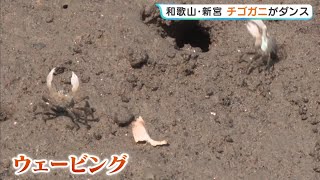
A seasonal spectacle has begun on the Miwasaki coast in Shingu, Wakayama Prefecture, where tiny male chigogani crabs are emerging from their burrows at low tide and rhythmically waving their claws in a movement resembling a dance.