News On Japan

Chinese Net users hail 'No Japanese Allowed' restaurant, clashing with authorities

TOKYO - Chinese internet users have rallied behind a yakiniku restaurant in Dalian, Liaoning Province, China, after it was ordered by authorities to remove a sign saying, "No Japanese Allowed."

Even while fanning anti-Japanese sentiment, authorities’ order for the sign to be taken away is seen by some as an attempt to ensure the reaction will not get out of control in the wake of discharging water from the Tokyo Electric Power Co. (TEPCO) Fukushima Dai-Ichi Nuclear Power Plant.

Editor-in-Chief Hu Xujin of the Global Times, a tabloid published by the Chinese Communist Party mouthpiece People’s Daily, lambasted the restaurant’s sign.

"Opposition between countries should not be allowed to fall into discriminatory acts," Hu said.

Kyodo News reported that the restaurant owner erected the sign in Chinese and Japanese following the discharge of water from the nuclear power plant two weeks ago. Authorities ordered the restaurant owner to remove the sign, but they refused.

Weibo users lauded the owner, calling their actions "the expression of a patriot" and "hero of the people," amid large numbers of posts criticizing authorities for taking such a hard line.

Ultimately, however, the owner bowed to pressure from local government officials and the police and has removed the sign.

Source: https://news.yahoo.co.jp/articles/091f215802bea0347b5728c42abc1ffa35a52322

News On Japan
POPULAR NEWS

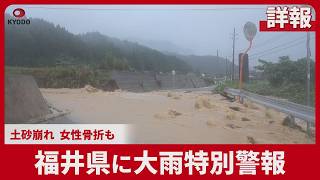
Record rainfall caused 19 rivers to overflow across Fukui Prefecture, flooding roads and homes, triggering landslides and temporarily forcing authorities to issue the highest-level heavy rain emergency warning from early Sunday morning.

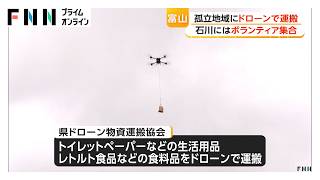
Drones were used to deliver food and daily necessities to an isolated mountain community in Himi City, Toyama Prefecture, on August 30 after torrential rain triggered a landslide that cut off road access, while volunteers continued flood recovery work in neighboring Ishikawa Prefecture.

Two typhoons east of Japan were moving northward on August 30, with Typhoon No. 23 (Banlan) overtaking Typhoon No. 22 (Artau), although neither storm is expected to have a direct impact on Japan.

A 9-minute, 13-second drone video filmed inside Aeon Mall Kumamoto two days after the deadly explosion has provided a detailed view of the destruction, showing collapsed ceilings, heavy dust and widespread damage that may have affected between one-third and nearly half of the shopping center.

Strong Typhoon No. 18 was moving northwest through the East China Sea on the night of August 26, gradually pulling away from Okinawa and the Amami Islands as lingering rain, strong winds and high waves were expected to ease. As of 9 p.m. on August 26, the typhoon was over waters north-northwest of Kume Island and moving northwest.

MEDIA CHANNELS
         

MORE Politics NEWS

Japan is moving to strengthen its defenses against mass drone attacks after Terra Drone became the sole company to advance through a Defense Ministry program for a Japanese-made interceptor drone, drawing on battlefield technology and production methods developed in Ukraine while pushing for domestic production of critical components.

Prime Minister Sanae Takaichi moved on August 28 to contain market concern over her government’s spending plans, saying Japan will aim to cap new government bond issuance at around 40 trillion yen in the fiscal 2027 budget while still pursuing food-tax relief, growth investment and measures to support households facing higher prices.

Japan has drawn up a new policy package aimed at strengthening energy security in response to developments in the Middle East, including support for alternative oil pipelines that would bypass the Strait of Hormuz and greater use of nuclear power to reduce dependence on fossil fuels.

Former Fukuoka Prefectural Assembly speaker Isao Kuranouchi, long regarded as the dominant power in the chamber, resigned as an assembly member on August 25, intensifying scrutiny of allegations involving financial transactions, costly overseas inspection trips and policies backed by public funds while raising broader questions about how he accumulated such influence.

Japan's Digital Agency launched a new smartphone app on August 25 that combines identity verification and administrative procedures, allowing users to access both government and participating private-sector services through a single application.

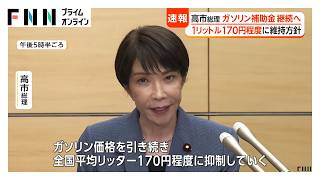
Prime Minister Takaichi said the government will continue using subsidies to keep the nationwide average gasoline price at around 170 yen per liter, drawing on reserve funds set aside to respond to developments in the Middle East.

The Japanese government plans to reuse low-radioactivity soil generated by decontamination work after the Fukushima nuclear accident at government office complexes in Saitama and Sendai, marking the first such reuse outside Tokyo.

Japan's GX Promotion Organization has invested about 3 billion yen in two startups developing nuclear fusion and plastic recycling technologies, with combined public and private investment expected to reach around 20 billion yen as the government seeks to accelerate the commercialization of advanced decarbonization technologies.