News On Japan

Akita Bookstores Miss Release Dates

Akita, Apr 05 (News On Japan) - The "2024 Problem" in logistics has been affecting bookstores in Akita Prefecture since April, causing delays in the arrival of paperbacks and literary books, which now reach stores a day after their release date.

According to the Akita Prefecture Bookstore Commerce Association, which consists of over 20 member bookstores, not only independent stores but also major chain bookstores are experiencing these delays. The distribution is handled by a transport company based in Saitama Prefecture, with the transportation distance from the Tokyo metropolitan area being over 600 kilometers one way. With the application of regulations on overtime work hours for truck drivers starting in April, there are concerns about a reduction in transport capacity.

As a result of the "2024 Problem" in logistics, bookstores in Akita Prefecture have seen the arrival of paperbacks and literary books delayed by a day from the release date since April 1. The transport company cites the difficulty in ensuring rest time after work hours due to the cap on overtime work as the reason for the review of their operations. The Akita Prefecture Bookstore Commerce Association has reported that the arrival of magazines, including comics and weekly publications, had already been delayed by a day from the release date, and with the recent logistics issue, almost all books, including paperbacks and literary works, will now be delayed by a day in reaching the shelves. The Association comments, "We apologize to our customers for the inconvenience caused by the delayed release dates, but we ask for their understanding as these measures are part of the work style reform for truck drivers."

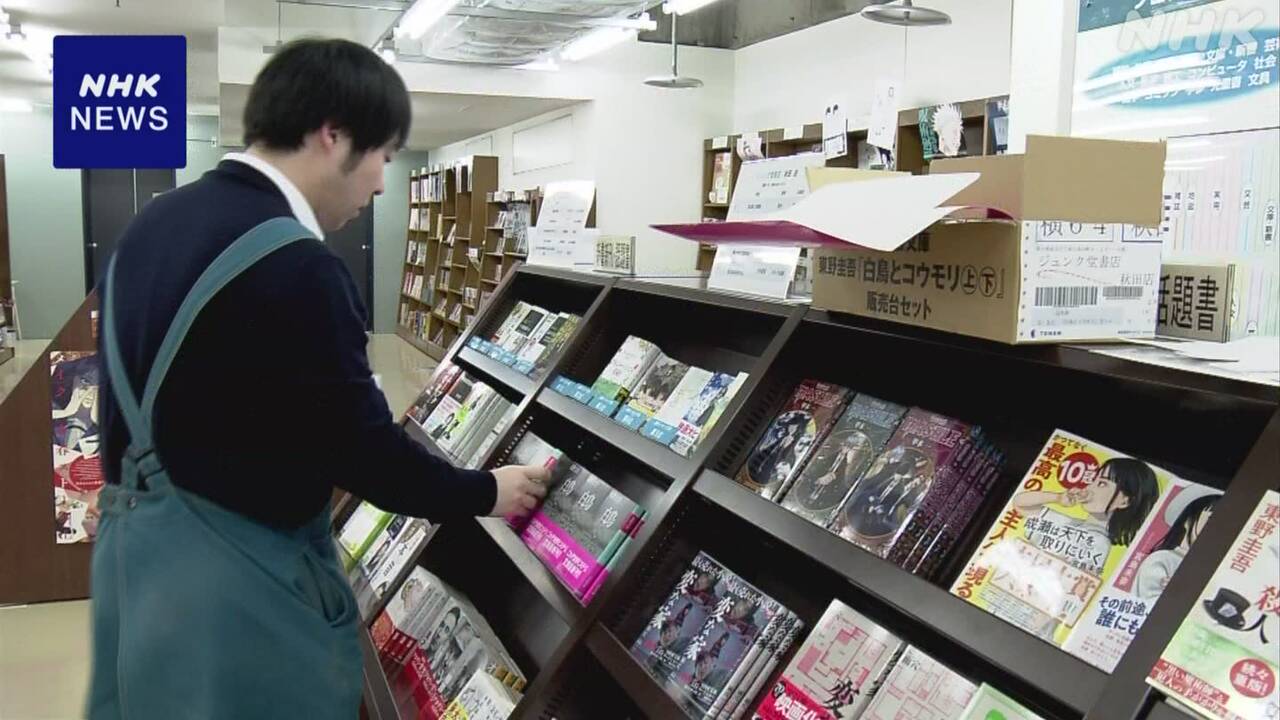
Even popular authors' books are delayed by a day at bookstores near stations. At a large bookstore in front of JR Akita Station in Akita City, paperbacks and literary books used to arrive on their release dates, but from April, they have been delayed by a day. Consequently, the latest paperback by popular author Keigo Higashino, which was scheduled for release on the 3rd, did not arrive until the morning of the 4th, with sales starting from that day.

The store mentioned that at least three customers, unaware of the delay, visited the store on the intended release date.

A male teenager who purchased a paperback said, "I don't see a problem with a one-day delay if it's for reviewing the work style of truck drivers." A woman in her thirties added, "I understand that those working in the logistics industry have it tough, but in Akita, this means we get information later than the Tokyo area. I hope they can find various ways to close this gap." Keiichi Konno, the deputy manager of Junkudo Bookstore Akita Store, expressed his concern, "It hurts that we cannot sell books to customers who want to buy them on the release date. There's also a fear that customers might shift from physical books to e-books, but I suppose it can't be helped."

Source: NHK

News On Japan
POPULAR NEWS

Bear sightings across Japan have already climbed to nearly twice the level recorded during the same period last year, prompting entry bans in mountain areas behind Kyoto’s Ninna-ji Temple and the cancellation of hiking events in Kansai, while new research suggests that the key to reducing encounters may lie in understanding what bears eat in each region.

Copper roofing panels were stolen from several shrines in Hamamatsu, Shizuoka Prefecture, including a city-designated cultural property, in the latest case amid a nationwide surge in copper thefts targeting shrines and temples across Japan, where soaring metal prices have fueled crimes that leave historic religious buildings damaged, exposed to the elements, and facing repair costs of millions of yen.

Flames broke out on the morning of May 20th on Miyajima Island in Hiroshima Prefecture, home to one of Japan's World Heritage sites, destroying Reikado Hall near the summit of Mount Misen.

Uncertainty surrounding the situation in the Middle East is beginning to affect daily life in Japan, as concerns over crude oil supplies spread to restaurants, cleaning services and even household garbage disposal systems across the Kansai region.

A 25-year-old woman arrested as a suspected ringleader in a robbery-murder case in Tochigi Prefecture once posted cheerful dance videos on social media and was remembered by those who knew her as an energetic and outgoing young woman.

MEDIA CHANNELS
         

MORE Business NEWS

The impact of tensions in the Middle East is spreading to familiar snacks in Japan, with Morinaga & Co. temporarily suspending sales of some caramel products, including its long-selling Hi-Soft brand, after difficulties emerged in securing certain raw materials.

The Nikkei Stock Average rebounded sharply on May 21st after falling below 60,000 at the previous day's close, briefly rising more than 2,200 points as hopes grew for progress in talks toward ending the fighting between the United States and Iran, while SoftBank Group gave the market a major boost following reports that OpenAI was preparing to file for an initial public offering.

Japan’s imports of crude oil from the Middle East plunged 67.2% in April from a year earlier, as the impact of the effective closure of the Strait of Hormuz began to ripple through the country’s trade and energy supply chains.

Sumitomo Mitsui Banking Corporation and Toshiba announced on May 20th that they had jointly developed a new stock index utilizing quantum technology.

TOTO, a major Japanese manufacturer of housing and bathroom equipment, reopened its showroom in London, England, on May 20th after undergoing its first major renovation in 16 years.

Uncertainty surrounding the situation in the Middle East is beginning to affect daily life in Japan, as concerns over crude oil supplies spread to restaurants, cleaning services and even household garbage disposal systems across the Kansai region.

U.S. President Donald Trump was found to have traded large amounts of stock, including shares in Kura Sushi USA, in a wave of more than 3,700 transactions over a three-month period that has sparked criticism over possible conflicts of interest.

As conflict in the Middle East drags on, shortages of naphtha — a key raw material used in a wide range of petroleum-based products — are beginning to affect even Japan's traditional cheap snacks, with manufacturers facing steep rises in packaging and material costs while trying to keep products affordable for children.