News On Japan

Takaichi Apologizes Over Political Funds Scandal

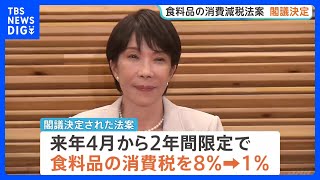
TOKYO - Prime Minister Takaichi began her responses in the House of Councillors on November 5th with an apology over political funds issues, as parliamentary questioning continued following her policy speech.

Reporting live from the National Diet Press Club, Fuji Television’s political reporter Haruka Wakatabe explained that Takaichi opened her remarks by addressing growing criticism over money and politics.

Mizuoka, chairman of the Constitutional Democratic Party in the Upper House, asked how the Takaichi Cabinet intends to resolve the ongoing political funds issue and whether lawmakers implicated in the scandal but unelected should hold key government posts.

The controversy centers on Deputy Chief Cabinet Secretary Kei Sato, a member of the Upper House appointed by Takaichi, who failed to record certain transactions in his political funds report. Opposition parties have refused to participate in Diet management meetings in protest, arguing that Sato has not been held accountable through an election.

Takaichi said, “I sincerely apologize for the confusion caused in Diet operations. He deeply regrets the omission and is working to establish an environment and system to prevent recurrence.” The prime minister appealed for understanding, saying she wanted Sato to be given “a chance to make a fresh start.”

Meanwhile, regarding her directive to review regulations on working hours, Takaichi responded to concerns that “strong opposition has arisen from the workplace,” saying it is important to “listen to a wide range of opinions and proceed with careful consideration based on actual working conditions and needs.”

In the afternoon, further questioning is scheduled in the House of Representatives, where Democratic Party for the People leader Tamaki and Komeito leader Saito are expected to take the floor.

Source: FNN

News On Japan
POPULAR NEWS

Plans to bring Shinkansen service to Shikoku have taken a significant step forward for the first time in 53 years, with the transport ministry beginning preliminary studies that could eventually cut travel times from Osaka to major cities including Tokushima, Takamatsu and Matsuyama to around 90 minutes.

A Takenaka Corp. construction manager who oversaw work on the Grand Ring and other facilities at the Osaka-Kansai Expo was arrested on August 19 on suspicion of causing more than 13 million yen in losses to the major contractor through inflated construction bills, with police investigating allegations that money from the scheme was used for renovations to his home and a cafe operated by relatives.

Typhoon No. 18 (Soudelor) formed near the Truk Islands on August 19 and is forecast to strengthen as it gradually turns northwest, potentially approaching the Ogasawara Islands before moving toward Okinawa or the Pacific coast of western Japan.

After 10 p.m., the clouds that had covered the sky above Shirakoma Pond gradually began to clear, revealing countless stars and the Milky Way rising vividly over the mountain lake in Nagano Prefecture's Northern Yatsugatake range.

A fire broke out at Sairinji temple in Saga city on the morning of August 18, engulfing the building in flames and prompting the dispatch of 10 fire engines and two ambulances, with no injuries reported so far.

MEDIA CHANNELS
         

MORE Politics NEWS

A Japan Air Self-Defense Force F-15 fighter jet tilted to one side and came to a stop while landing at Naha Airport on August 18, forcing the closure of one of the airport's two runways and causing delays of more than an hour for some arriving commercial flights.

Hyogo Prefecture has been placed under a system requiring central government approval for new borrowing after its debt repayment burden exceeded a nationally defined threshold, raising concerns that worsening finances and higher interest rates could push the prefecture closer to serious fiscal distress.

Prime Minister Sanae Takaichi’s economic agenda came under fresh pressure on August 18 after weaker-than-expected growth figures exposed the fragility of Japan’s recovery, sharpening the political stakes around the Bank of Japan’s next rate decision, the weak yen, and the government’s plan to cut the consumption tax on food.

The United States dropped 49 mock atomic bombs across Japan in the closing weeks of World War II, killing around 400 people as American air crews practiced the techniques later used in the atomic bombing of Hiroshima.

Defense Minister Shinjiro Koizumi and three other Cabinet ministers visited Yasukuni Shrine in Tokyo on August 15, the anniversary of the end of World War II, while Prime Minister Sanae Takaichi refrained from going in person and instead offered prayers from the Nippon Budokan.

Prime Minister Sanae Takaichi on August 13 condemned Russian President Vladimir Putin's visit to the Northern Territories, saying it was "absolutely unacceptable," while Foreign Minister Toshimitsu Motegi summoned Russia's ambassador to Japan and lodged a strong protest.

Russian President Vladimir Putin has visited Etorofu Island, marking his first trip to the Russian-held islands claimed by Japan as the Northern Territories, according to the Kremlin.

Reports that a man posing as an employee of Russian airline Aeroflot conducted intelligence operations in Tokyo have renewed attention on Russian espionage in Japan, a country former Soviet intelligence officers have described as unusually easy for spies to operate in because of weaknesses in its legal and counterintelligence framework.