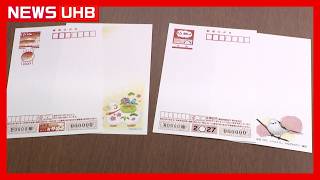
OSAKA - Otoshidama, the New Year cash gifts traditionally given to children in Japan, is undergoing a noticeable transformation as the spread of cashless payments and persistent inflation begin to affect even this long-standing custom.
For many families returning to their hometowns over the New Year holidays, otoshidama remains an inseparable part of the season, but the way it is given, received, and used is starting to change. Rising prices and the growing use of smartphone-based payments are casting a shadow over what has long been a simple source of joy for children.
At a household in Ikeda, Osaka Prefecture, two sisters excitedly talked about the otoshidama they received from their grandfather, proudly counting their gifts and calculating how much they could spend. Their parents said they typically let the children take around 5,000 yen to buy what they like, allowing them to decide for themselves how to use the money.
When asked what they planned to buy, the children mentioned items such as stickers and small toys, choosing things they could only find at specific shops. For adults, seeing children smile when receiving otoshidama remains a pleasure, but among those giving the money, a sense of strain is increasingly evident.
People interviewed on the street said that while it is painful to give money amid rising living costs, cutting back feels unavoidable for some. Others said that even 1,000 yen no longer buys much, highlighting how inflation has reduced the real value of otoshidama. Those with many relatives to give to said the burden grows heavier each year.
According to a survey conducted since 2023 by a research firm tracking otoshidama trends, the share of respondents who feel uneasy about the tradition rose by 2.4 percentage points from the previous year to 40.2 percent, surpassing 40 percent for the first time. The total budget households planned for otoshidama this New Year averaged 20,439 yen, down more than 1,000 yen from the previous year.
Another notable change unique to the Reiwa era is the rise of cashless otoshidama. Among people aged 15 to 20 who expect to receive otoshidama, 38.5 percent said they would like to receive it via smartphone-based cashless payments, the highest level since the survey began.
As inflation squeezes household budgets and payment methods evolve, families are also beginning to rethink how children learn about money. There is a growing movement to teach financial literacy, including saving, spending, and even investing, from an early age.
The government is also moving ahead with discussions to expand tax-free investment schemes, allowing minors to open accounts under national systems that exempt certain investment gains from taxation. At the same time, new types of after-school programs have emerged that would have been unthinkable in the past.
One such private school, which opened in November, teaches financial knowledge to students ranging from elementary school to high school. In one class, children learned the difference between wants and needs by using play money in a game-like setting, deciding what to buy and explaining their choices.
A parent whose child attends the program said he realized the need for financial education after giving his child 5,000 yen as a birthday gift, only to see it quickly spent without much thought. He said he himself never properly learned about money and struggled with how to teach it at home.
During the lesson, children practiced deciding whether to buy essential items such as notebooks or to refrain from purchasing toys they might soon lose interest in. Some said learning about money was fun, while others said understanding how to save for expensive goals, such as game consoles, made them think more carefully about their spending habits.
The school offers a four-year curriculum for elementary students, covering everything from basic money management to taxes and investment knowledge. The school’s founder said that in Japan, talking about money has often been treated as taboo, leaving many children without opportunities to learn. He said financial knowledge can be a powerful tool when entering society and should be taught positively from a young age.
Source: KTV NEWS